
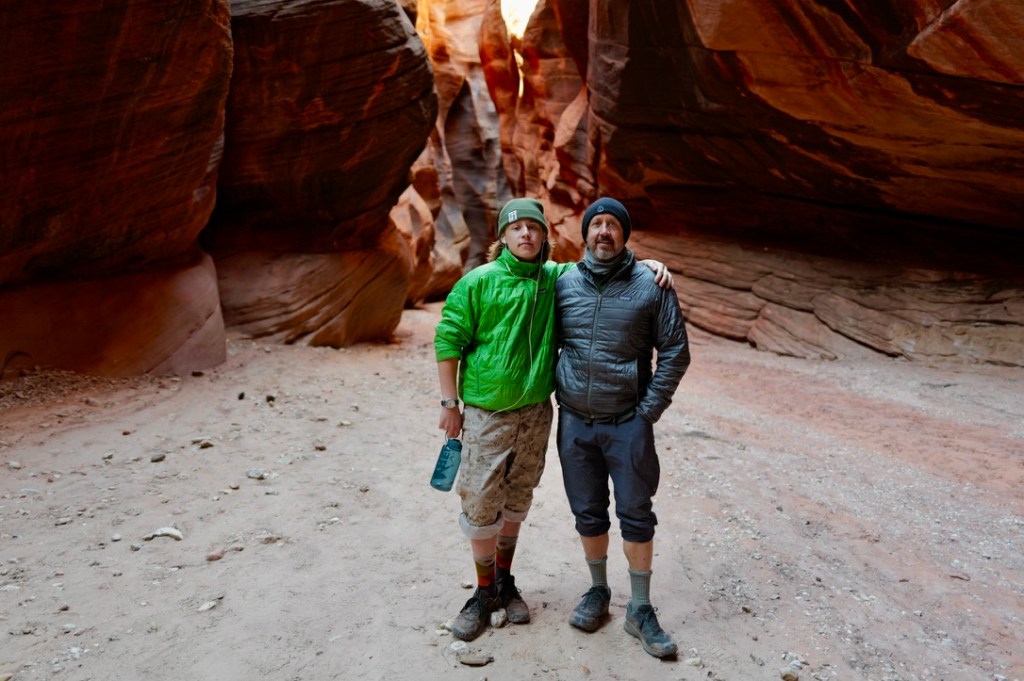
My son Roe and I spent the week in Zion at the end of March. The original plan included a hike the Narrows top-down — sixteen miles through the deepest slot canyon in North America, camping at the confluence of Deep Creek. We had permits, and confirmed campsites.
We didn’t hike the Narrows. A storm hit on day two and flooded the rivers.
Before the trip, I’d spent two sessions with Claude Code — what I call Exo, my local Claude setup — building out everything we’d need. I told it what I cared about: history, archaeology, geology, and peculiar characters. It produced eight interlinked documents saved to my Obsidian vault, available offline on my phone. Here’s what it built:
A day-by-day itinerary with confirmed reservations and logistics. A stack-ranked list of every viable hike organized by day, with backup routes already researched. A conditions report tracking weather forecasts, trail closures, and USGS river flow data against the 120 CFS threshold that closes the Narrows. A quick-facts reference with flight confirmations, permit fees, water safety protocols, and emergency numbers. A food and restaurant guide covering everything from Springdale restaurants to backcountry meal planning. A day-by-day reminder checklist.
And then the two documents that turned out to matter most: a deep history covering 150 million years of geology, twelve thousand years of human habitation, and the explorers and settlers who built the park — and a collection of regional legends and campfire stories drawn from Paiute oral tradition, local folklore, and the strange true stories of the canyon country.
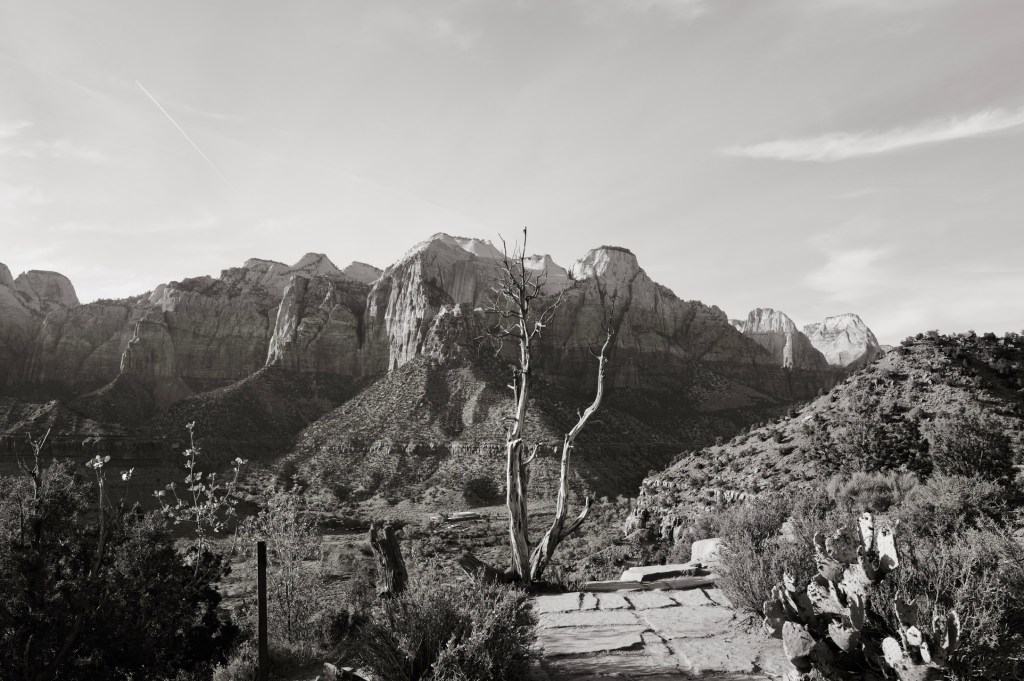
The geology doc explained the Grand Staircase — how the oldest rock at Zion is the youngest rock at the Grand Canyon, and the youngest rock at Zion is the oldest rock at Bryce. Six hundred million years of continuous Earth history, stacked in colored cliffs you can see from a single overlook. It explained that Zion’s two-thousand-foot walls are fossilized sand dunes from a desert larger than the Sahara, deposited 190 million years ago on the edge of Pangaea. The diagonal lines in every cliff face record the direction of Jurassic winds.
The history doc covered the split-twig figurines — small animal effigies found in caves throughout the Colorado Plateau, some with tiny spears piercing their sides. Hunting magic from four thousand years ago. It covered the Virgin Anasazi, who farmed the canyon floor for a millennium before a twenty-three-year drought drove them out. It covered David Flanigan, a Springdale teenager who shot a bighorn sheep in 1888, discovered a cliff overlook, and spent thirteen years building a cable tramway that lowered lumber two thousand feet to the canyon floor. Brigham Young had prophesied that lumber would move from the plateau “as the hawk flies.” Flanigan made it happen.
The campfire stories doc covered the Water Babies of Paiute tradition — small beings with long dark hair who cry like human infants near springs at night, luring you to the water’s edge. The Wild Man of Zion — a figure reported in the 1930s backcountry, tall, covered in hair, moving upright through the trees. Katherine Van Alst, an eight-year-old who disappeared from camp in 1946 and was found six days later, thirty miles away and six hundred feet higher, walking calmly out of a cave. “Here I am.” Nobody knows what happened to Katherine Van Alst. And Everett Ruess, a twenty-year-old artist who rode his burros into the Escalante desert in November 1934 and was never seen again. “You cannot comprehend its resistless fascination for me,” he wrote. The canyon country kept him.
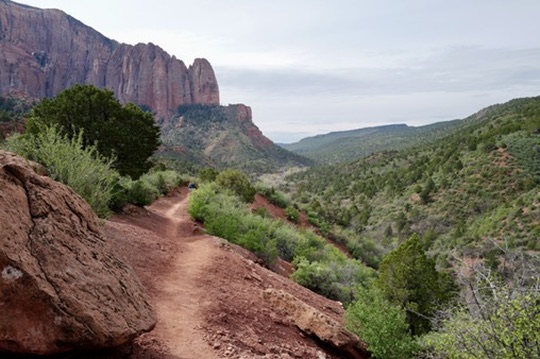
When the storm hit on day two, the ranked hike list paid for itself. LaVerkin Creek in the Kolob section was our third-ranked backup — total solitude, red sandstone creek canyon, thirteen designated campsites. We knew where to go because it was already researched.
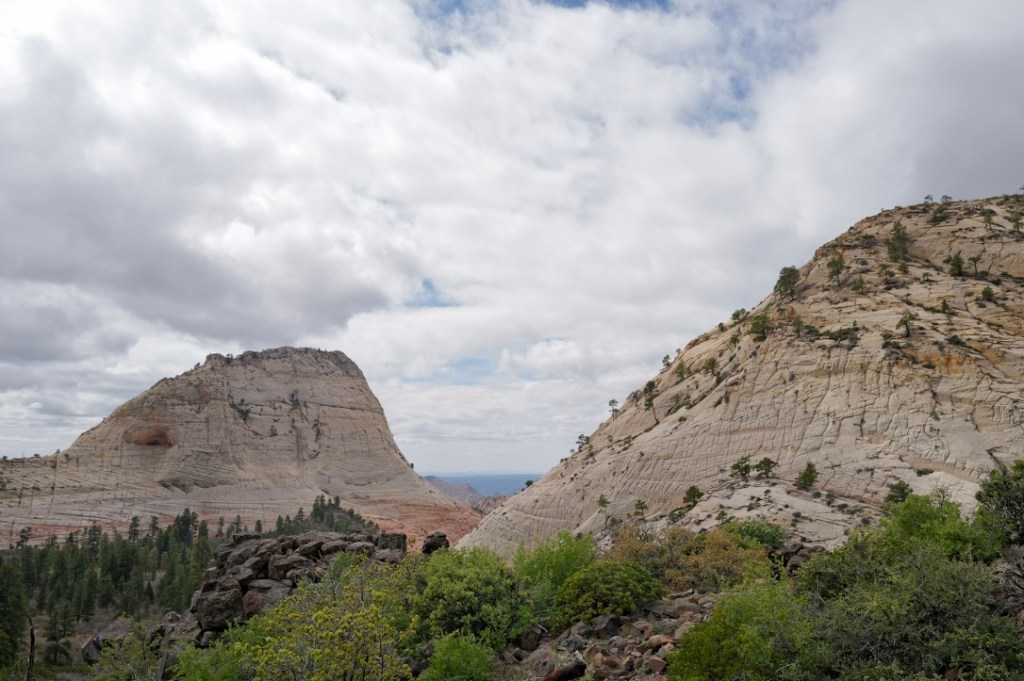
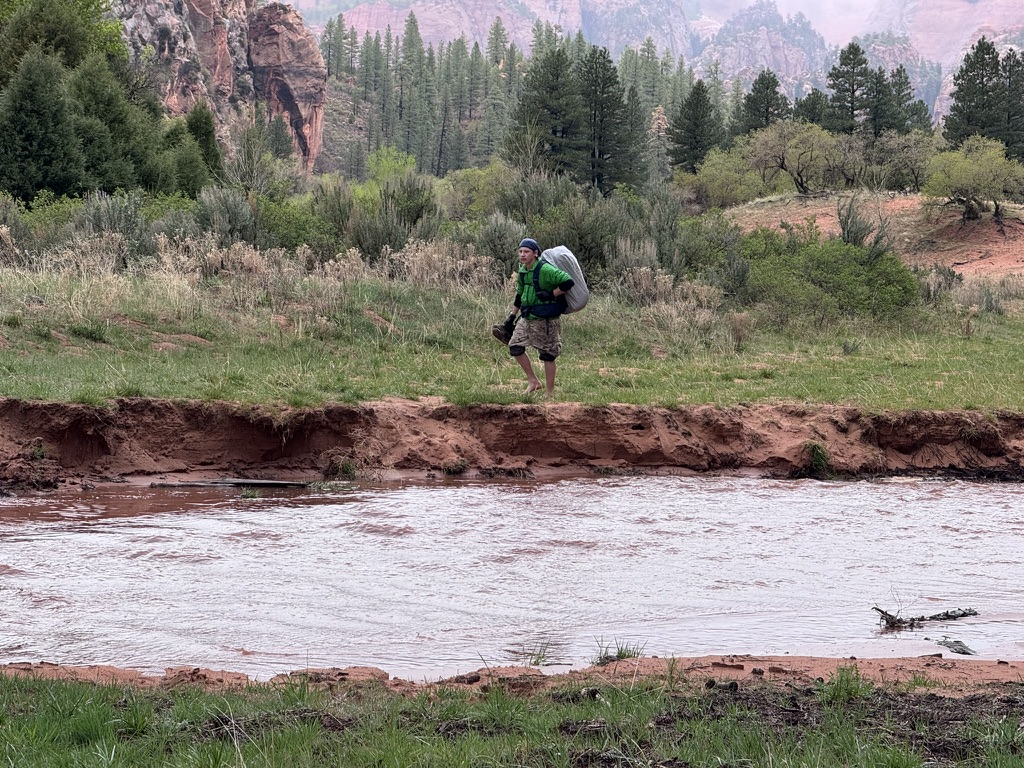
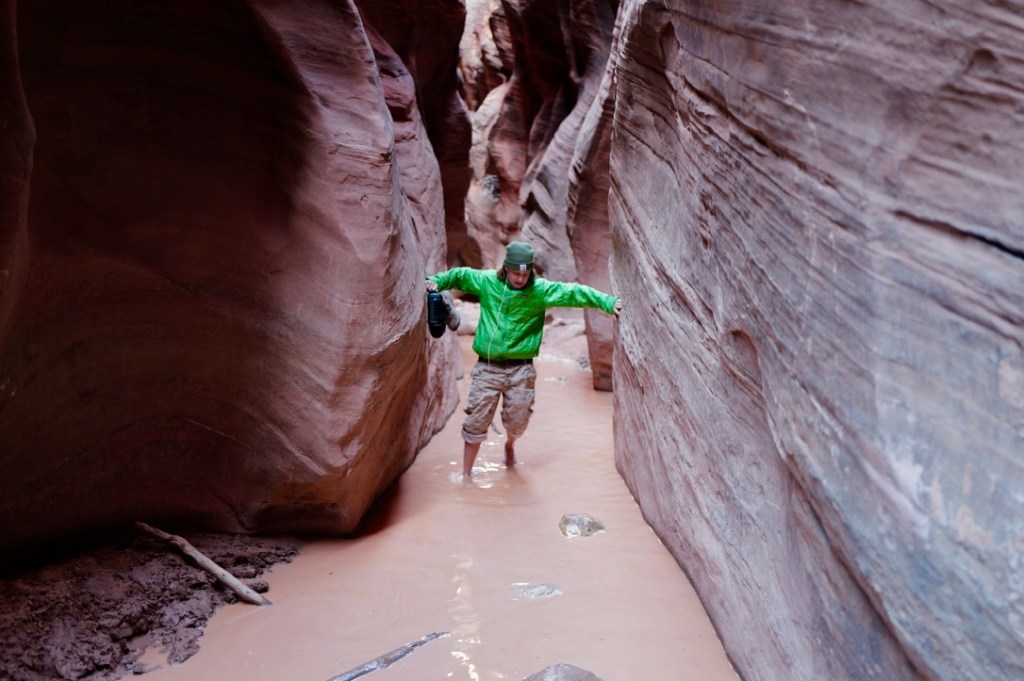
We camped at Watchman. We hiked from Lee Pass into LaVerkin Canyon and caught the storm. Rivers flooded. We hiked out through Hop Valley — twenty-plus flooded river crossings, an epic day. We camped in Wildcat Canyon. After this we were beat. We hitchhiked back to Zion, drove to Buckskin Gulch, and explored one of the longest slot canyons on Earth.
None of that was the original plan. The reading materials didn’t care. The geology, the history, the campfire stories — all of it applied to the landscape we were actually in, not the one we’d planned to be in. The library Exo built was about the region, the people who lived here, and the forces that shaped the rock. That holds whether you’re in the Narrows or in Hop Valley at a river crossing.
I’m publishing the condensed version of the supporting materials below. The deep history and geology, the campfire stories, and the ranked hike list. They were written by Claude Code during two planning sessions, saved to Obsidian, and read in the car on my son’s drive. Use them if you’re heading to Zion. Or just read the campfire stories after dark.
Supporting Materials
These documents were written by Claude Code in two planning sessions. Use them if you’re heading to Zion. These are the very condensed versions.
- Zion — Deep History, Geology, and Characters — 150 million years of geology, twelve thousand years of human habitation, and the peculiar characters who built the park.
- Regional History and Campfire Stories — Paiute oral traditions, local folklore, and the strange true stories of the canyon country. Read after dark.

