
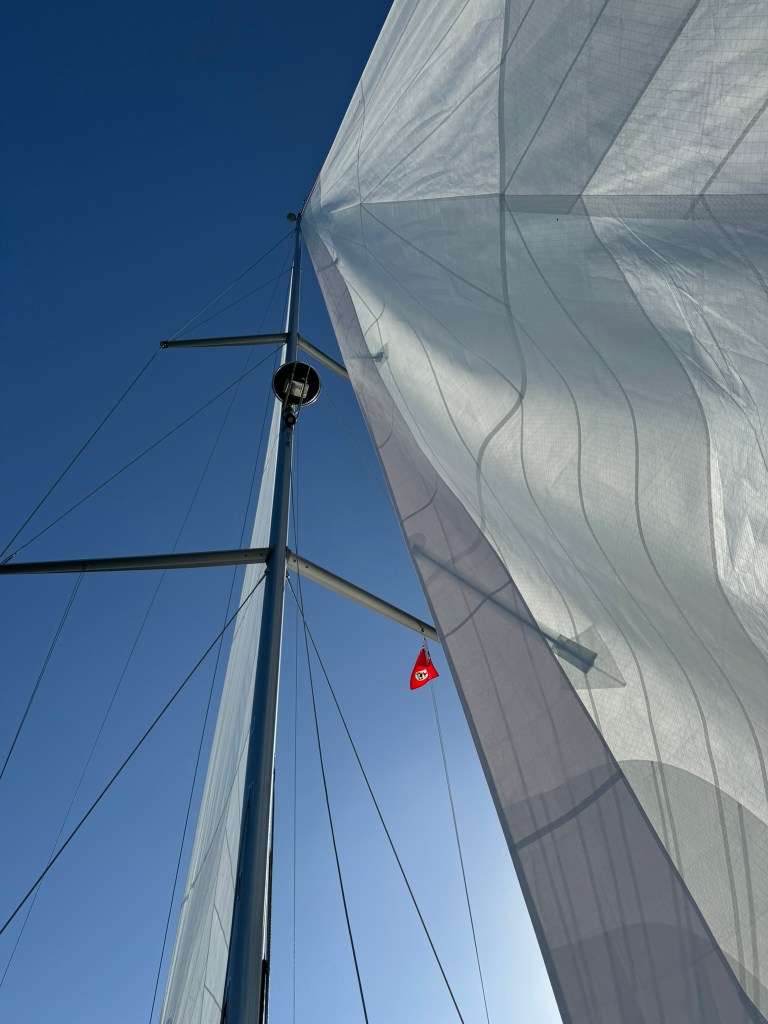
I have to credit John Cena for this one. I heard him on Amy Poehler’s podcast this week talking about anchors and sails, and I haven’t stopped thinking about it, because it describes every team I’ve ever worked with. I love John Cena, by the way. He was a neighbor of mine for many years, and he’s exactly what you would expect. Funny, sincere, friendly, and kind.
So, yes…anchors and sails. Every team has both.
Sails catch wind. They propel the team toward the mission. Anchors hold the team right where it is.
And the anchors? Almost never the people who don’t care. Usually it’s the opposite. They care so much about the mission, and about their own piece of it, that they get stuck. I’ve watched brilliant people sit on work that was ready weeks ago. Stall on a decision because getting it wrong felt unforgivable. That was never apathy. It was fear. Fear of letting the team down. Fear that the work isn’t good enough.
Anyway…sails don’t have to be perfect. A patched sail with a few holes still catches wind. The boat doesn’t need your work to be flawless. It needs your work to move it.
Perfectionism paralysis is one common anchor behavior. Another is paralyzing the team with endless questions before executing. Analysis paralysis. Usually these are good and valid questions. But in technology, you very rarely have all the answers. We’re often inventing something new. You have to make your best guess with the information you have, and you execute. Challenge your thinking regularly, absolutely. But move forward. Waiting for all the answers ensures you’re not creating anything new. You find the answers on the journey.
Anyway, I love this simple concept, anchors and sails, but don’t use this as a label to bludgeon team members. Use this as a question. When someone’s ruminating on everything that can go wrong: okay, great points. Solid red teaming. Now how do we turn this into forward movement? Or when someone is desperately seeking to exhaust all unknowns from the domain space — often impossible — thank them for their thoughtful questions and challenge them to turn this into forward movement, even if it means inferring answers. How do we turn this into a sail and not an anchor? When someone’s been polishing the same deliverable for weeks, ask them, no accusation in it: are you being a sail or an anchor right now? No reason to get defensive; we’ve all been an anchor at times. The question assumes they care. It just asks where that care is pointed.
Caring about the mission means moving it. Ship the patched sail.
Thanks, John. I’d say it to your face, but I moved out of the old neighborhood, and it was always hard to see you anyway.

