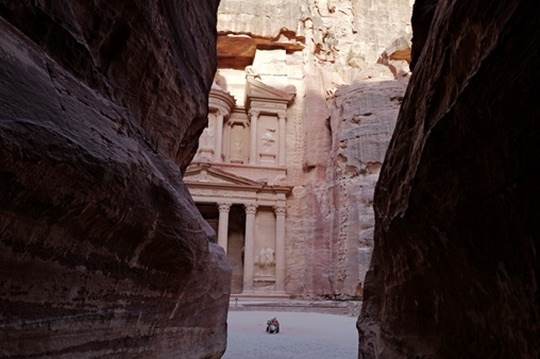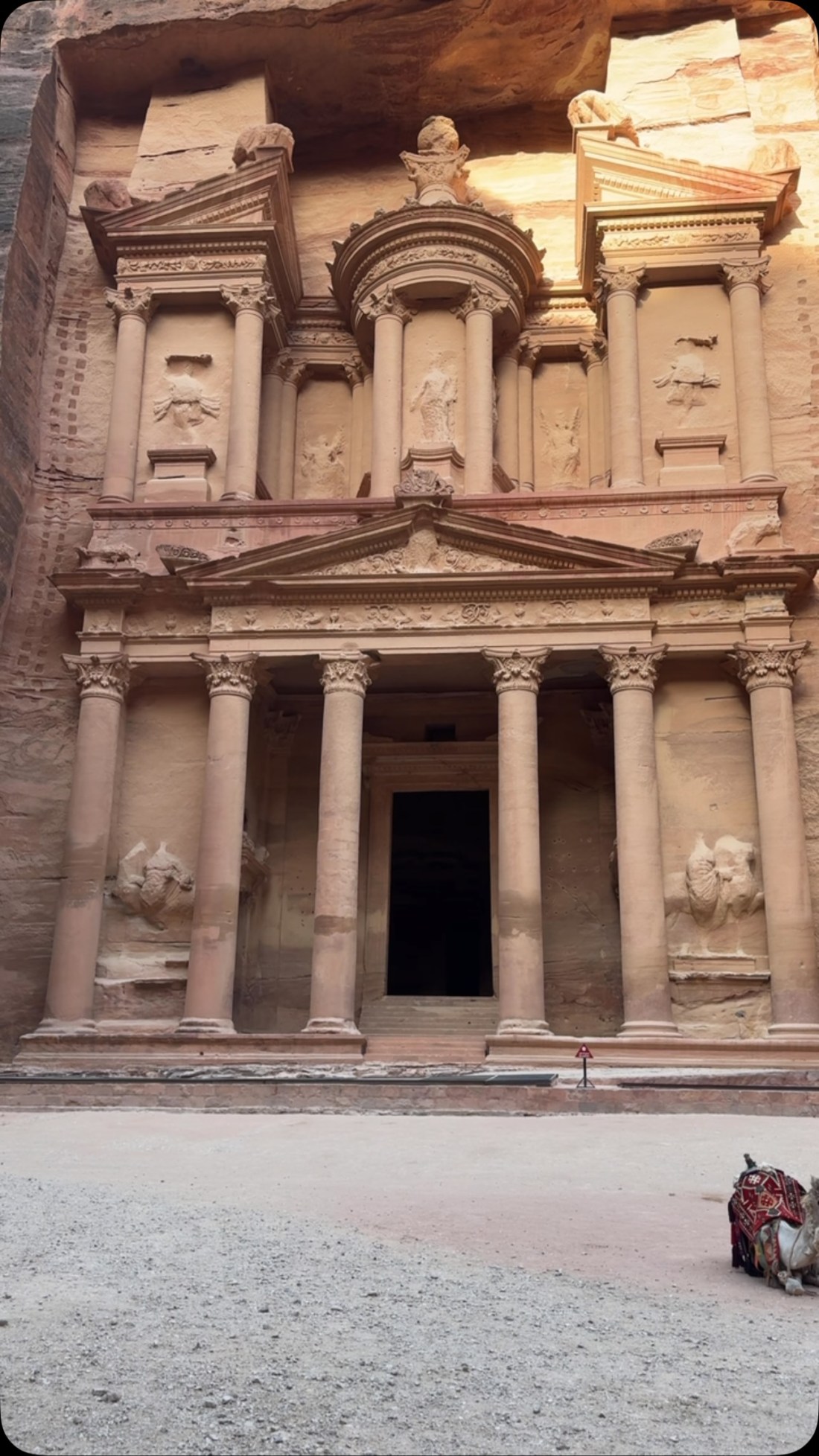
I walked up to the Treasury and there was nobody there.
I spent a week in Abu Dhabi and Dubai for work, then took four days to drive around Jordan looking at old things. I posted as I went. This is that series, collected, with the pictures.
Start with the part that surprised me most.
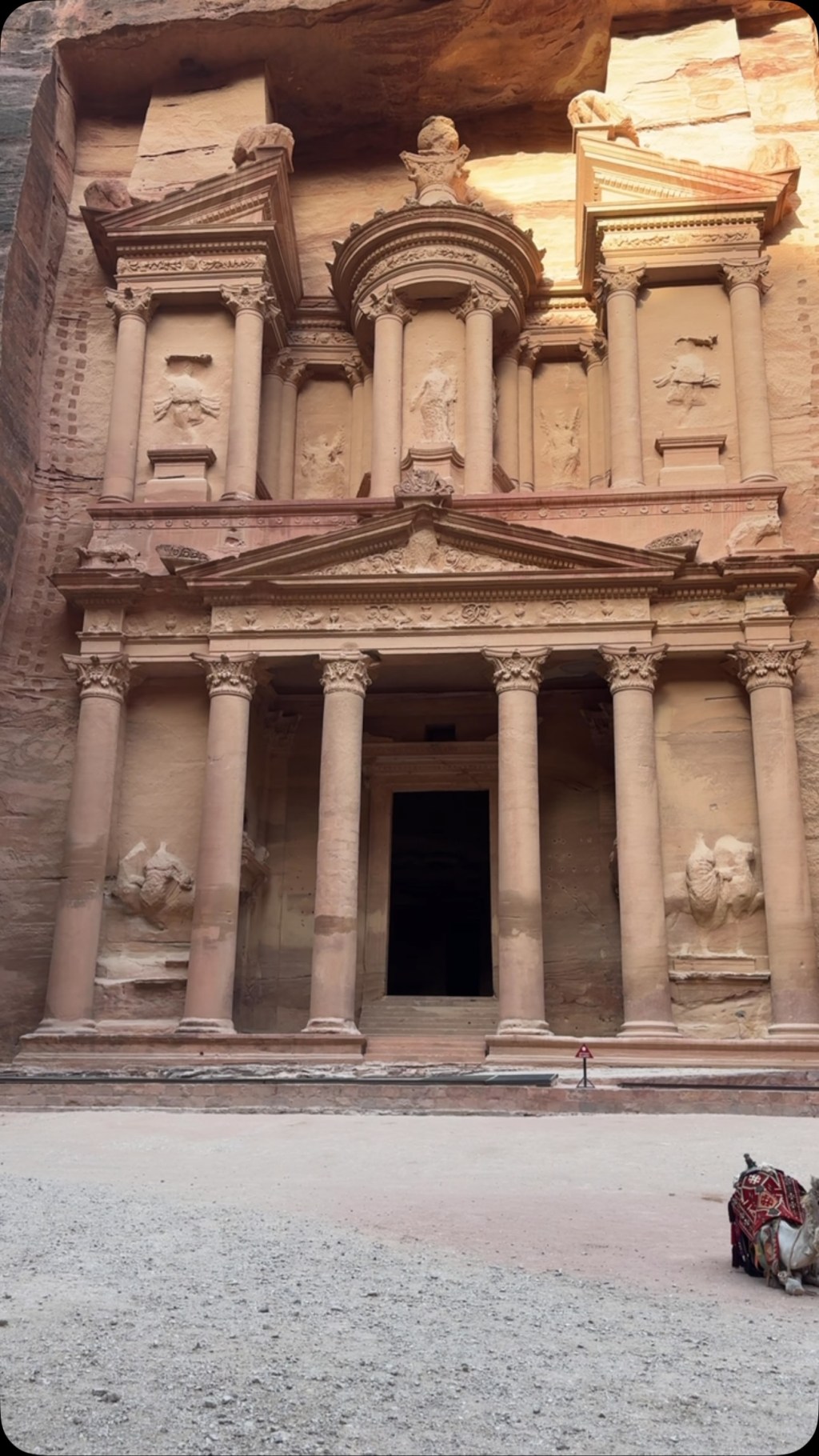
I walked up to the Treasury with literally nobody around.
Tourism here fell off a cliff with covid and never came back. The war next door finished the job. Jordan isn’t in it, but people don’t make that distinction from a distance, so the country eats the loss anyway. Hotels are empty. Guides are sitting idle.
My experience was terrific. Completely safe. The people are among the most generous I’ve encountered anywhere. And it was a childhood dream fulfilled — walking through the biblical sites, the Neolithic sites, and the Paleolithic ones.
Go now. You’ll have it to yourself, and the country could use the visit.
The guide
Amman · 24 July
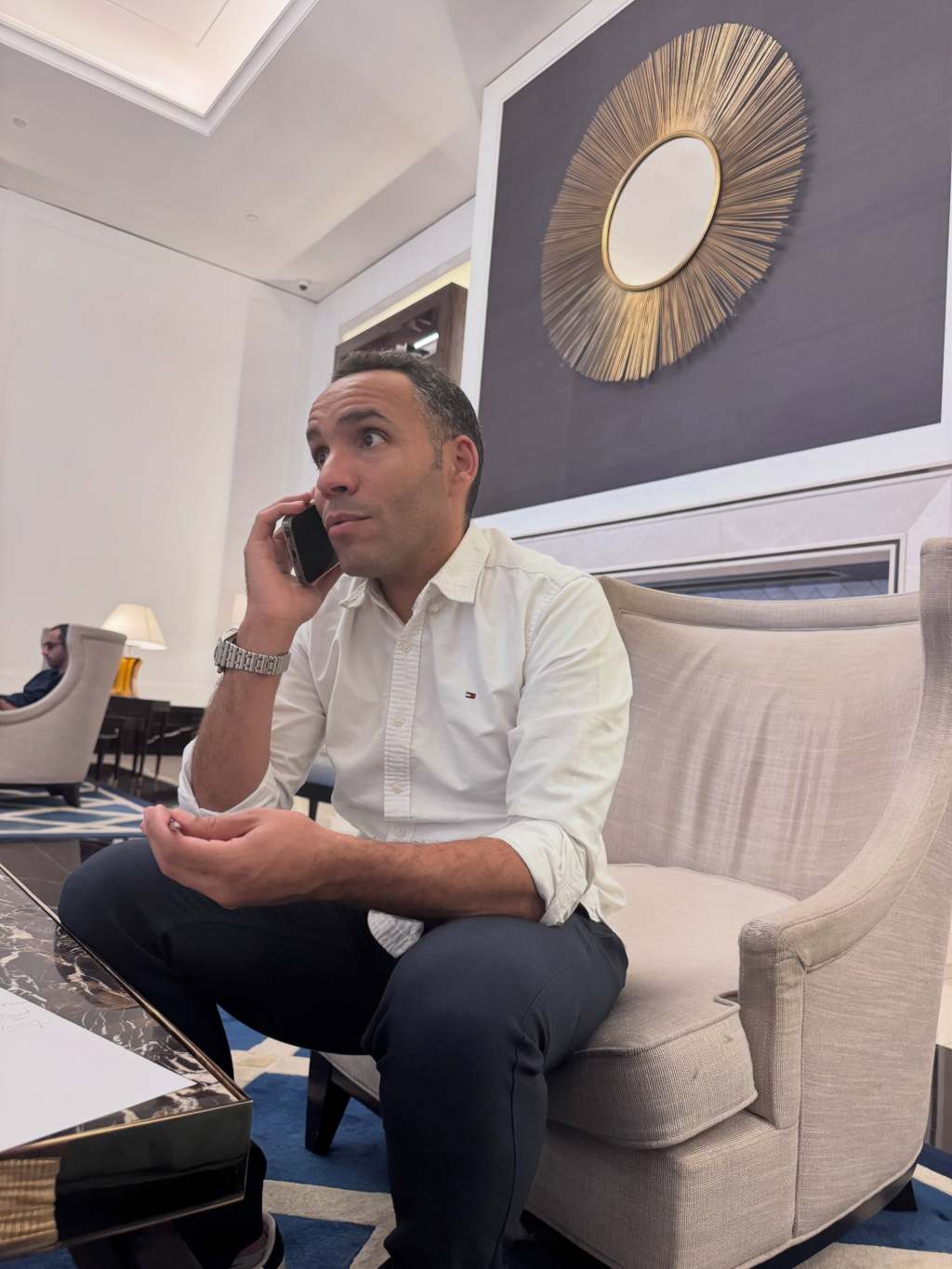
This is Osama, my guide in Jordan — @osszyoud. We completely refactored my itinerary. He has a degree in archaeology, and we removed the luxury nonsense in favor of locally owned places and archaeological and historical sites.
Going to see Lot’s cave and where Moses died.
That decision is why the rest of this exists. If you go, hire him. There’s a section at the bottom on how.
The corridor
That “Paleolithic” part isn’t a stretch. Humans have been in this corridor for a very long time.
Stone tools from the Jordan Rift date to roughly 1.5 million years ago, some of the earliest evidence of hominins outside Africa. This valley is the road out. Every migration north went through here. Neanderthals lived in these hills. Later, Beidha next to Little Petra was a farming village around 7000 BCE, and ‘Ain Ghazal outside Amman produced human statues from about 7200 BCE that are among the oldest large-scale sculptures of people anywhere on earth.
Which brings you to Petra, which is practically modern by comparison.
Amman
Amman · 24–25 July
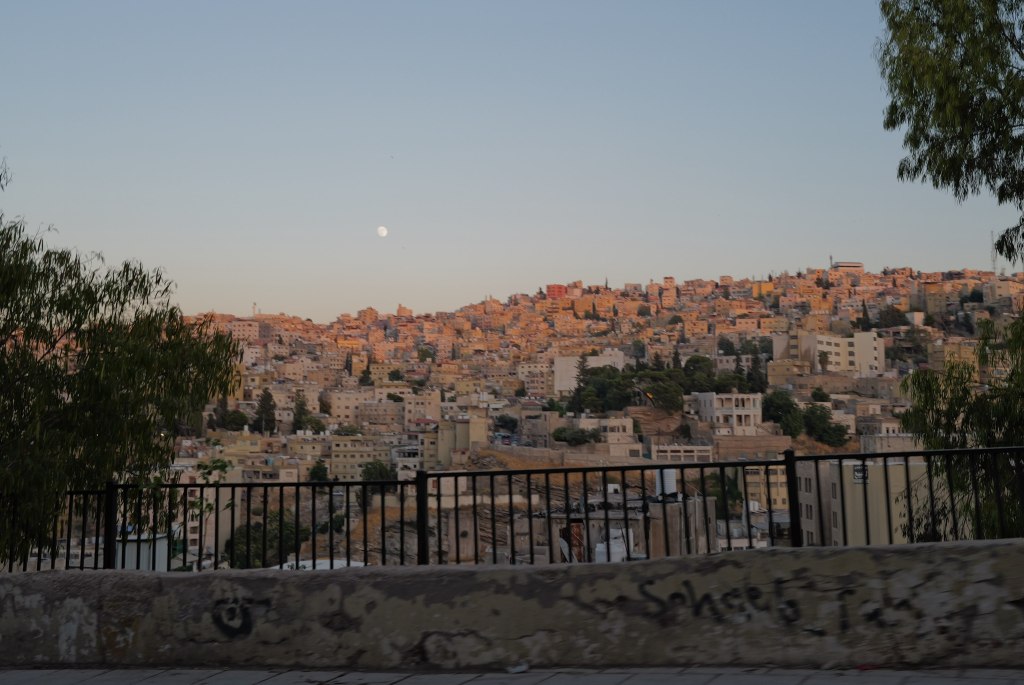
It started as Rabbath Ammon, capital of the Iron Age kingdom of Ammon. It appears in 2 Samuel as the city where David sent Uriah the Hittite to die so he could take Bathsheba. Ptolemy II renamed it Philadelphia in the 3rd century BCE, after himself. It became one of the Decapolis, ten Greek cities in a Semitic landscape. Rome annexed it in 106 CE and put it on a new imperial road. Everything monumental downtown comes from the building boom that followed. Byzantium made it a bishopric. Muslim armies took it in 635 and the Greek name went away. The Umayyads built a palace on the acropolis around 730.
Then it stopped. The Abbasids moved the capital to Baghdad in 762. An earthquake flattened the region in 749. Amman emptied out and stayed empty for about a thousand years. A Swiss traveler passing through in 1812 found broken columns and Bedouin camps. There’s no medieval quarter here and no Ottoman old city. That period is just missing.
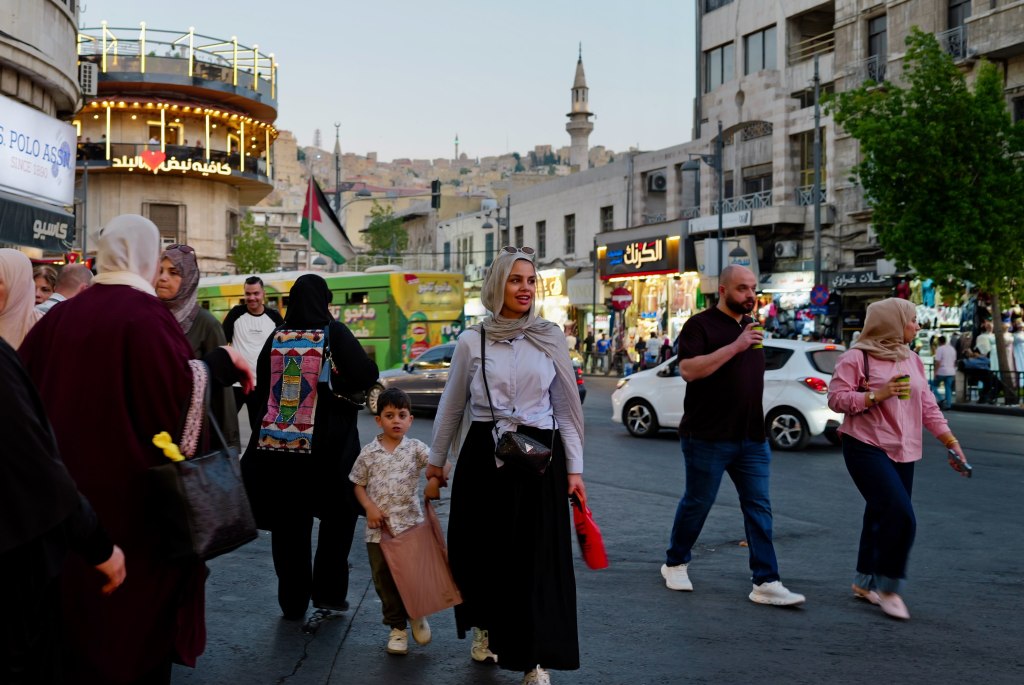
It started again in 1878. Circassian refugees fleeing the Russian conquest of the Caucasus arrived, moved into the vaults of the Roman theatre, and built a town around them. The railway arrived in 1903. Abdullah I made it his capital in 1921 over Salt, which was older, larger, and wealthier. That was the point. Salt had entrenched families. Amman had nobody.
The town was built on seven hills. It covers more than nineteen now. People still navigate by them instead of by street names. Jabal Amman, Jabal al-Weibdeh, Jabal al-Hussein. The Citadel is Jabal al-Qal’a, the hill of the fortress, and it’s where all of this started.
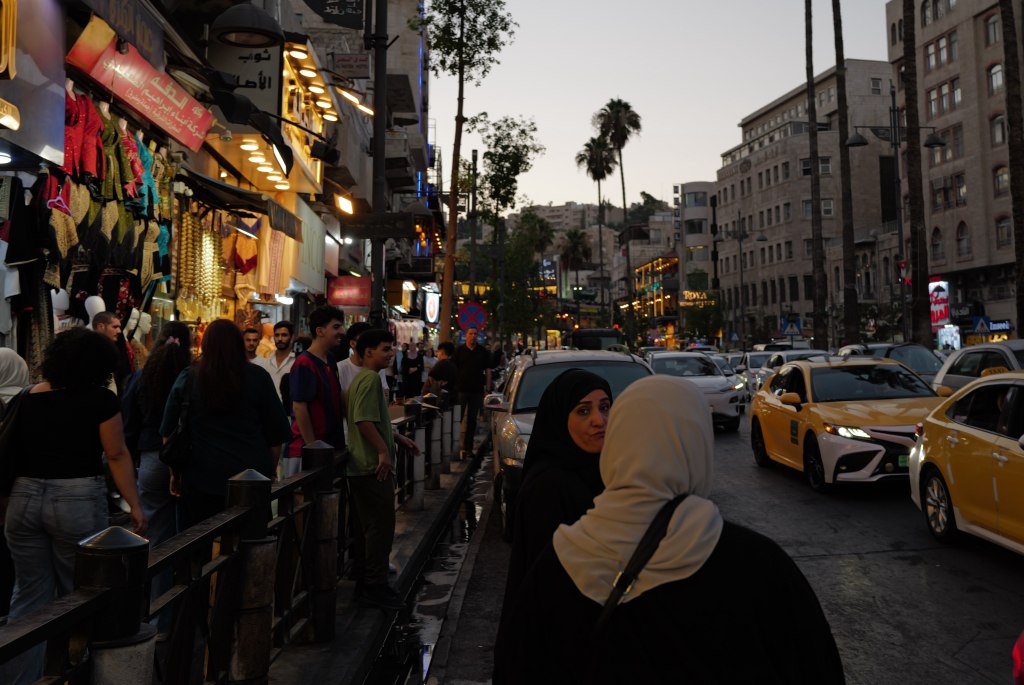
Five thousand people then. Over four million now.
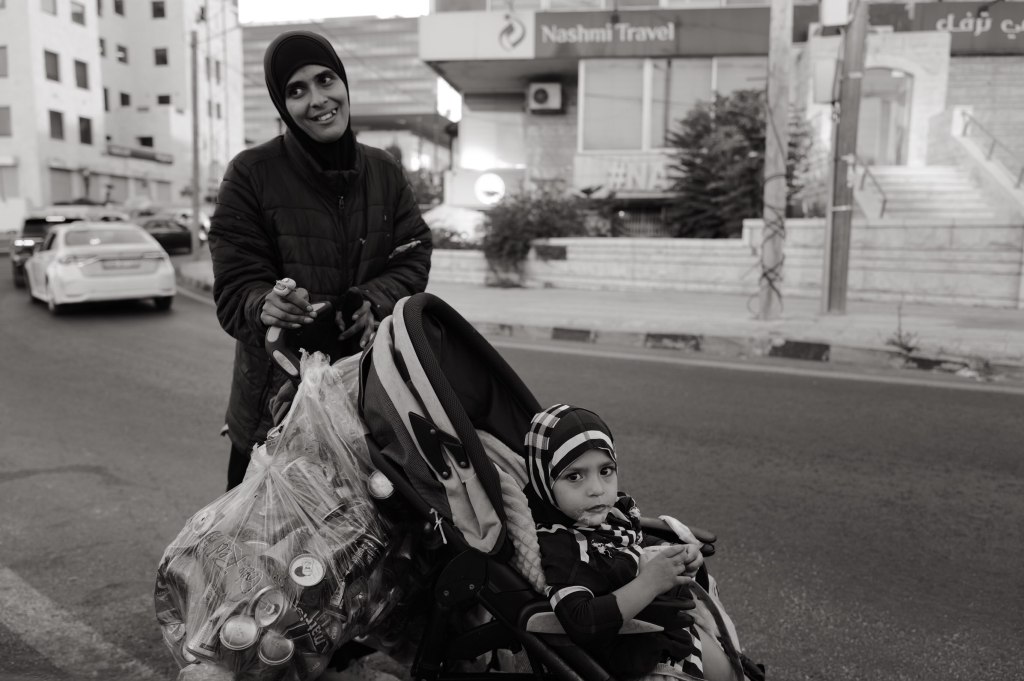
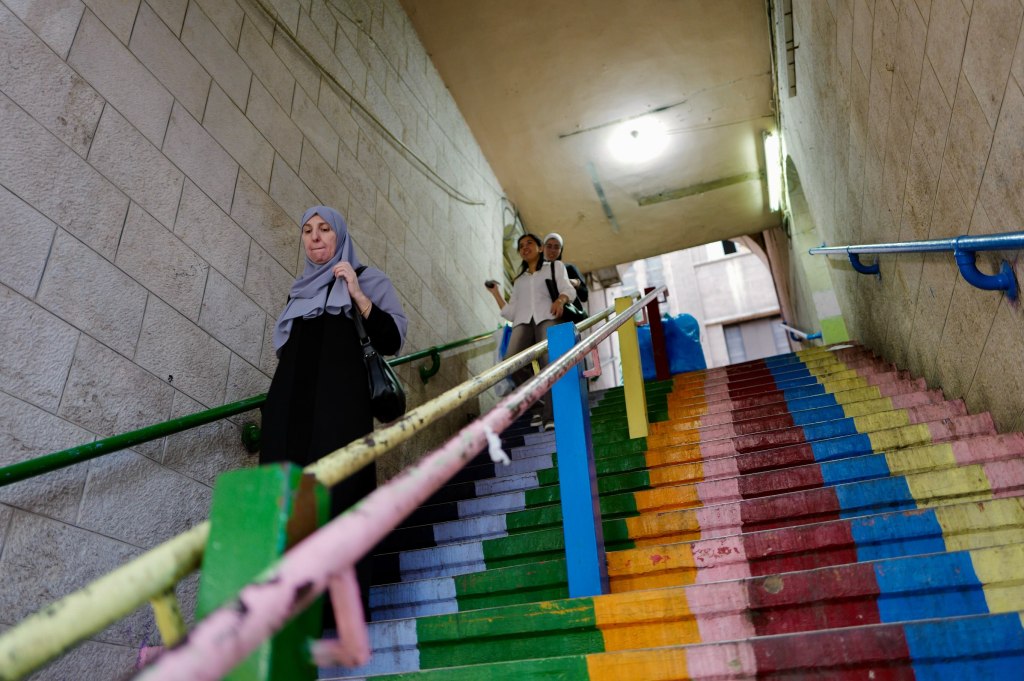
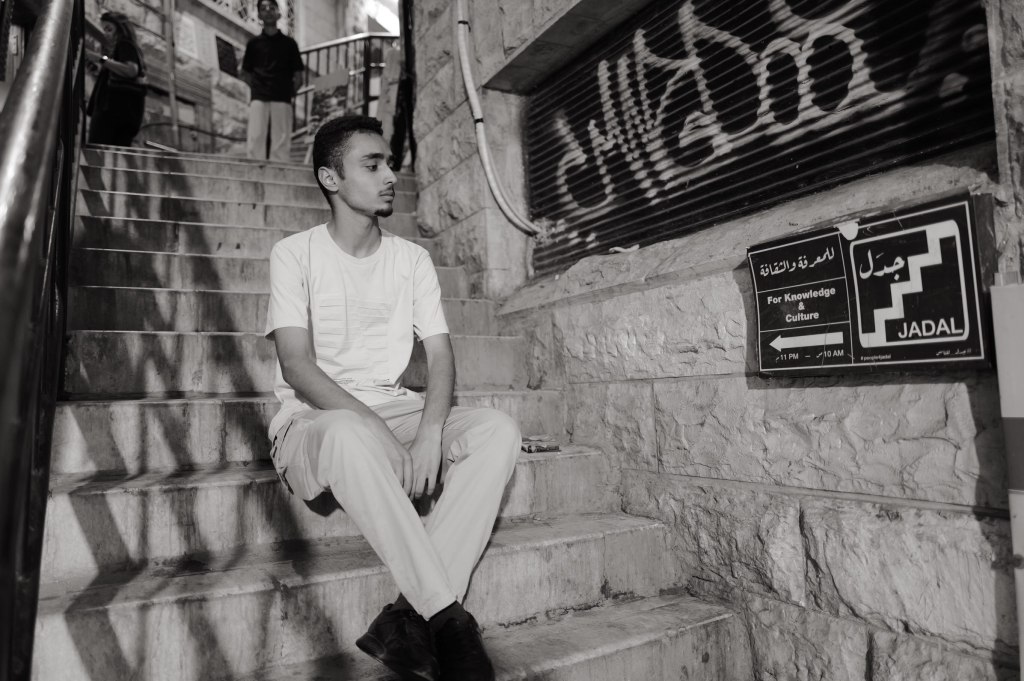
I met this young man downtown. He asked me to take photos of him for his Instagram. Nice to meet you, Sanad.
The Citadel
Jabal al-Qal’a · 25 July
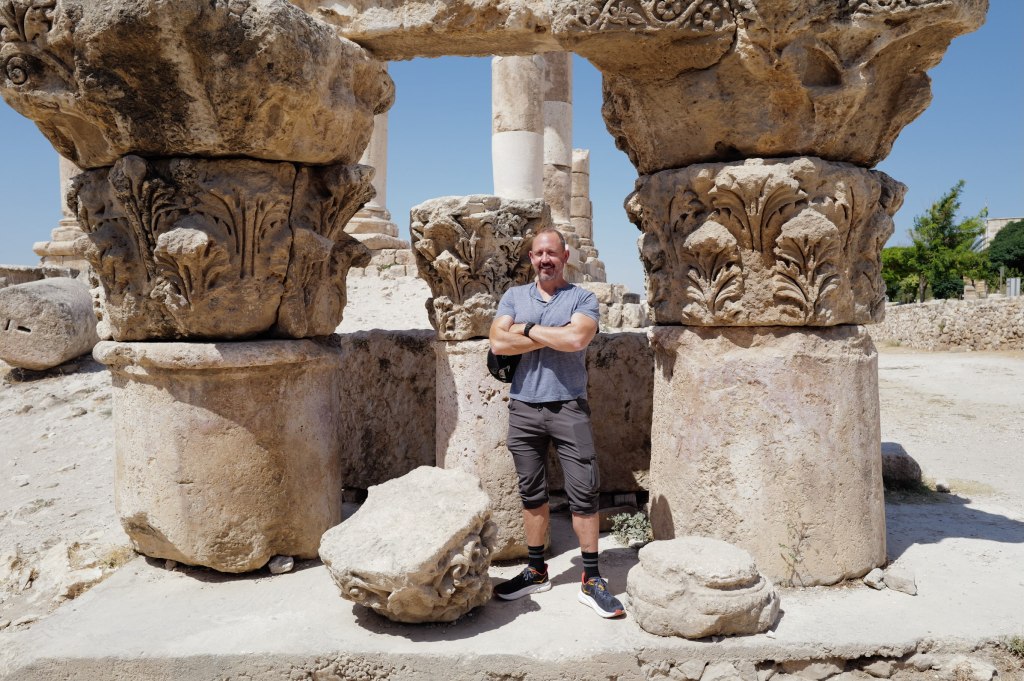
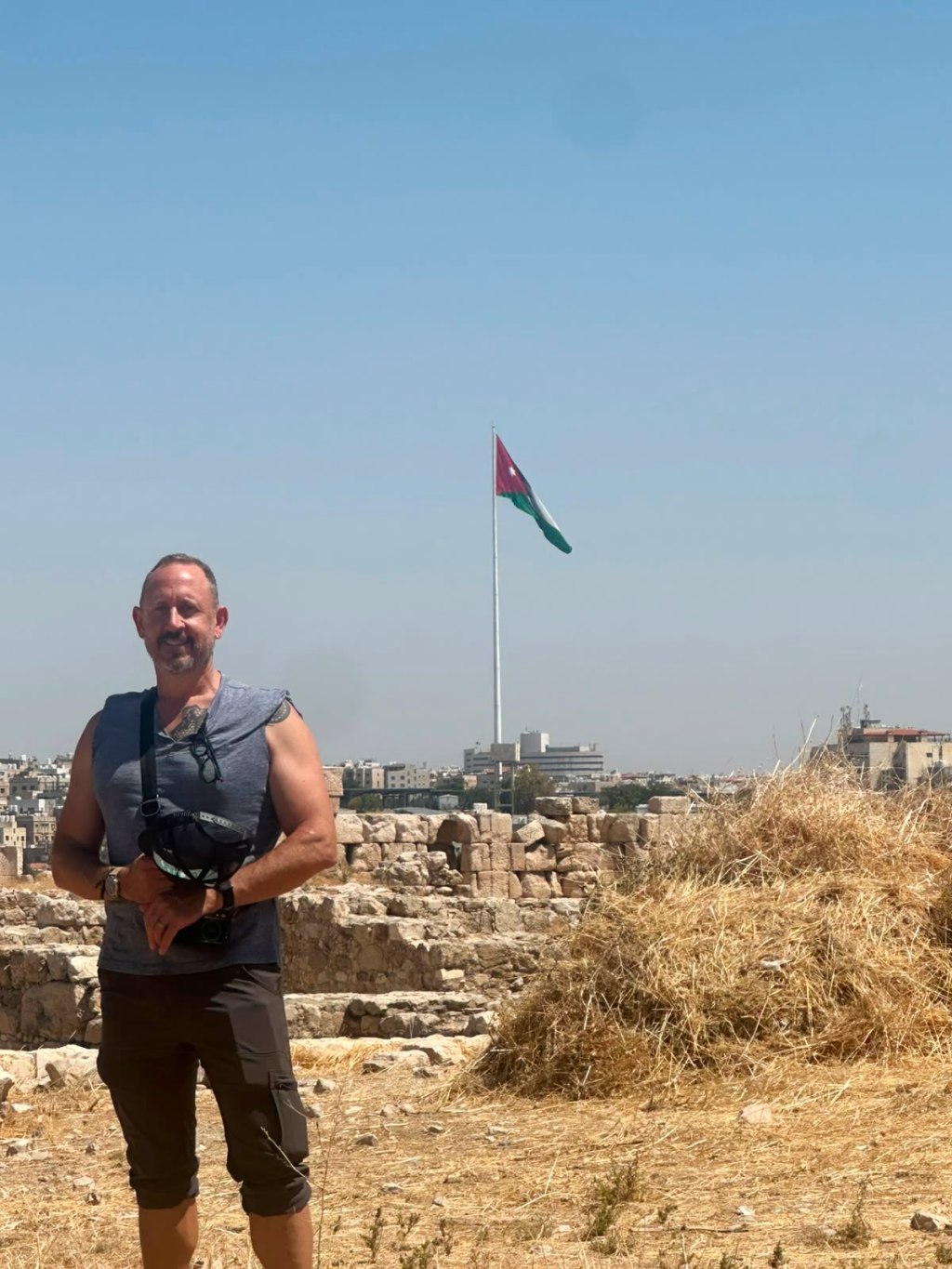
The hill has been occupied since the Neolithic. The Ammonites fortified it in the Iron Age and ran their kingdom from here. The Romans built the Temple of Hercules on top of it in the 160s CE, dated by an inscription to Marcus Aurelius and Lucius Verus. What’s left of the statue that stood inside is a marble hand and elbow. Scale them up and the figure was around thirteen meters tall.
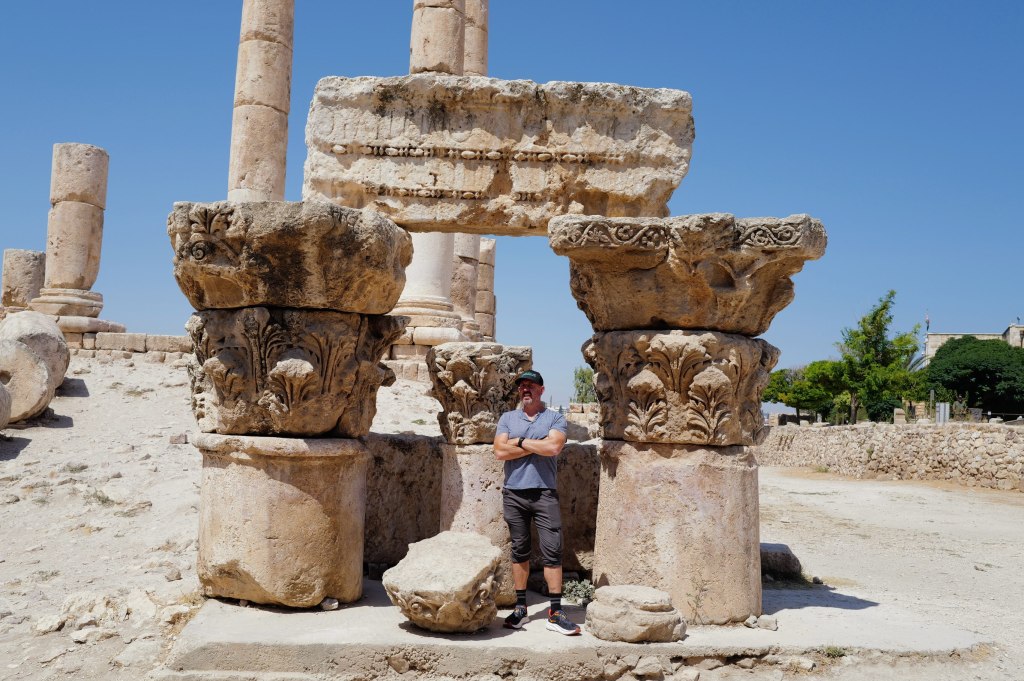
Byzantium put a church here in the 6th century, built out of recycled Roman columns. The Umayyads took over around 730 and built a palace complex on the north end: audience hall, cistern, bath, colonnaded street. The dome you see is a modern reconstruction funded by Spain. Archaeologists still argue about whether it was ever roofed that way.
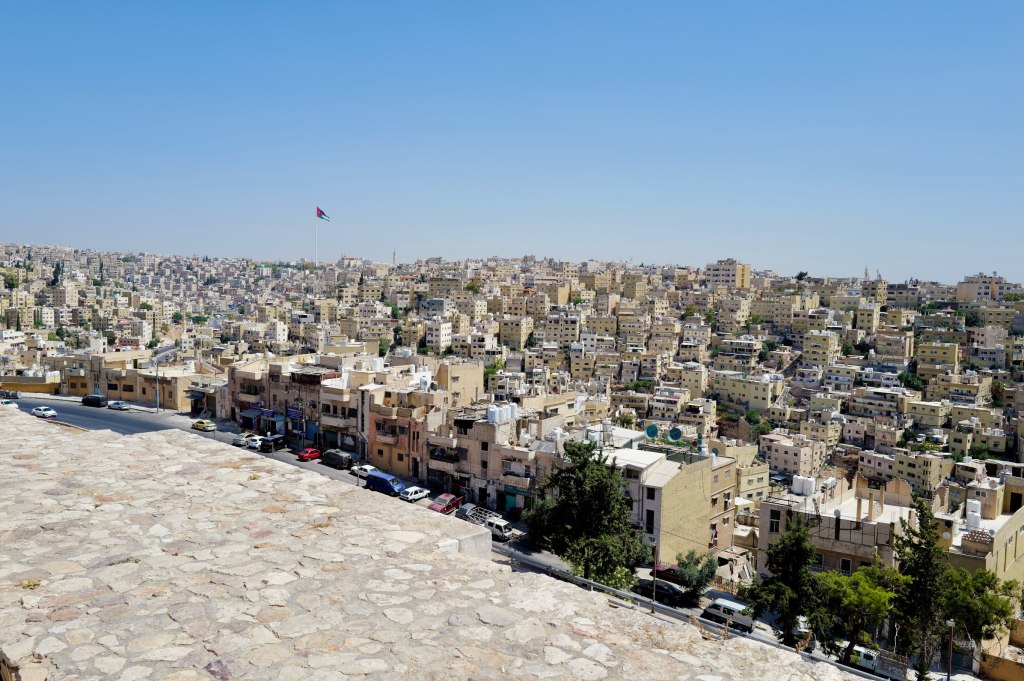
The palace had about twenty years. An earthquake hit in 749 and the Abbasids moved the capital to Baghdad in 762. After that the hill sat empty for a thousand years.
Six thousand years of occupation on one 850-meter ridge. You can walk the whole sequence in an hour.
King Abdullah I Mosque
Amman · 25 July
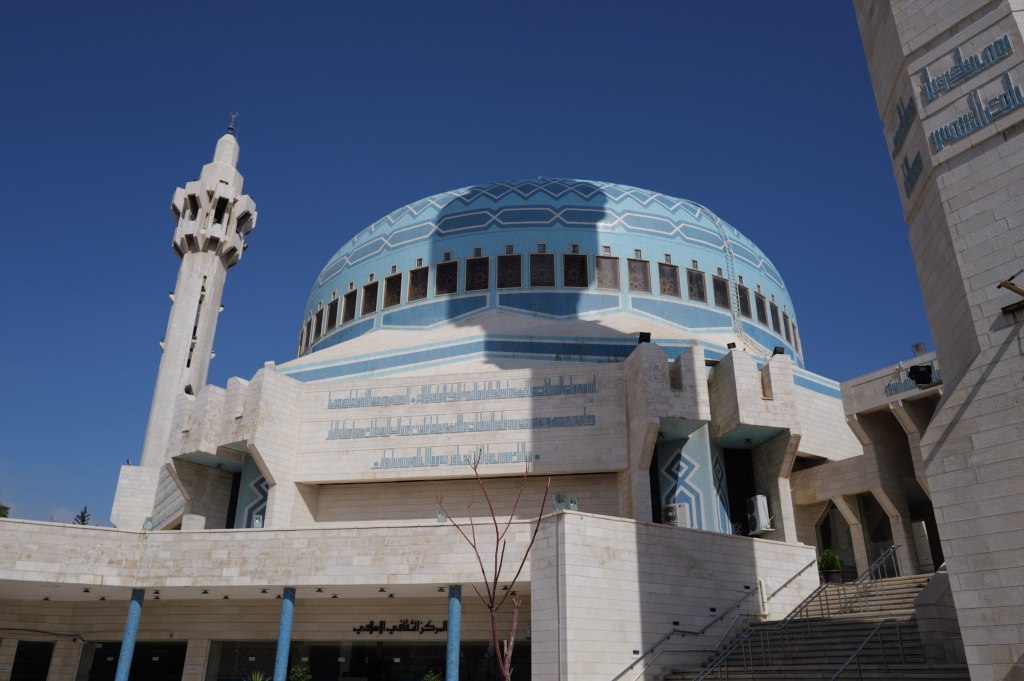
Built between 1982 and 1989, which makes it one of the newer things in a city full of Roman stone. King Hussein put it up as a memorial to his grandfather, Abdullah I, the man who chose Amman as his capital in 1921 and was assassinated at al-Aqsa in 1951 with Hussein standing beside him.
20 July 1951, Friday prayers. Abdullah walked into al-Aqsa in Jerusalem with his fifteen-year-old grandson next to him. A 21-year-old tailor’s apprentice named Mustafa Shukri Ashu stepped out from behind a door and shot him three times in the head and chest. He died there in the entrance.
Then the gunman fired at the boy. By Hussein’s own account the bullet hit a medal on his chest and glanced off — a decoration his grandfather had given him and insisted he wear that morning. Hussein went after the man instead of taking cover. The bodyguards shot the gunman dead on the spot.
The motive was the West Bank. Abdullah had annexed it, and enough people were convinced he was preparing a separate peace with Israel that a plot formed to stop him. Ten men were accused. Six were convicted.
Hussein was sixteen when he took the throne.
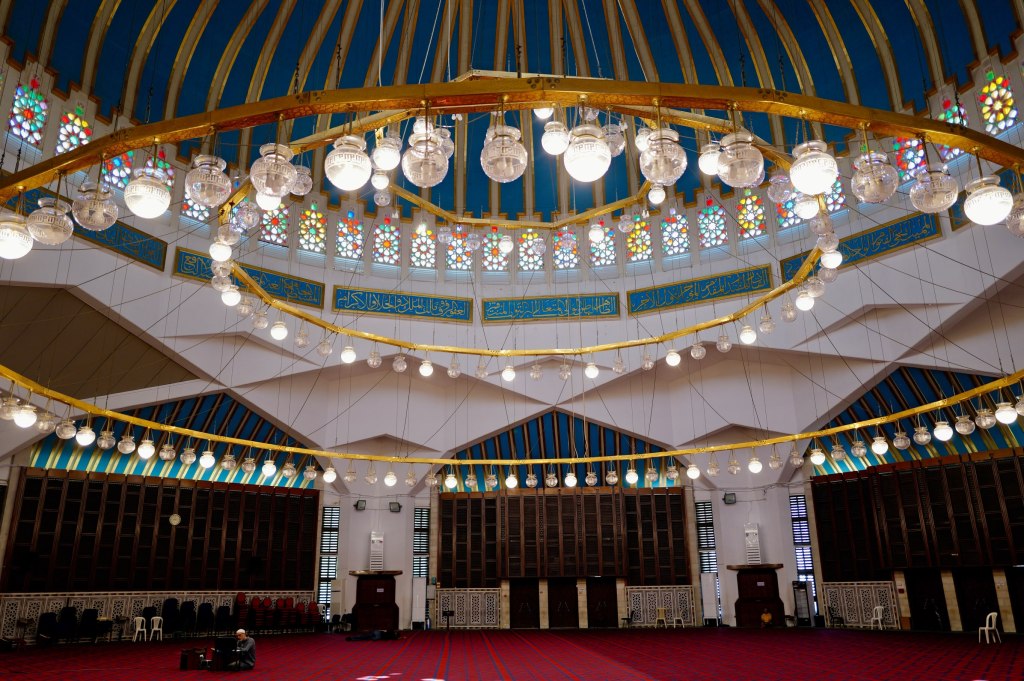
The dome is 35 meters across, mosaic in blue, and it carries its own weight with no interior columns holding it up. Nothing blocks the floor. Three thousand worshippers inside, another three thousand in the courtyard.
The building is a grandson’s monument to a grandfather he watched die. That’s worth knowing before you walk in.
Mount Nebo
Mount Nebo · 25 July
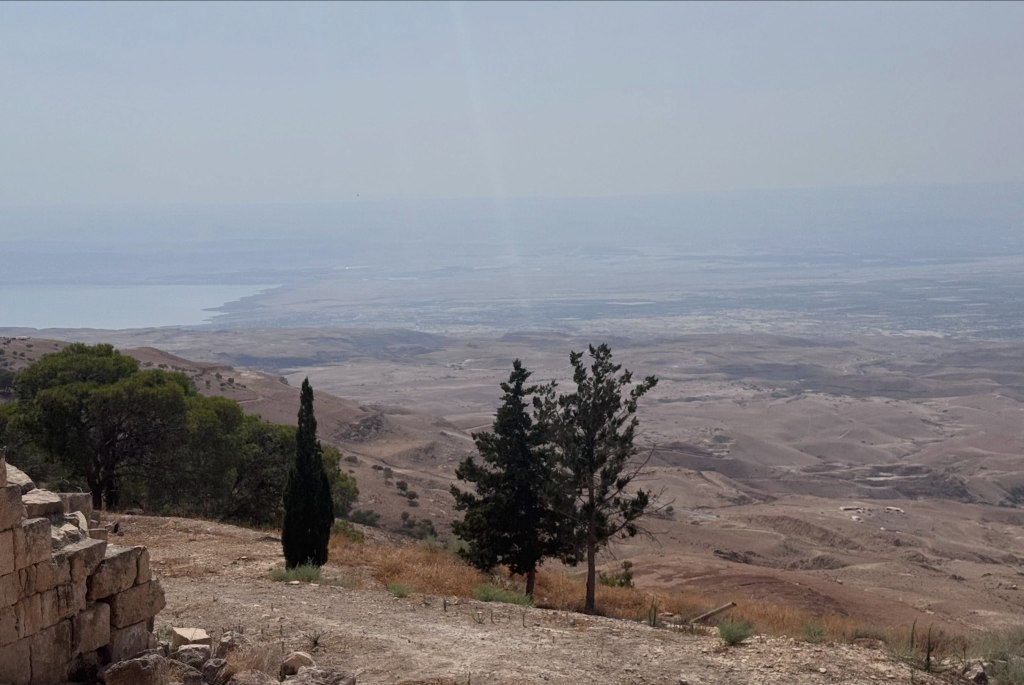
About 710 meters up, forty minutes southwest of Amman. On a clear day you can see the Jordan Valley, the Dead Sea, Jericho, and the hills of Jerusalem.
Deuteronomy 34 says Moses climbed here and God showed him the land — Gilead, Dan, Judah, the Negev, the valley down to Zoar. Then told him he wasn’t going in. He died here at 120. He was buried in a valley in Moab; nobody knows where.
Forty years of work. He was shown the country and not allowed to walk into it.
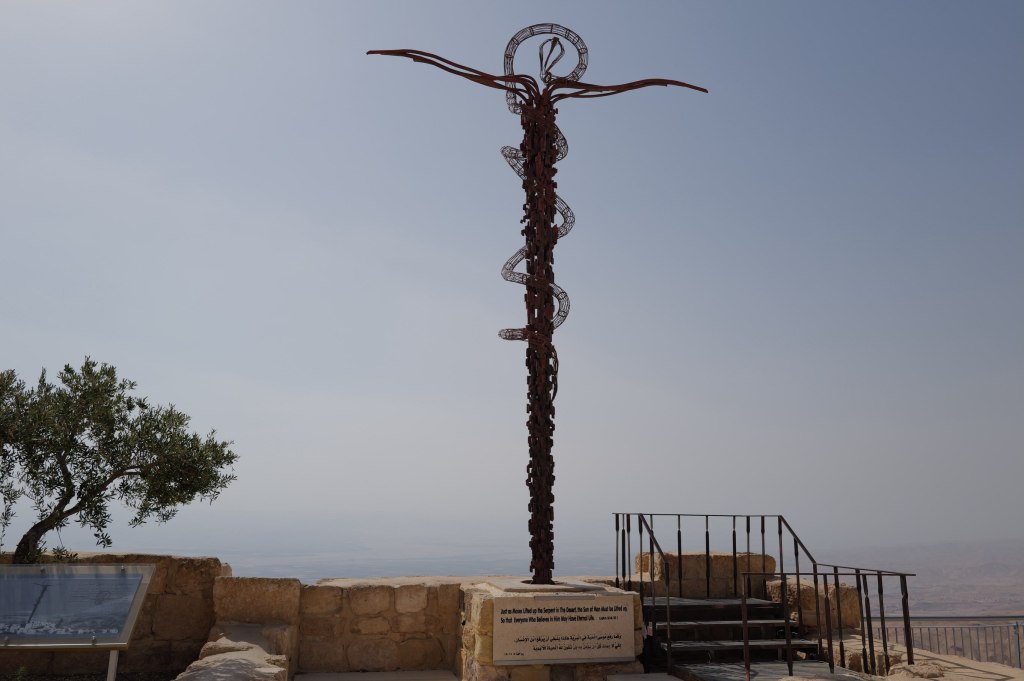
What’s actually here is Byzantine. A Spanish nun named Egeria came through around 384 CE on a pilgrimage across the Holy Land and wrote a letter home describing a church already standing on this summit, with monks living beside it who showed her the spot they said was Moses’ tomb. Her account is one of the earliest firsthand travel records from Christian late antiquity.
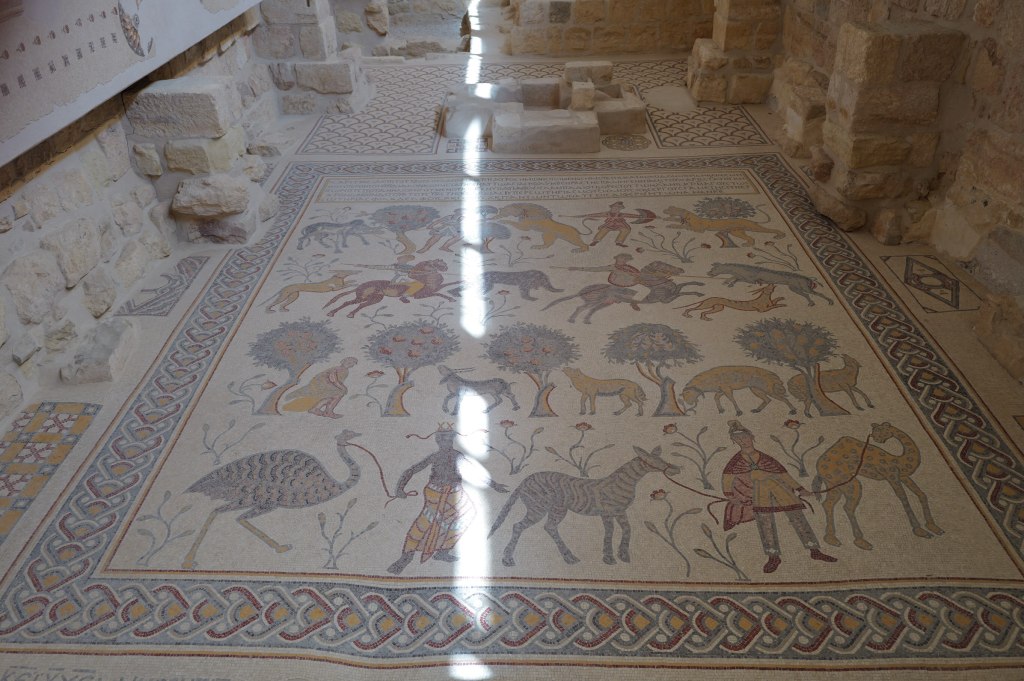
The mosaic floor was laid in 531 CE and the artists signed their names to it: Soelos, Kaiomos, Elias.
The site was abandoned around the 16th century and sat in ruins. The Franciscans bought it in 1932 and have been excavating ever since. Pope John Paul II came in 2000 and planted an olive tree.
2 Maccabees claims Jeremiah hid the Ark of the Covenant in a cave on this mountain and sealed the entrance. It’s a 2nd-century BCE text making a claim about events four hundred years earlier. Nobody has found anything.
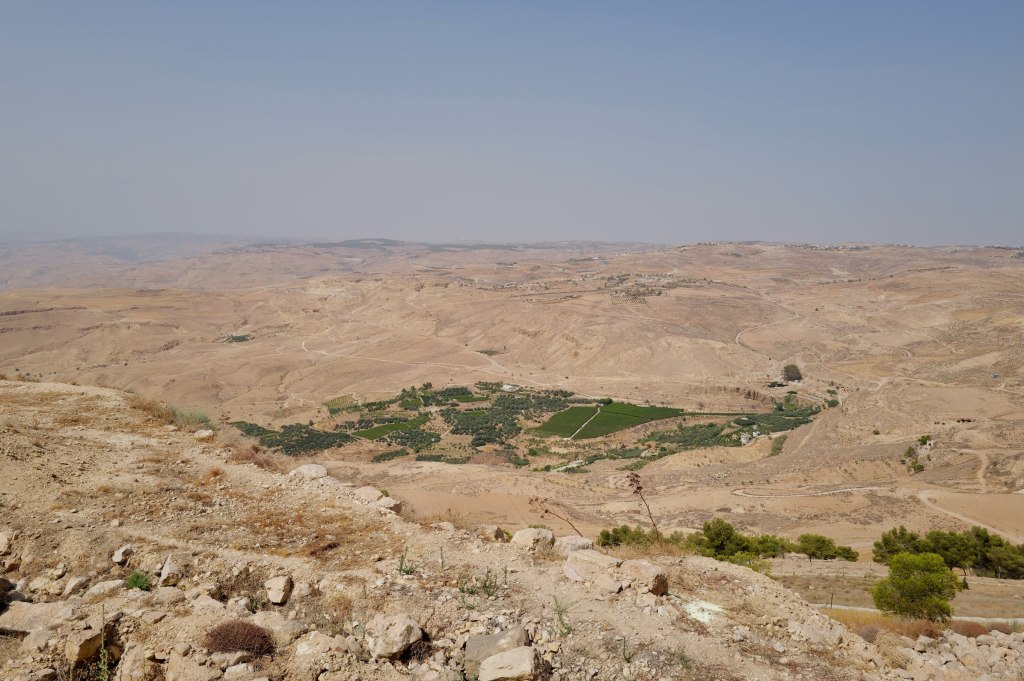
Martin Luther King Jr. used this mountain in the last speech he gave, in Memphis. He said he’d been to the mountaintop and seen the promised land, and that he might not get there with them.
He was killed the next day.
Madaba, and a map on the floor
Madaba · 25 July
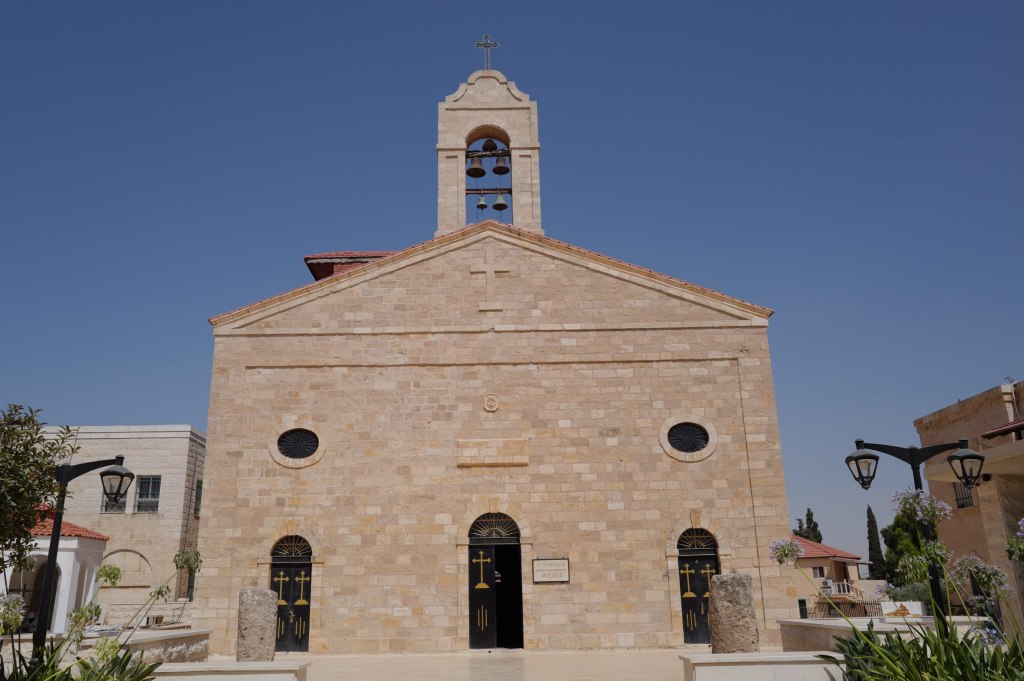
The building is from 1896. What’s on the floor is from the 6th century.
Madaba was empty for centuries until 1880, when Christian families from Karak moved here after a feud and the Ottomans gave them permission to settle, on the condition they build only on the footprints of old churches. Digging those foundations is how they found the map. The church went up over it in 1896.
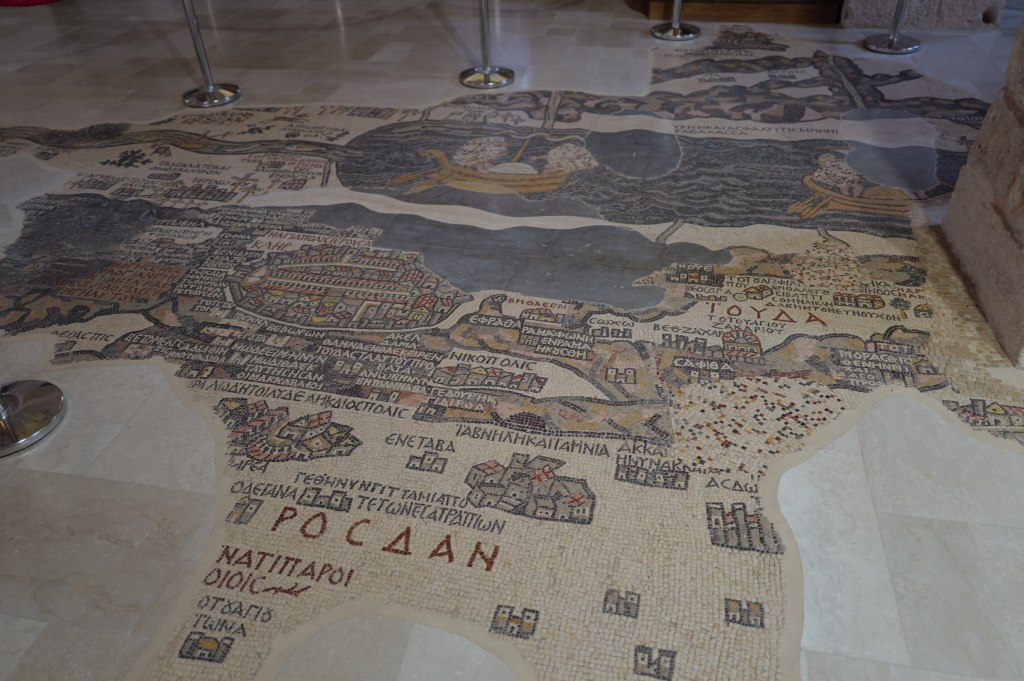
The Madaba Map was laid around 560 CE. It covered the floor at roughly 16 by 6 meters and took something like two million cut stone tesserae. About a quarter of it survives. It’s the oldest surviving map of the Holy Land and the oldest known depiction of Jerusalem, and it’s oriented east rather than north, so you read it standing at the western edge facing the altar and facing the actual land.
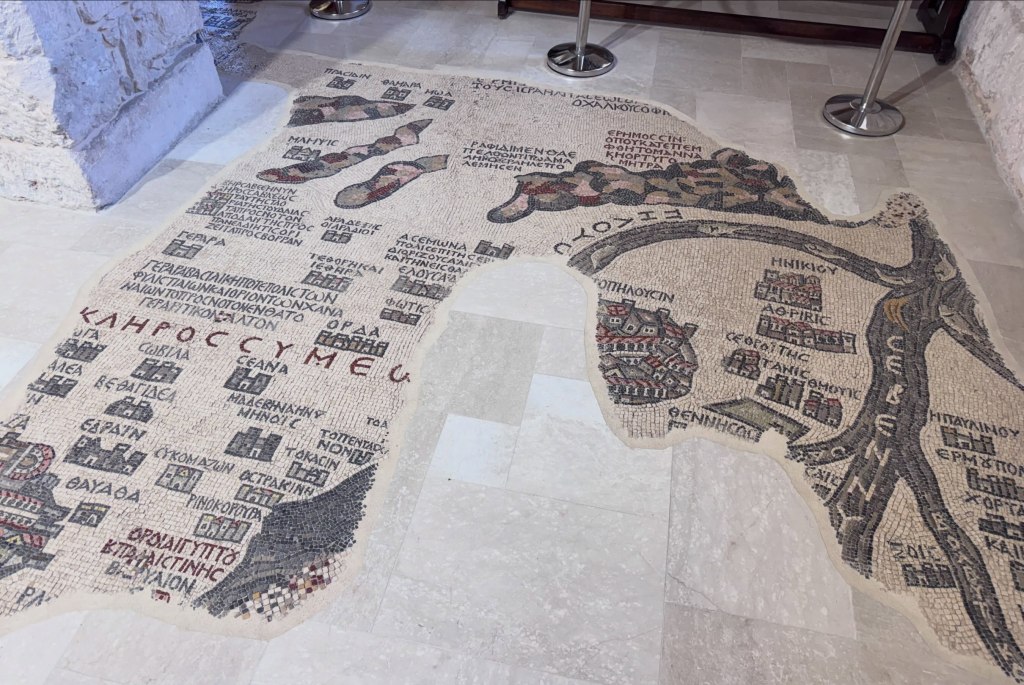
Christian pilgrims used the map to navigate to holy sites. The Jerusalem panel shows the city walls, the gates, the Church of the Holy Sepulchre, and the Cardo Maximus. For a long time that was just a picture. Then in the 1970s Israeli archaeologists excavating the Jewish Quarter used the map to predict where the Cardo should be, dug, and found it.
A 6th-century floor mosaic worked as a survey document fourteen hundred years later.
During the iconoclastic period, in the 8th century, church mosaics across Jordan and Palestine lost their people. Human and animal figures were considered idolatry. Someone lifted the tiles out one at a time and reset them as scrambled patterns, leaving the floor intact and walkable. The local Christian communities almost certainly did this to their own churches, during a period when both the Byzantine world and the Umayyad caliphate were arguing over whether religious images were idolatry.
Petra, before the Siq
Bab al-Siq · 26 July
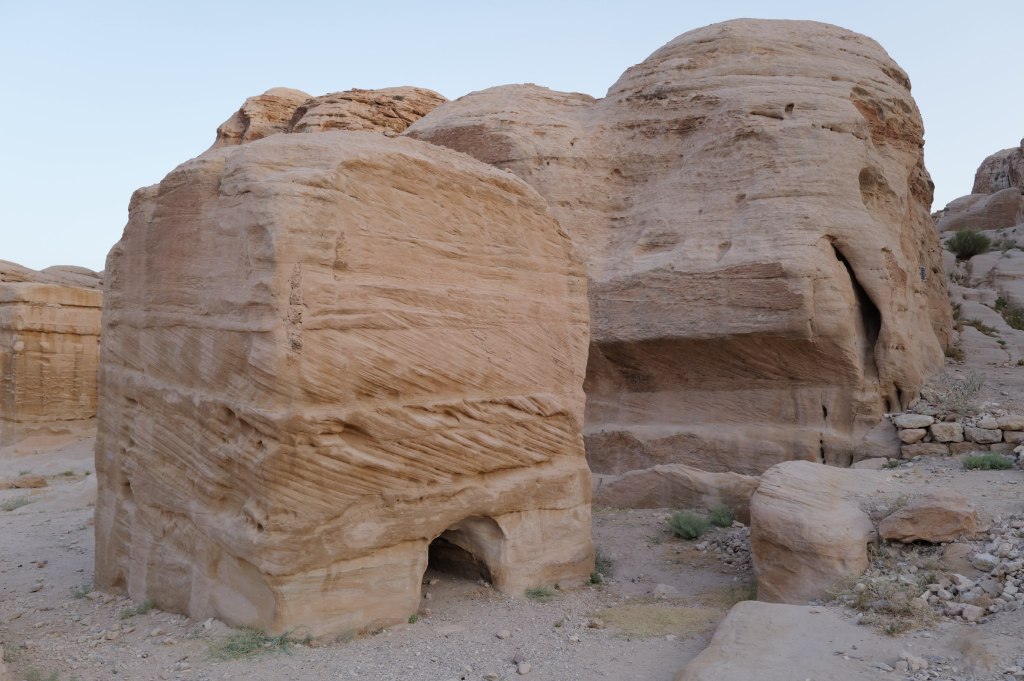
Carved by the Nabataeans, an Arab people who ran the incense trade out of southern Arabia. They started as nomads and became the richest middlemen in the region, taxing frankincense and myrrh moving north. By the 1st century BCE they had a kingdom, a king, and this. The camel is the reason it exists.
All of this comes before the Siq. Most people walk past it.
The freestanding cubes are djinn blocks. Solid stone, cut out of the bedrock and left standing. About 26 around Petra, most along this stretch. The name is Bedouin, houses of spirits, and it stuck because nobody knows what the Nabataeans called them. Some have burial chambers inside. Some sit near water channels. Function is still argued.
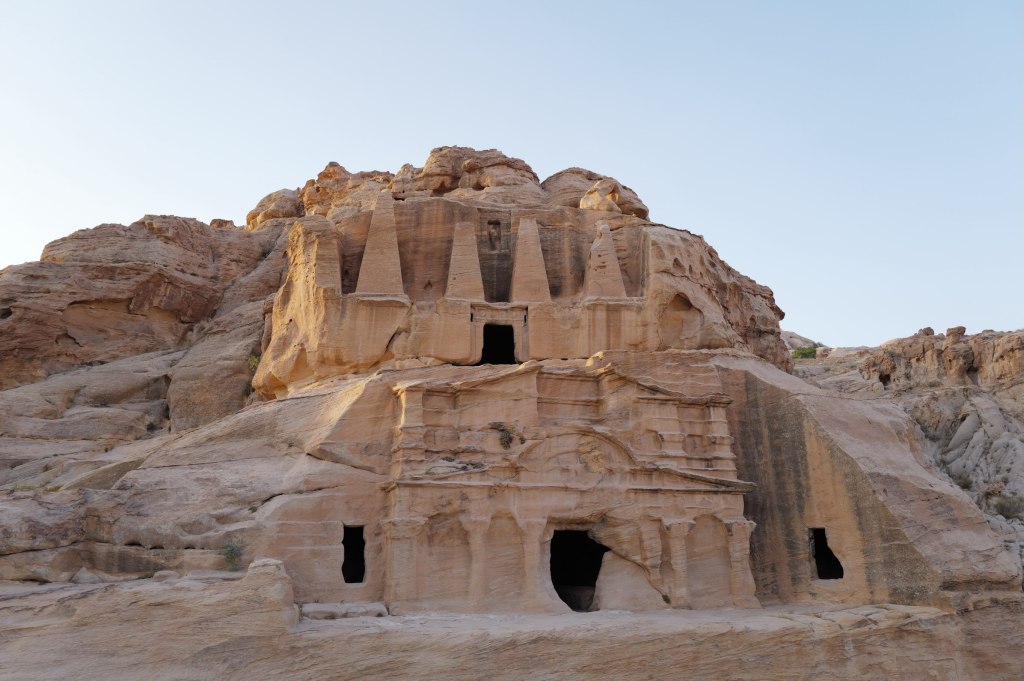
The two-level facade is the Obelisk Tomb over the Bab al-Siq Triclinium, carved at different times. The four obelisks are nefesh, grave markers standing in for the soul of the dead. Five markers, five people. The form is Egyptian, which tells you how far this trade network reached. The lower level is a dining hall with benches on three sides. Families came back on set days to eat with their dead.
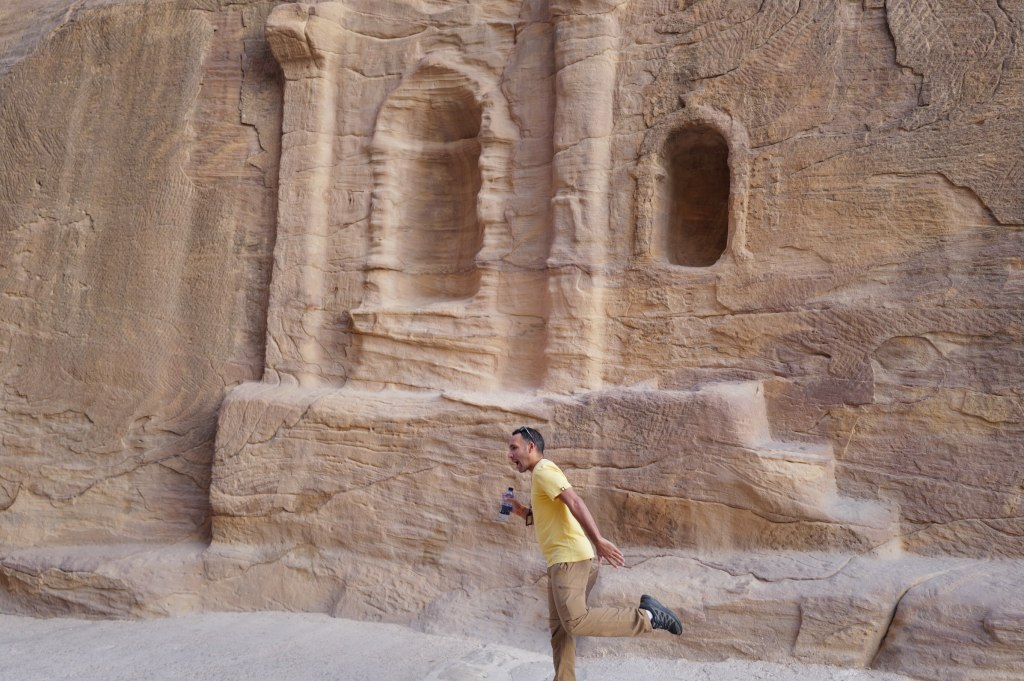
The last wall has niches at different sizes and standards of carving, one with a full temple front, others rough. People paying for what they could afford. The Greek inscription is later, after Rome annexed the kingdom in 106 CE. The language changed. People kept leaving offerings in the same spots.
Dushara
Petra · 26 July
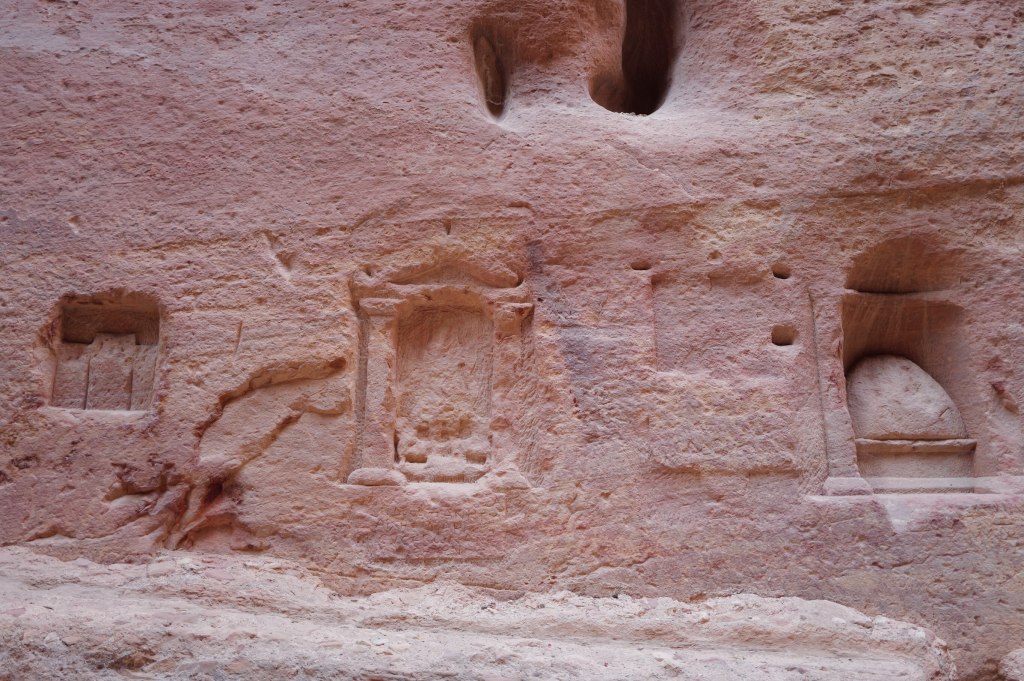
The chief god of the Nabataeans. The name means “he of Shara,” the mountain range that surrounds Petra. Not an import. A god of this specific ground.
He has no face. The Nabataeans carved him as a plain rectangular block, and that wasn’t a shortcut or a primitive stage they hadn’t grown out of. It was the theology. The block is called a betyl, from beth el, house of god. The god isn’t depicted in it. He’s understood to be present in it. Nabataean carvers were capable of anything the Hellenistic world could do, and you can see it on the Treasury facade. They chose the block anyway.
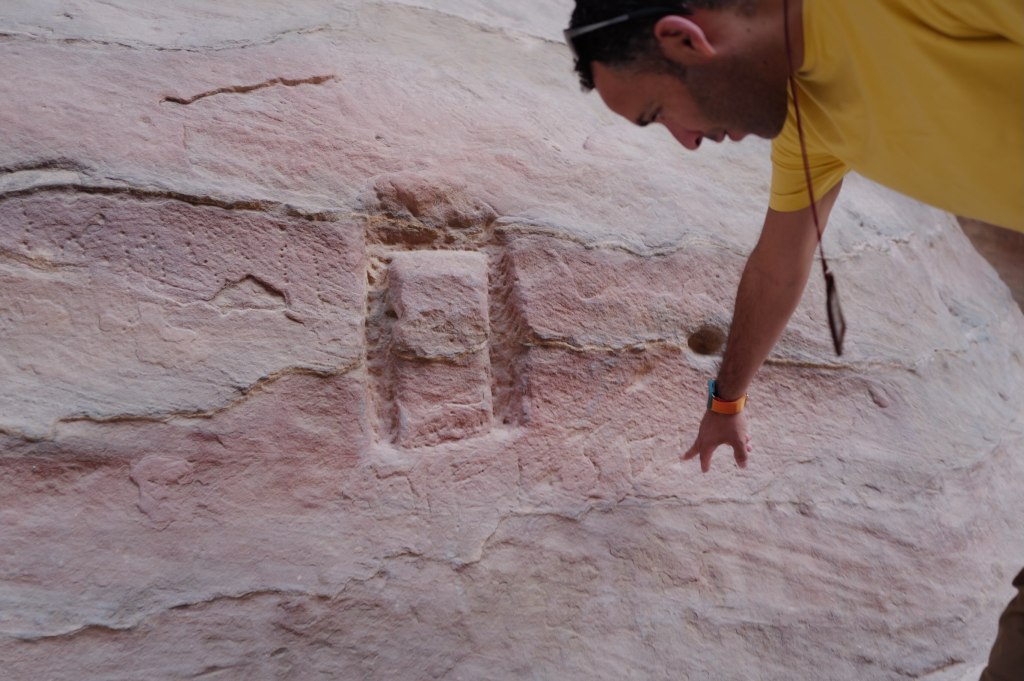
There are hundreds of these cut into the walls around Petra. In the Siq they sit at eye level and at the height of someone on a camel, so travelers made offerings walking in. The entrance to the city was also a mile of shrines. You were passing through a religious space before you got anywhere near the buildings.
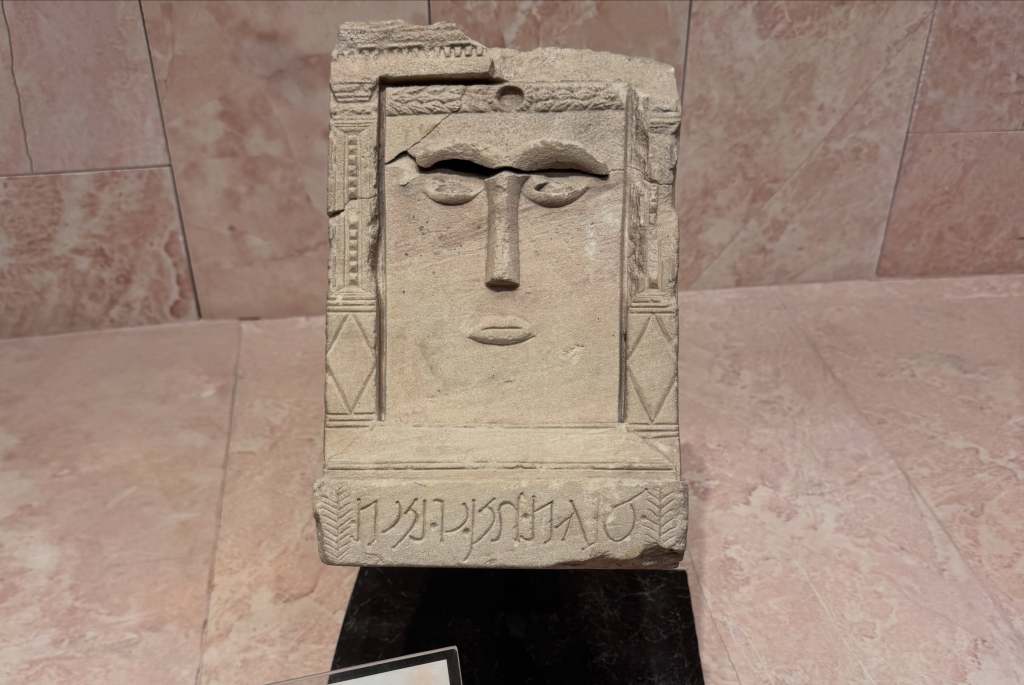
Some betyls have two simple eyes and a nose. Those are usually read as al-Uzza, the goddess paired with him. The plain ones are Dushara.
Ancient writers said the original was an unworked black stone at Petra, taken as it was found. The move from raw stone to cut rectangle is the whole argument in one object: a god you can house but not picture.
He didn’t disappear. Dushara worship continued under Rome, showed up on Roman provincial coinage, and the black stone tradition was still alive in pre-Islamic Arabia when Islam arrived.
The Siq
Petra · 26 July
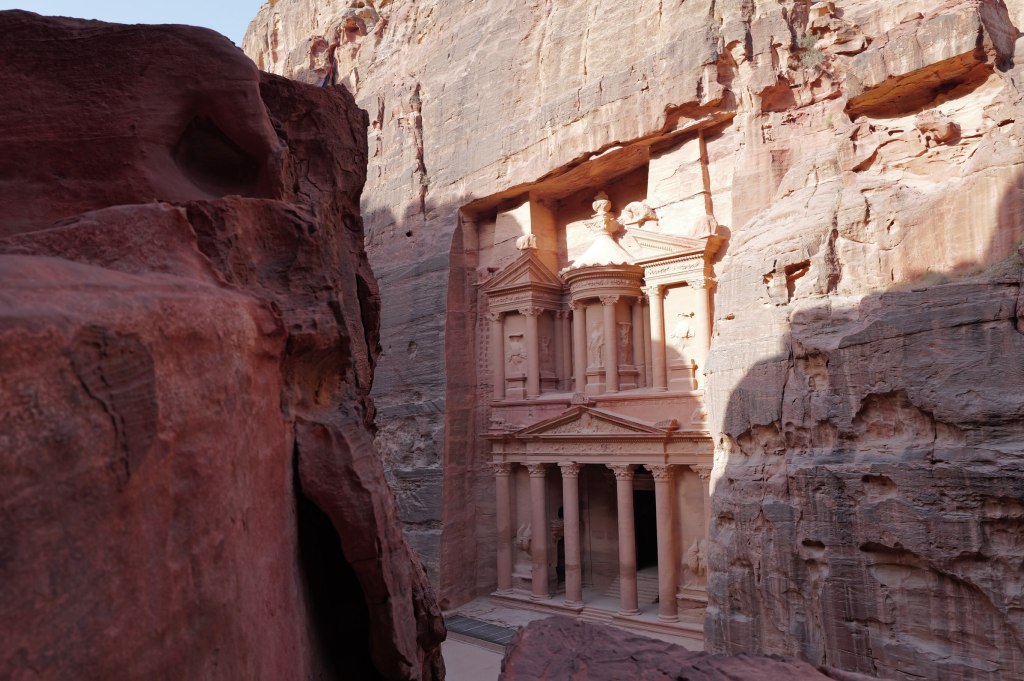
The Siq is the way in. A natural fault in the sandstone, about 1.2 kilometers long, walls up to 180 meters, narrow enough in places to touch both sides.
Look down at the channels cut into the rock at knee height. That’s the water system. Petra sits in a desert that gets under 150mm of rain a year, and the Nabataeans built dams, cisterns, and ceramic pipe networks that supported tens of thousands of people. They controlled flash floods and stored what fell.
The city existed because they solved water.
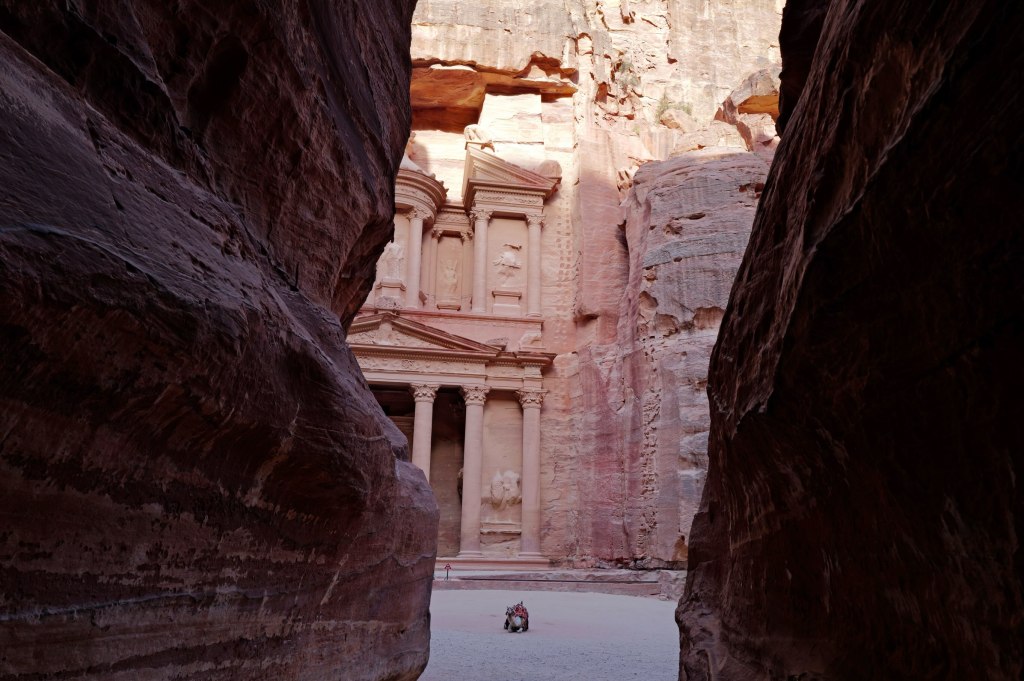
Most people stop at the Treasury. The site is 264 square kilometers. Past it there’s a theatre cut into rock seating around 4,000, a colonnaded street, temples, hundreds of tombs, and 800 steps up to the Monastery.
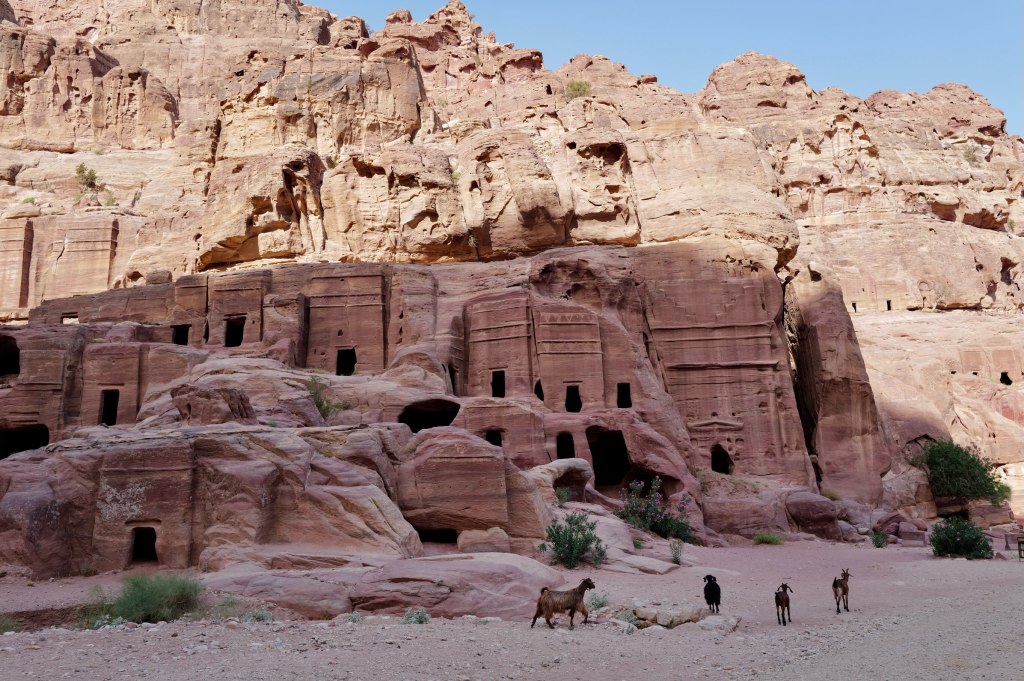
Rome annexed the kingdom in 106 CE. Trade moved to sea routes, earthquakes hit in 363 and 551, and the city declined. After the Crusades it dropped out of European knowledge for six hundred years. Bedouin families lived among the tombs the whole time.
In 1812 a Swiss traveler named Johann Ludwig Burckhardt got in by speaking Arabic under a false name and telling a guide he’d vowed to sacrifice a goat at a shrine nearby. He walked through the Siq, memorized what he could without being seen taking notes, and published it.
Same man who found Amman in ruins that year.
The Treasury
Petra · 26 July
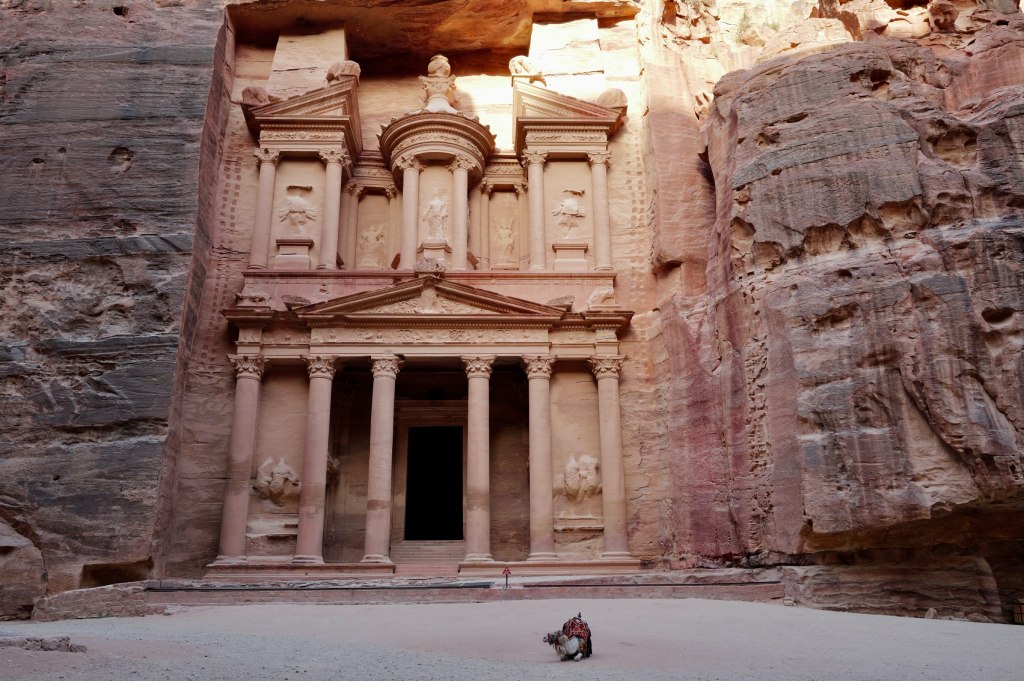
Al-Khazneh. Around 39 meters tall, carved top down out of a single rock face, probably for King Aretas IV around the turn of the era.
It’s a tomb. The name comes from a Bedouin story that a pharaoh hid gold in the urn at the top, and people shot at it for generations trying to break it open. The bullet damage is still there. The urn is solid stone.
In 2003 archaeologists found tombs underneath it. In 2024 they excavated further and found twelve burials with grave goods. The building had been studied for two centuries and it was still holding people nobody knew about.
The Monastery
Ad-Deir · 26 July
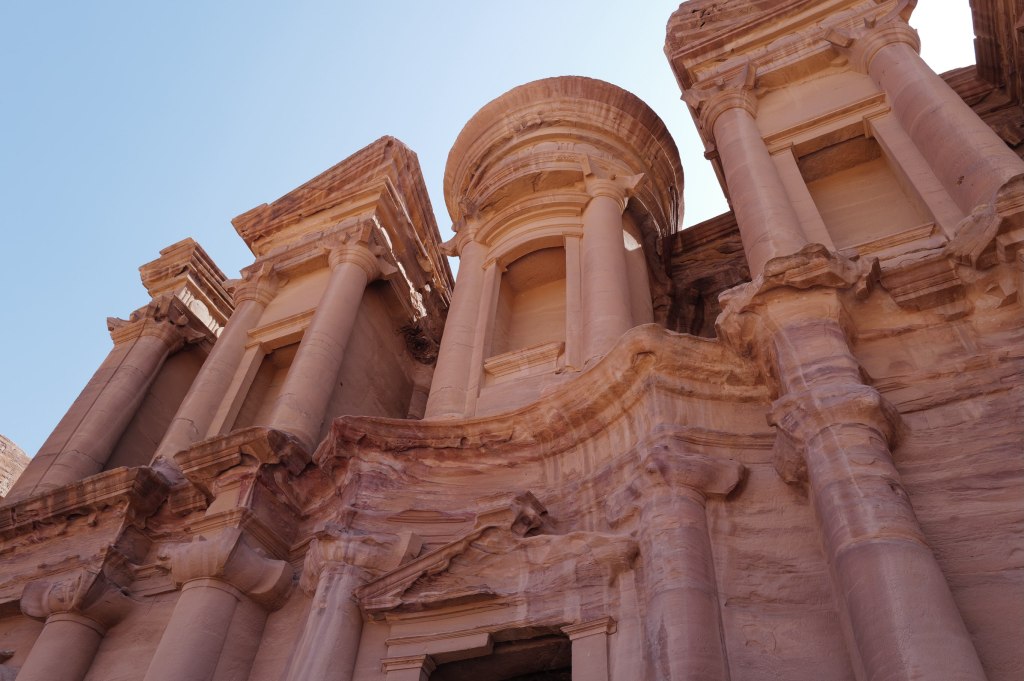
Ad-Deir. 800 steps cut into rock to get here, and most people never make the climb.
It’s bigger than the Treasury. About 47 meters wide and 48 tall, with an eight-meter urn on top. The doorway alone is eight meters. Stand in it and you’re not quite half its height.
The facade is the same design language as the Treasury but stripped down. No figures, no relief carving, just the shapes: broken pediment, central round tholos, columns, urn. It’s later, probably mid-1st century CE, likely tied to Obodas I, who was deified after his death. The interior is a single empty chamber with a bench running around it and an altar niche in the back wall. That’s a biclinium, a room for ritual meals. People came up here to eat in the presence of a god.
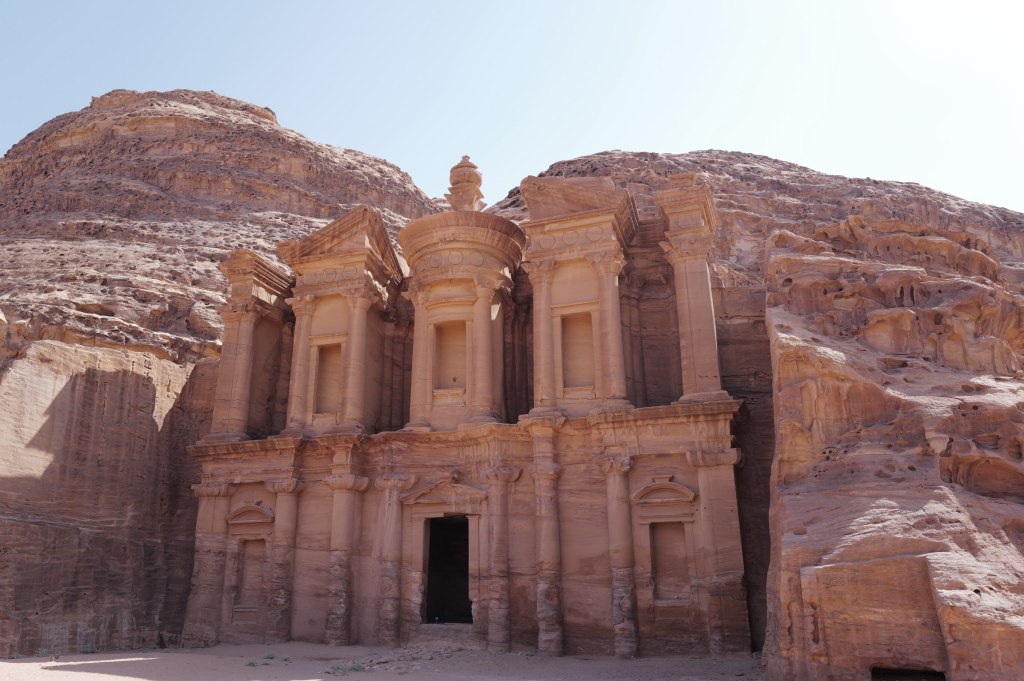
It was never a monastery. The name comes from Christian crosses carved into the interior walls, cut by Byzantine monks who used the chamber centuries later. The Bedouin called it ad-Deir and that stuck.
The climb takes about 45 minutes. Go early. There’s a tea stall at the top facing the facade.
The people who never left
Petra · 26 July
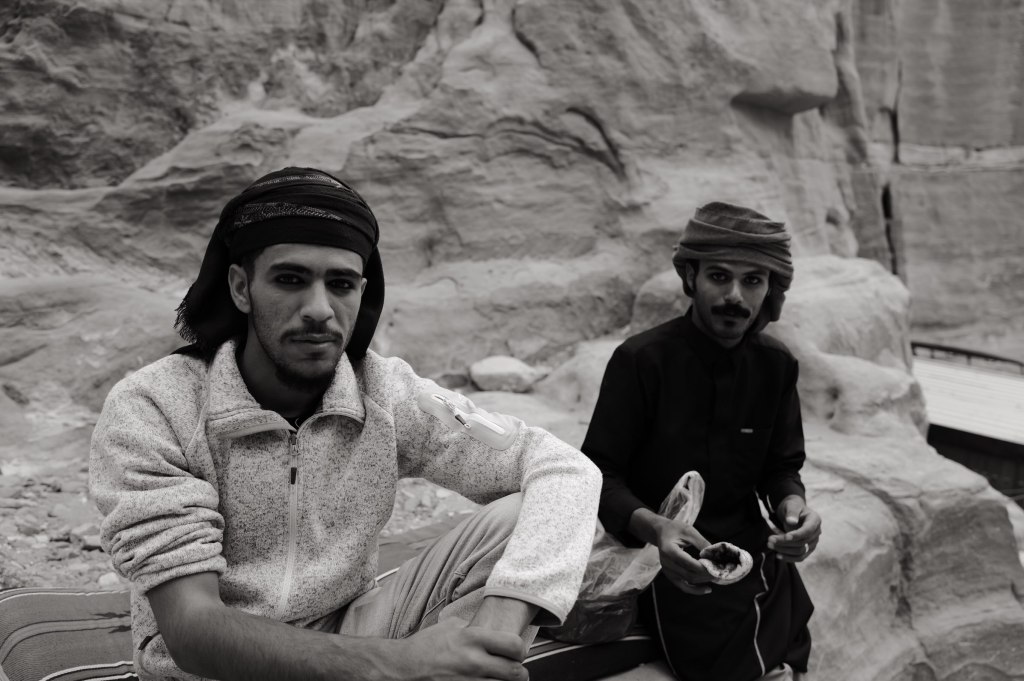
Petra was never abandoned. When Burckhardt walked in in 1812 and wrote it up for Europe, Bedouin families were living in the tombs and had been for generations. The Bdoul are the main tribe here. They say they descend from the Nabataeans. That’s contested and probably unprovable, but they were in the caves for centuries and nobody disputes that part.
They lived in the carved chambers. Kept goats. Ran water through the old Nabataean channels. Buried their dead in the same rock.
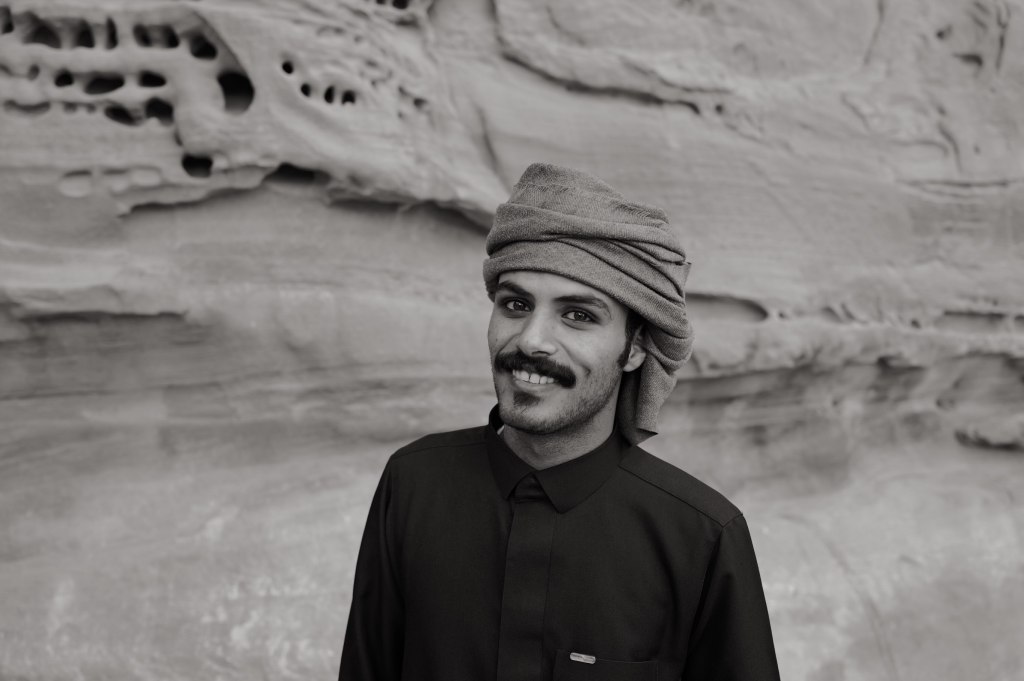
In 1985 UNESCO listed Petra as a World Heritage Site, and living in it stopped being compatible with preserving it. The government built a village at Umm Sayhoun, above the site, and moved most of the Bdoul there in the 1980s. Concrete houses, electricity, a school. Some families went. Some resisted. A few stayed in the caves and are still there.
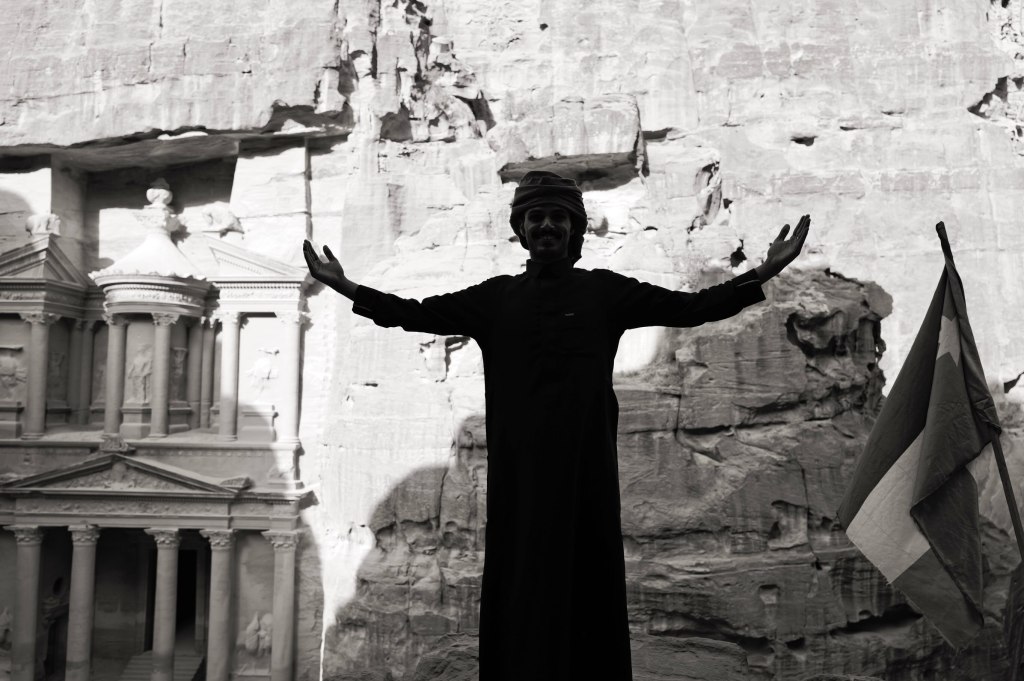
The work here is Bedouin work. The guides, the camel and donkey handlers, the tea stalls, the men who take you up the 800 steps to the Monastery. Most people you talk to inside Petra live at Umm Sayhoun and come down every morning to the place their grandparents lived in.
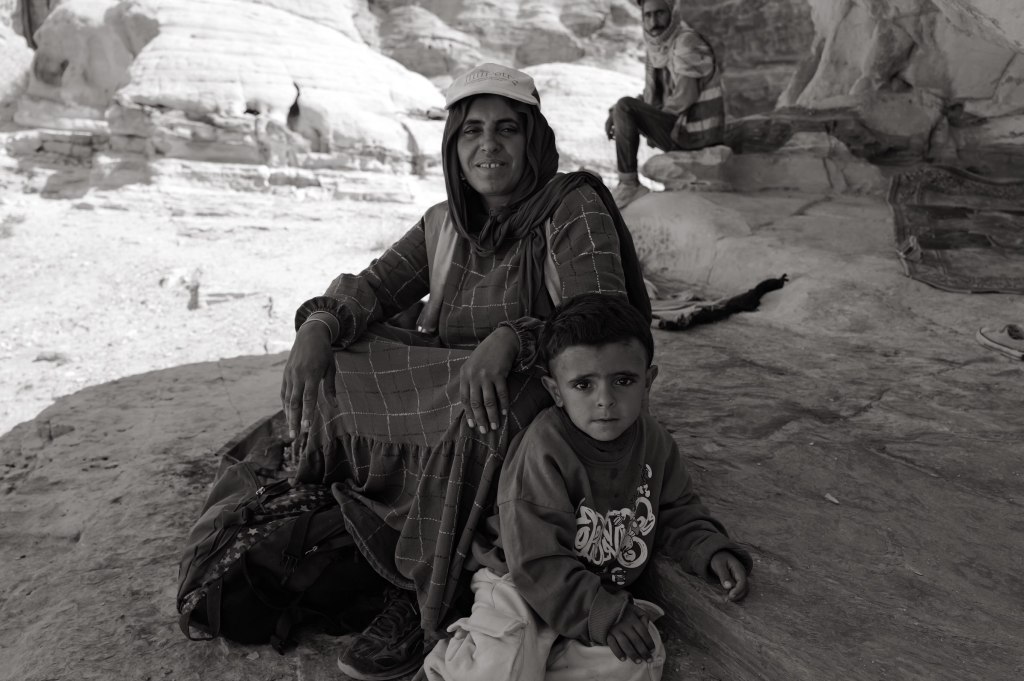
Two generations ago this was home. Now it’s a job at a monument.
That trade wasn’t optional and it wasn’t free.
Little Petra
Siq al-Barid · 26 July
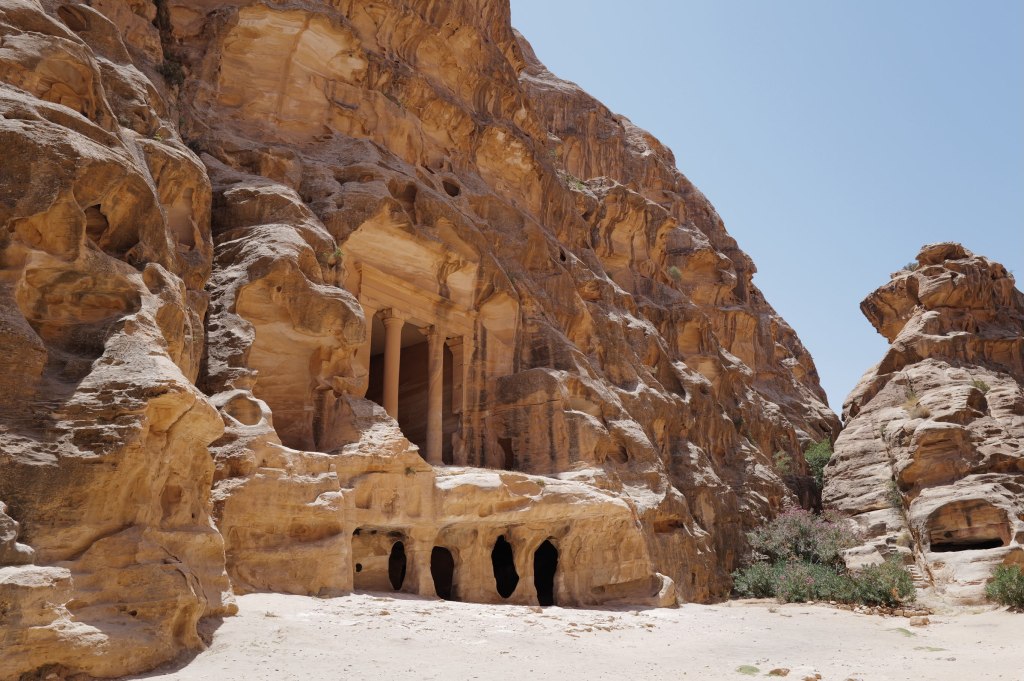
Siq al-Barid, which means the cold canyon. It sits about 8 kilometers north of Petra and takes maybe an hour to walk. Almost nobody goes.
Same builders, same rock, different purpose. Petra was the capital. This was a caravan stop. Traders coming down from the north with incense stopped here before entering the main city, and everything cut into these walls is built around that: stables for camels, cisterns, and a series of triclinia, dining halls with benches on three sides. It’s a service town. The Nabataeans fed and housed the trade that made them rich, and this is where it happened.
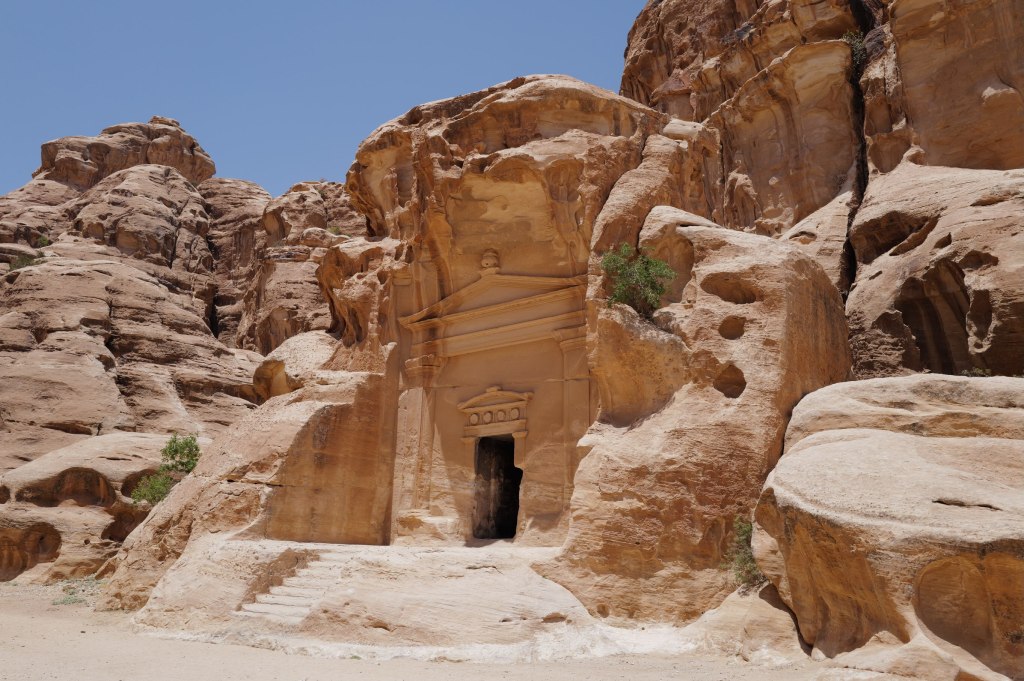
The canyon is only about 450 meters long and narrow enough in places that direct sun never reaches the floor, which is where the name comes from. Staircases run up both walls to chambers on higher levels.
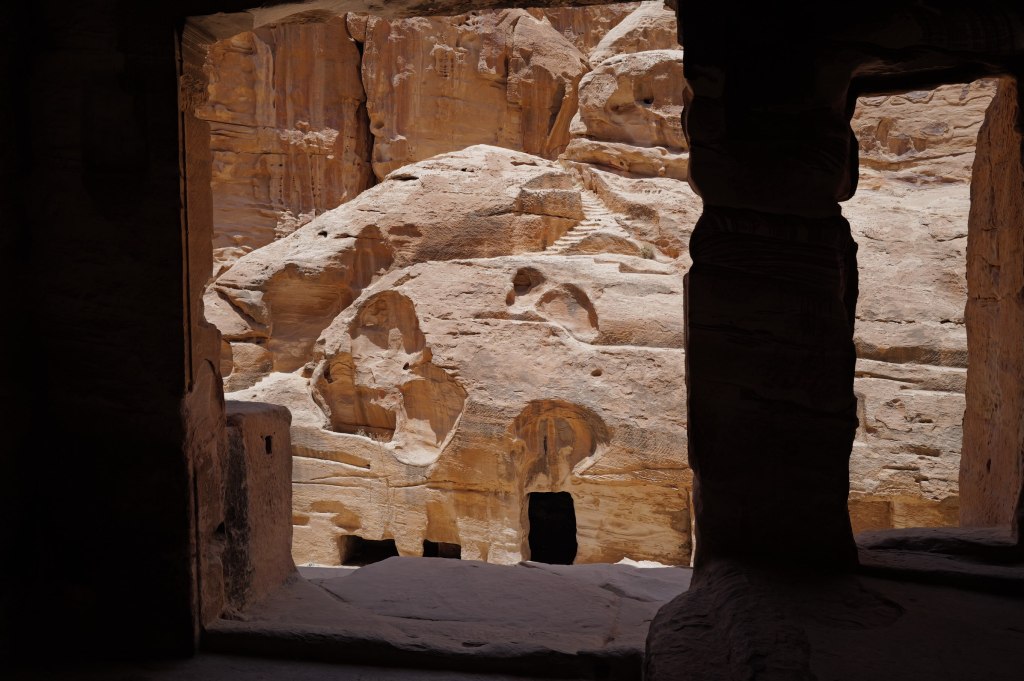
The thing to find is the Painted House. It’s up a set of stairs on the right side, a small biclinium with a painted plaster ceiling still on it. Grape vines, birds, winged cupids picking fruit. It’s one of the only surviving Nabataean interior paintings anywhere. Centuries of soot from cooking fires nearly buried it. A conservation team cleaned it in the 2010s and what came out is much brighter than anyone expected.
There’s also Neolithic material next door at Beidha, a settlement from around 7000 BCE. That’s about 7,000 years older than the Nabataeans and one of the earliest farming villages in the region.
Go in the afternoon after Petra. It’s free.
The Dead Sea
Dead Sea · 26 July
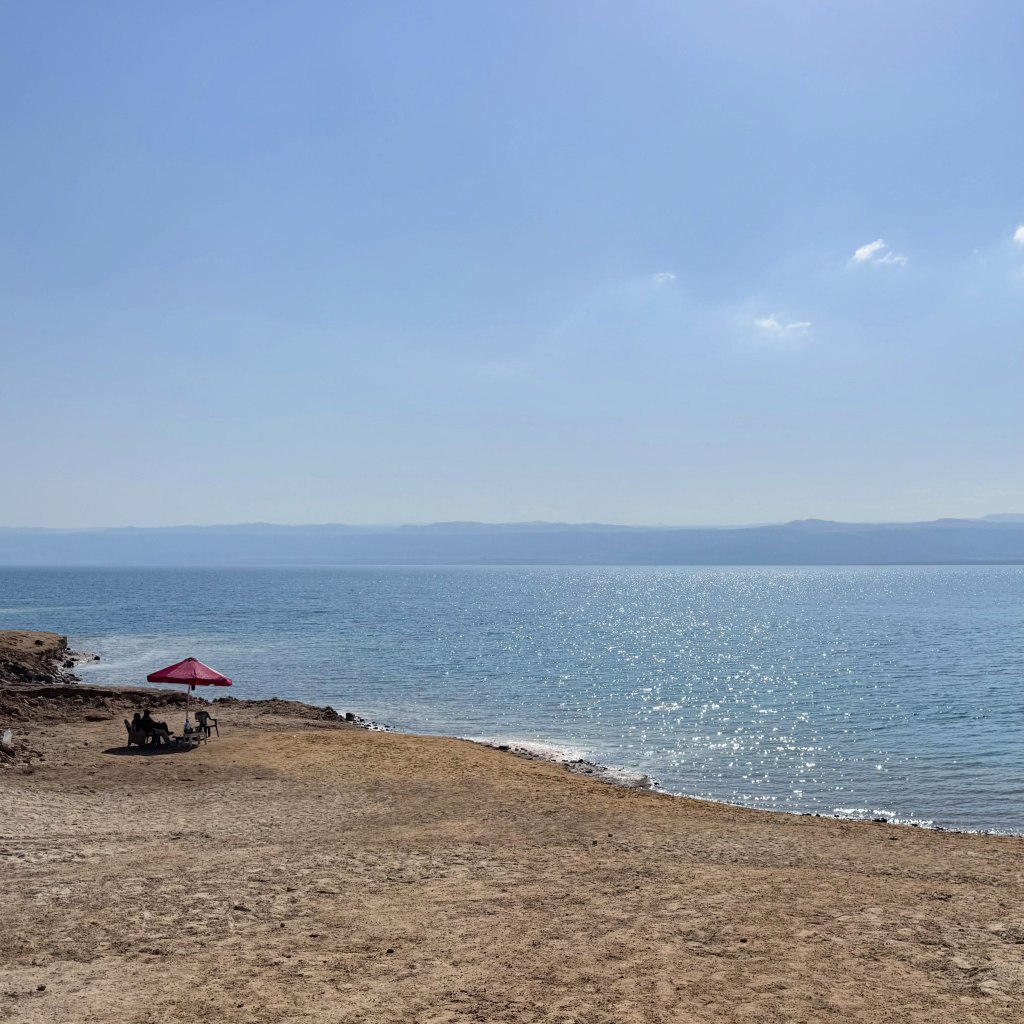
The lowest point on land. About 430 meters below sea level and dropping roughly a meter a year.
Around 34 percent salt, close to ten times the ocean. Nothing lives in it. You don’t swim, you float, and the water is dense with magnesium and bromide, so it comes out slick and oily. Closest thing I can compare it to is baby oil. Don’t shave first. Don’t put your face in.
It’s shrinking because almost nothing flows in anymore. The Jordan River was the main source. Israel, Jordan, and Syria now divert something like 90 percent of that water for farming and drinking, so the river arrives at a trickle. At the southern end, Israeli and Jordanian mineral companies pump the water into evaporation ponds to pull out potash and bromine, which speeds up the loss. Meanwhile the desert evaporates about 1.5 meters a year off the surface. More goes out than comes in. The surface has dropped about 35 meters since 1960.
The collapse is the visible part. As the sea retreats, fresh groundwater moves into the exposed ground and dissolves buried salt layers, leaving cavities. The surface caves in. There are more than 6,000 sinkholes along the shoreline now. They’ve taken roads, date farms, and resorts.
The bigger version of this lake was Lake Lisan, which filled this valley during the last ice age from roughly 70,000 to 15,000 years ago. It ran about 200 kilometers, from the Sea of Galilee in the north down past the current southern shore. As the climate warmed it evaporated and split into what we have now, the Galilee and the Dead Sea, connected by the Jordan River. The white marl terraces you see stepping up the hillsides are old shorelines. Every line is a level this water used to hold.
Best guess is it stabilizes at a smaller size rather than disappearing. Another century or so to get there.
Lot’s Cave
Safi · 26 July
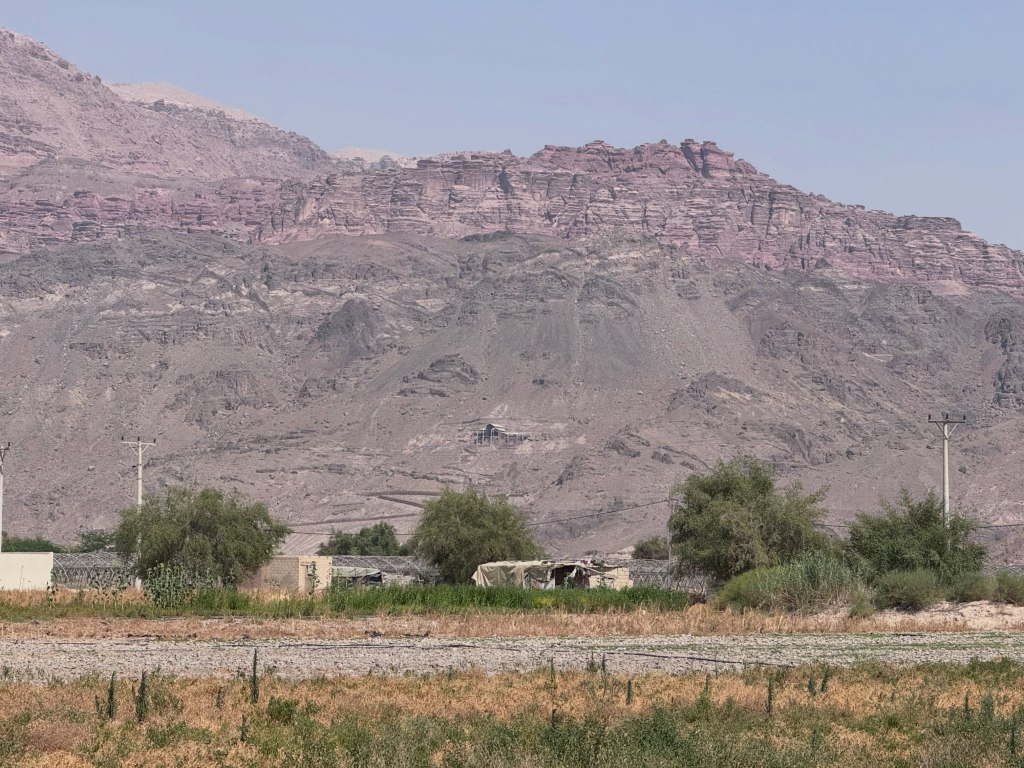
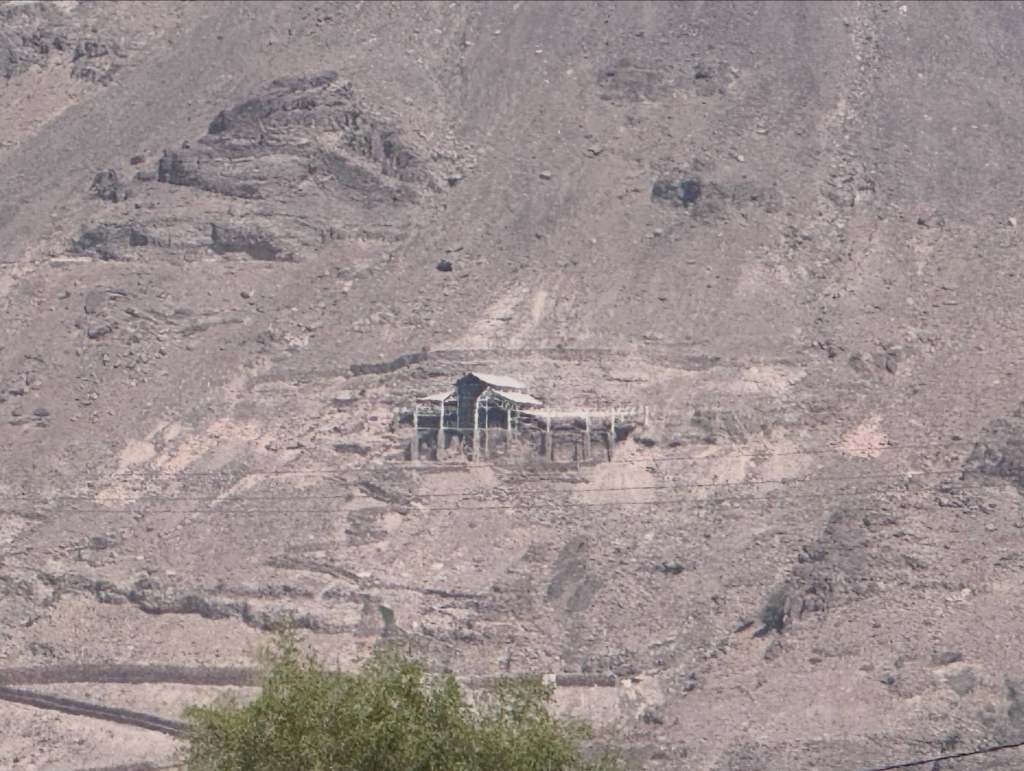
Above the southeastern shore of the Dead Sea, near Safi. A cave in the hillside with the ruins of a Byzantine monastery built around it and a mosaic floor still on the ground.
The story is Genesis 19. Two angels come to Sodom and Lot takes them in. The men of the city surround the house and demand them. Lot offers his two virgin daughters instead, which the text reports without comment. The angels blind the crowd and tell Lot to run. Fire falls on Sodom and Gomorrah. His wife looks back and becomes a pillar of salt. Lot and the two daughters end up in a cave in the hills above the plain.
Then the part people skip. The daughters believe every man on earth is dead and there’s no one left to father children. So they get their father drunk on consecutive nights and each sleeps with him. Both become pregnant. Their sons are Moab and Ben-Ammi, named in the text as the ancestors of the Moabites and the Ammonites, the two kingdoms that ran this side of the Jordan. Amman is named for the second one.
That’s the function of the story. It’s an origin account for the neighbors, written by people who weren’t the neighbors, and it explains them as the product of incest. Ancient polemic doing genealogical work.
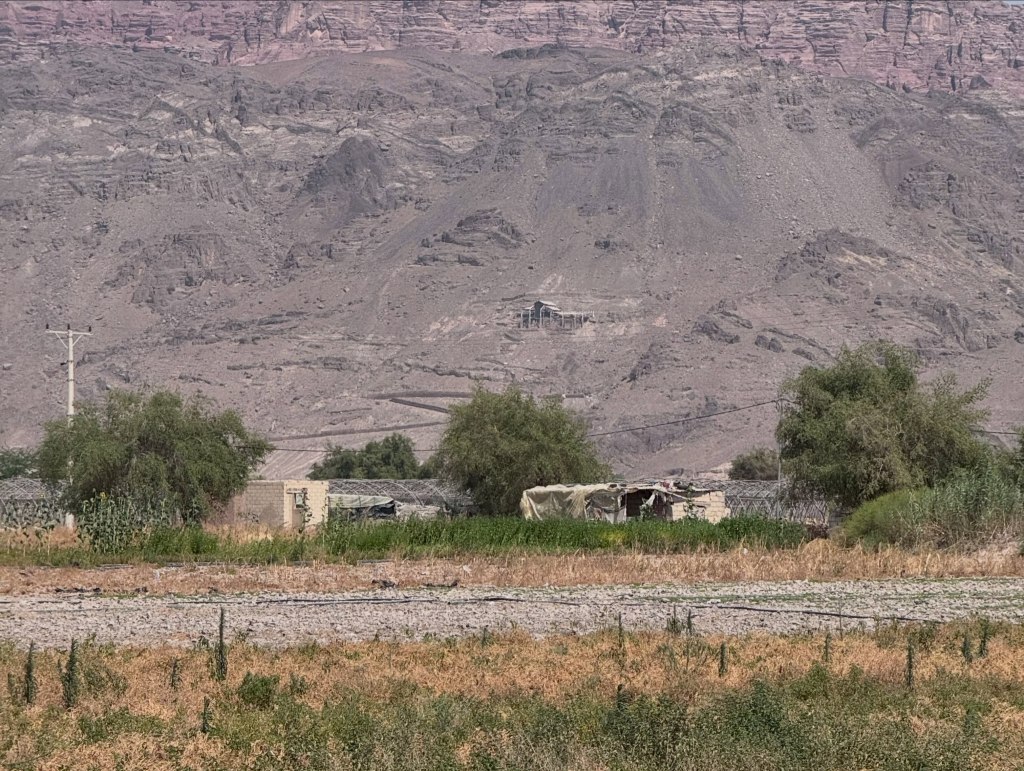
The facts. The site was excavated by Konstantinos Politis starting in 1988. There’s a real cave with occupation material going back to the Early Bronze Age, roughly 3000 BCE. A Byzantine monastery was built over it in the 5th century and used into the 8th. The mosaic floor carries Greek inscriptions naming the place as Lot’s sanctuary, and the earliest dates to 606 CE. So people were venerating this specific cave as Lot’s cave at least 1,400 years ago.
That confirms the tradition is old. It doesn’t confirm the events. And it lines up with the Madaba Map, which marks a shrine to Lot in roughly this position.
Jerash
Jerash · 27 July
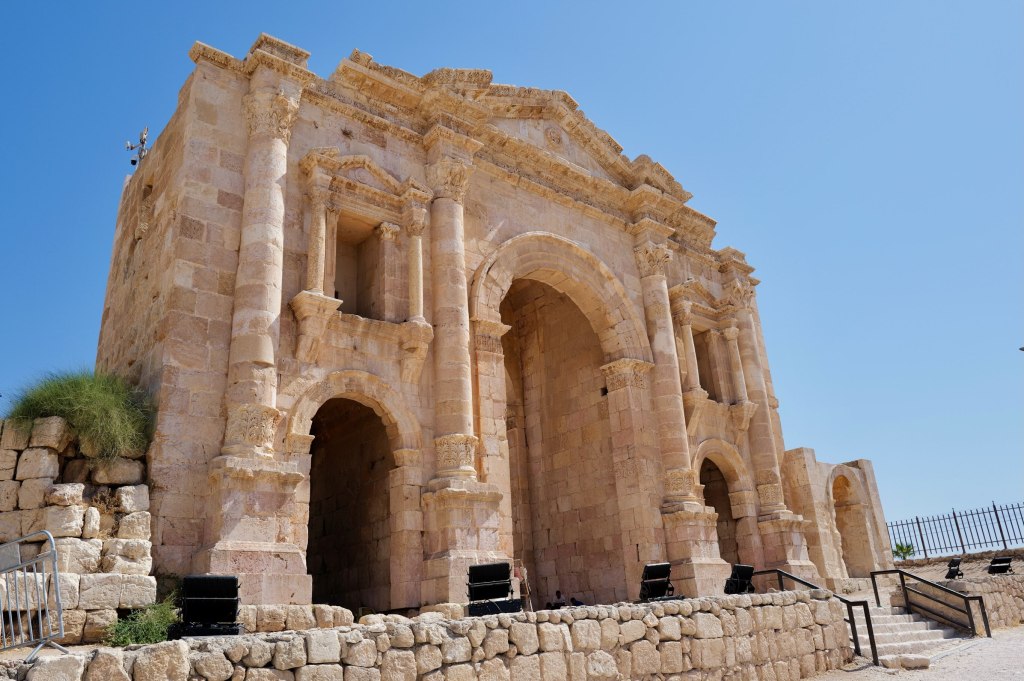
An hour north of Amman, and the best-preserved Roman provincial city outside Italy.
It was Gerasa, one of the Decapolis, the same league Amman belonged to. Settlement goes back much further, but the city you walk through is the Roman one, built through the 1st and 2nd centuries CE after Trajan annexed the region in 106 and money started flowing into the frontier.
You enter through Hadrian’s Arch, built in 129 CE for the emperor’s visit. Then the Oval Plaza, which is genuinely oval and ringed with columns, an unusual shape that solved the problem of connecting the main street to the older temple hill at an awkward angle.

From there the Cardo Maximus runs 800 meters through the city, still paved with its original stone. Look for the ruts cut by cartwheels and the manhole covers over the drainage system underneath.
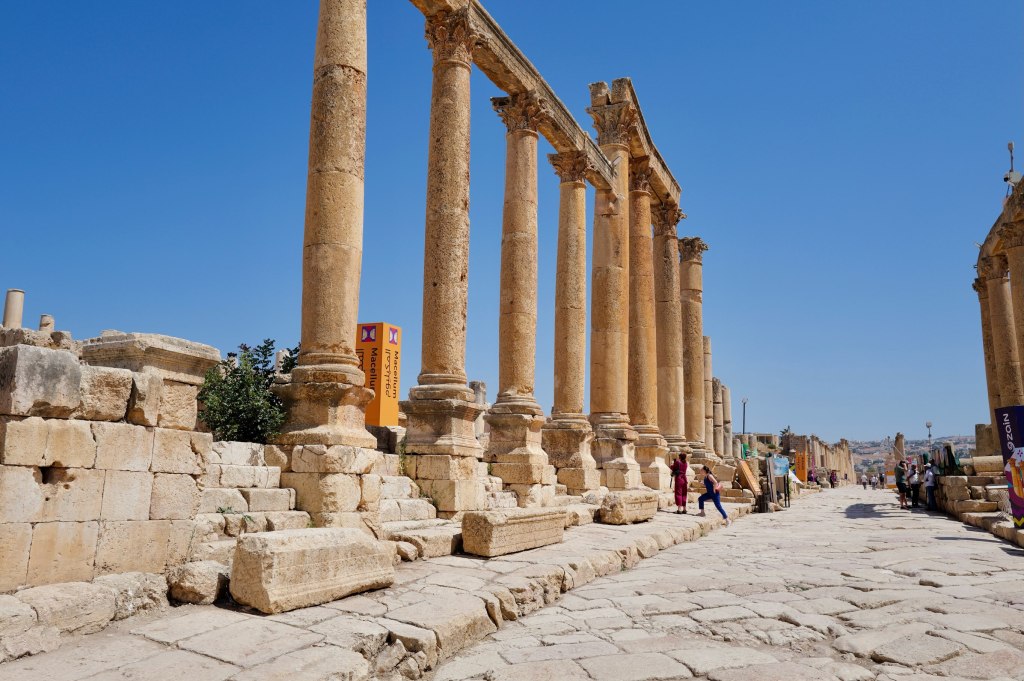
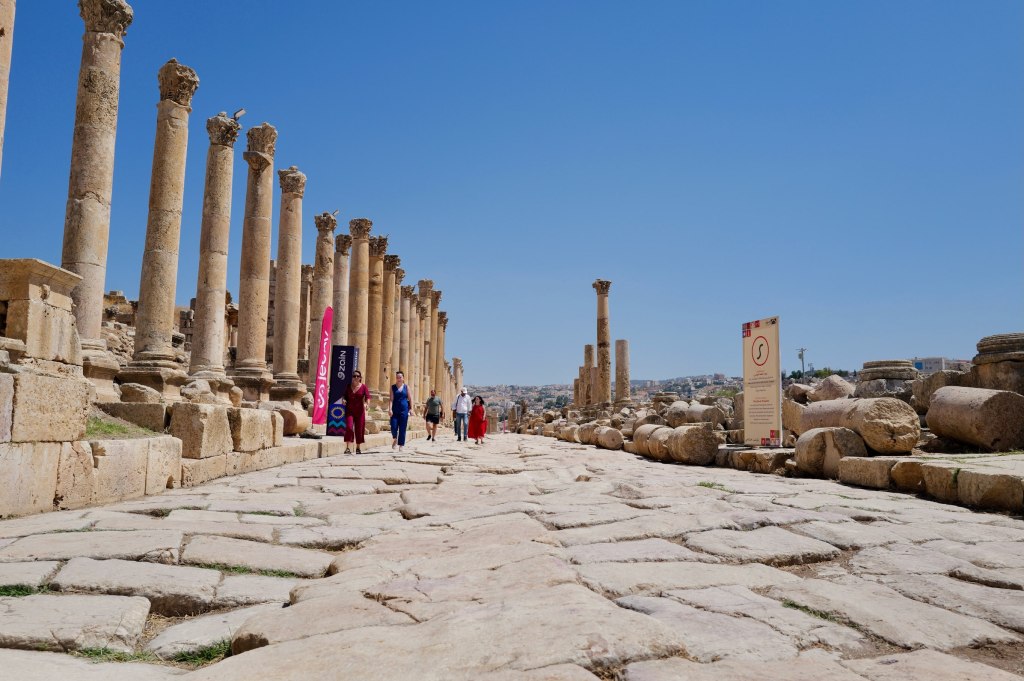
The Temple of Artemis is the high point, literally and otherwise. She was the city’s patron goddess. Eleven of the original twelve columns still stand. They’re built on lead-lined joints designed to flex, and if you wedge a knife or a coin into the seam you can watch the column move in the wind.
Thirty meters of stone, rocking.
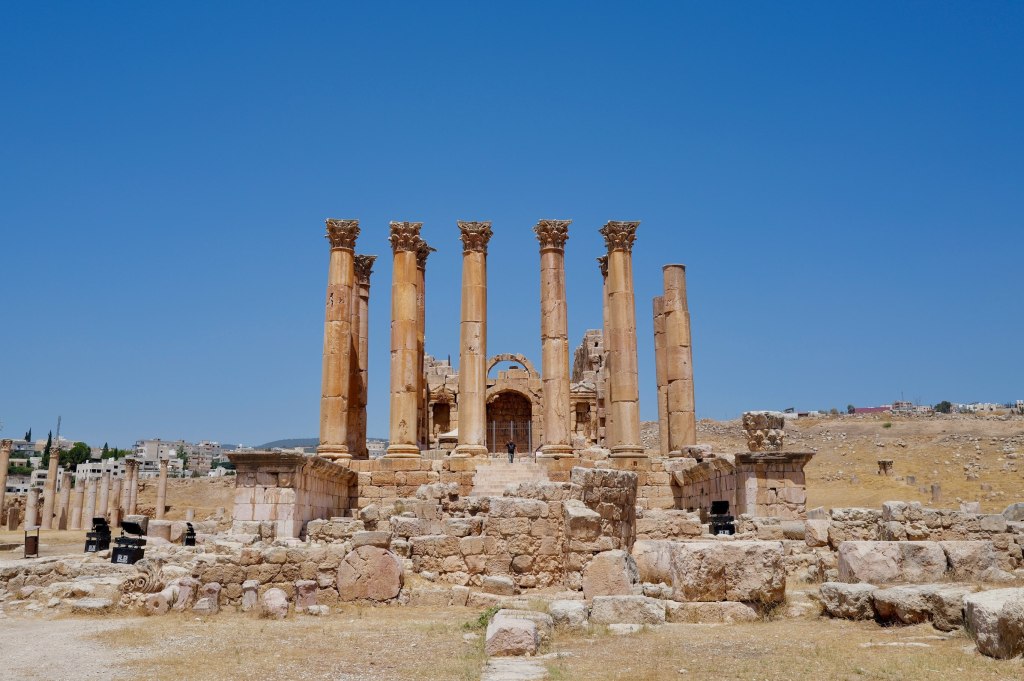
Two theatres, a hippodrome, temples, baths, churches. Byzantine builders put up at least 15 churches here, mostly out of recycled Roman stone.
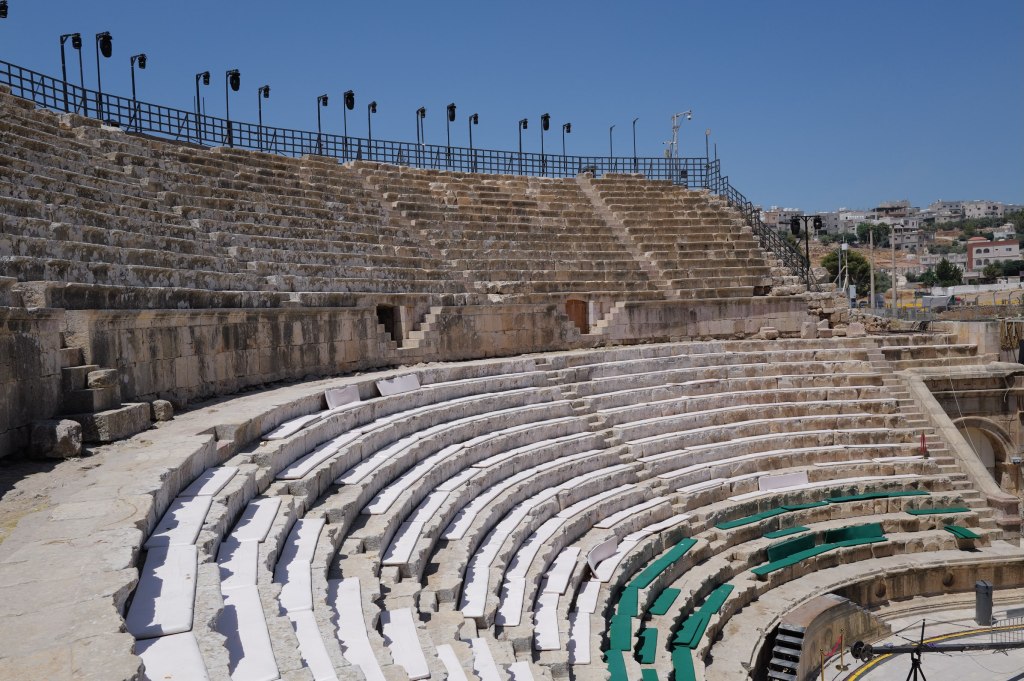
The 749 earthquake ended it. The city was buried in sand and forgotten until 1806. Excavation has been running since the 1920s and most of the site is still underground.
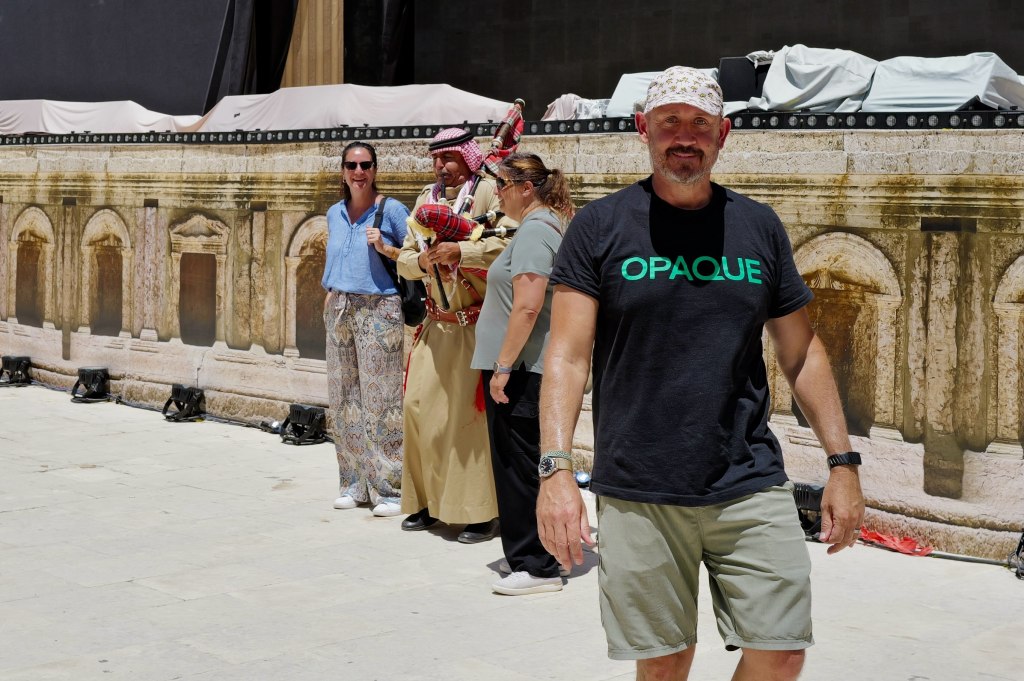
Bagpipes in Jordan
Jerash · 27 July
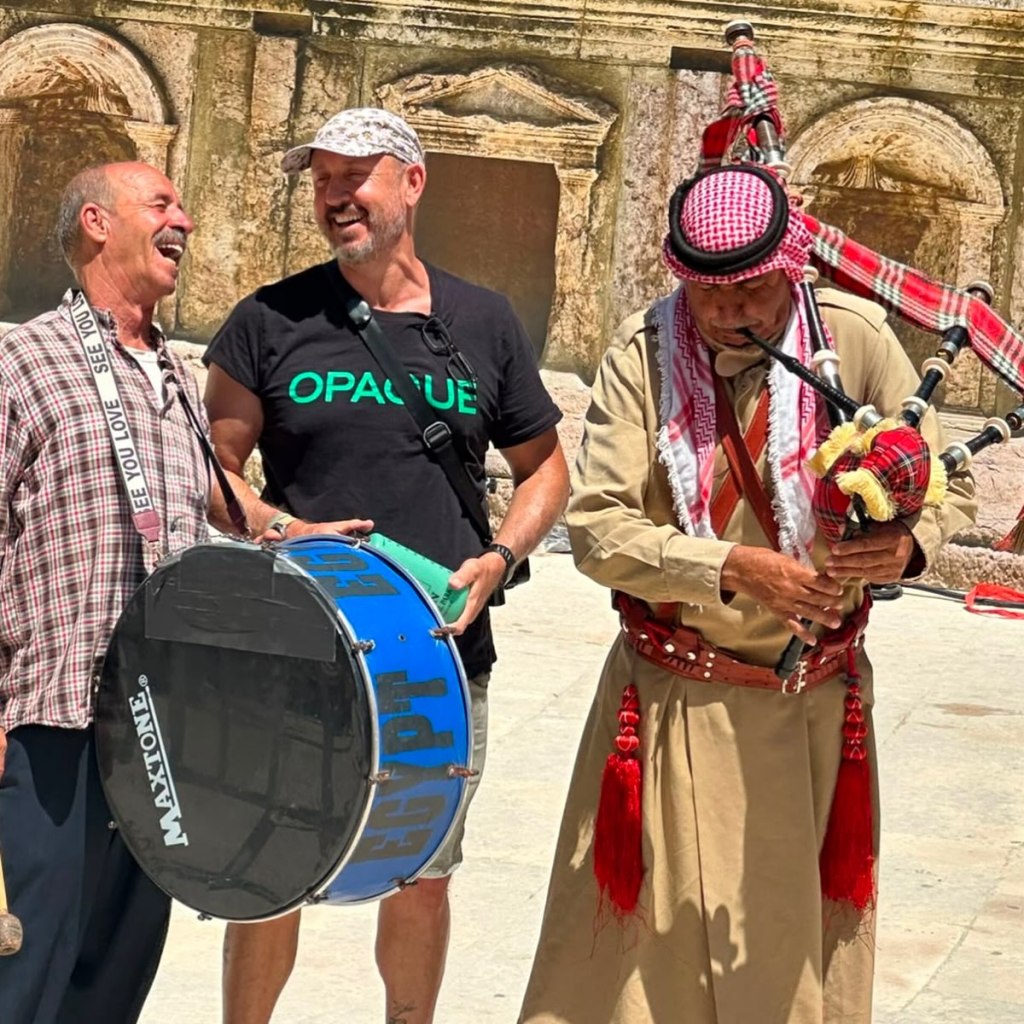
You’ll hear them at weddings, funerals, military parades, and the changing of the guard. Nobody here treats it as foreign.
They arrived with the British. After the First World War, Britain administered Transjordan, and the Arab Legion was built and led by British officers — Frederick Peake, then John Bagot Glubb, who ran it until 1956 and was called Glubb Pasha. British regiments brought their pipe bands. The Legion adopted them and made it standard.
But the instrument is much older than Britain, and the Highlands didn’t invent it either.
Every bagpipe is a reed pipe with a bag attached. The reed pipes are ancient and they’re from here — double-reed and double-chantered pipes go back thousands of years across Mesopotamia and Egypt. The Levant has its own versions still in use, the mijwiz, and bagged relatives like the habban and the jirbah that run across the Gulf.
The part people get wrong is the bag. You’ll see it stated flatly that bagpipes were invented in Mesopotamia. The evidence for that is thin. It rests on a disputed Hittite carving, one ambiguous Greek loanword in the Book of Daniel, and a century of reference books copying each other. The first solid attestation of a bag is Greco-Roman. Suetonius and Dio both describe Nero playing one, and the Romans had a word for the player.
So the honest version: the pipes came here with an empire, but they were coming home. The ancestors are from this region. Scotland is a late adopter that got very good at marketing.
The empire left in 1946. Glubb was dismissed in 1956. The pipes stayed.
Ajloun Castle
Ajloun · 27 July
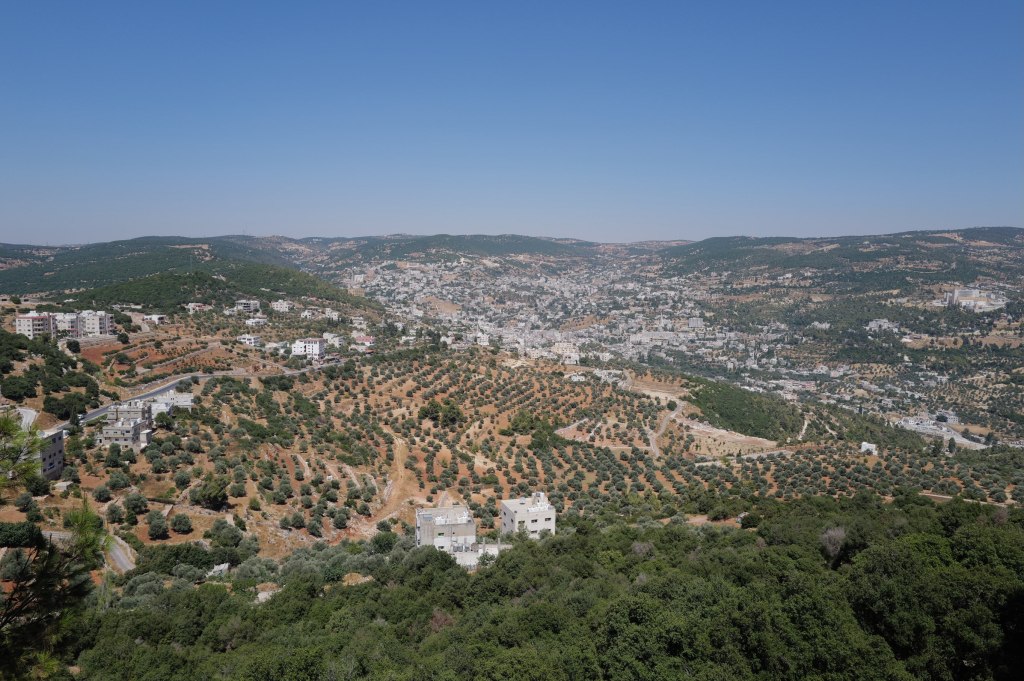
Qal’at Ar-Rabad. Ninety minutes north of Amman, sitting on a hill with sight lines across the Jordan Valley.
Built in 1184 by Izz al-Din Usama, a commander and nephew of Saladin. That date matters. This is Crusader-era, but it’s not a Crusader castle. It was built by Muslims, against Crusaders, three years before Saladin took Jerusalem at Hattin.
Two jobs. It controlled the iron mines of Ajloun and the routes between Damascus and Egypt. And it watched the Crusader fortress at Belvoir across the valley, checking their expansion east.
It also worked as a relay. Ajloun was part of a network of pigeon posts and signal fires that could move a message from the Euphrates to Cairo in a day. The castle isn’t just a strong point. It’s a node.

The Mongols wrecked it in 1260. The Mamluks rebuilt it under Baybars almost immediately, added towers, and kept it in service. Earthquakes in 1837 and 1927 did the rest of the damage.
Go up to the top level. On a clear day you can see the Jordan Valley, the hills of the West Bank, and the Sea of Galilee. That view is why it’s here.
What people wear, and where to put your feet
Ajloun · 27 July
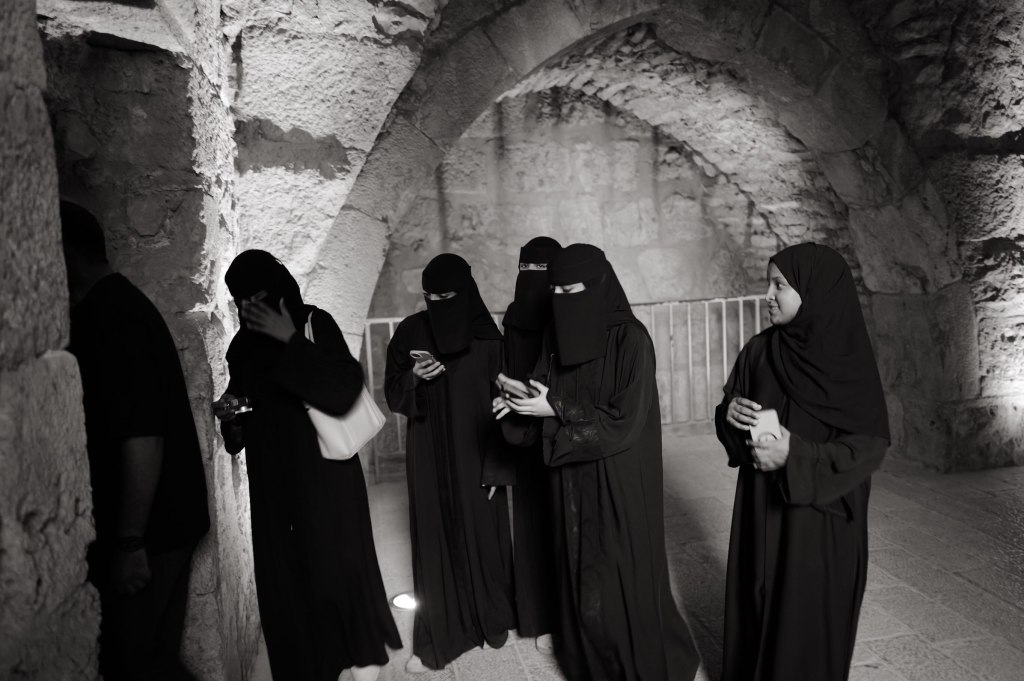
Terminology first, since most Westerners get it wrong. Hijab is a headscarf covering the hair, face fully visible. Shayla is the long draped scarf worn in the Gulf. Abaya is the loose black overgarment, not a head or face covering. Niqab covers the face but leaves the eyes. Burqa is the word that causes trouble — in Afghanistan it means the full covering with a mesh eye screen, which you won’t see here. In the Gulf it usually means the battoulah, a stiff gold-colored mask over the brow and nose, traditional, mostly worn by older women now, and disappearing.
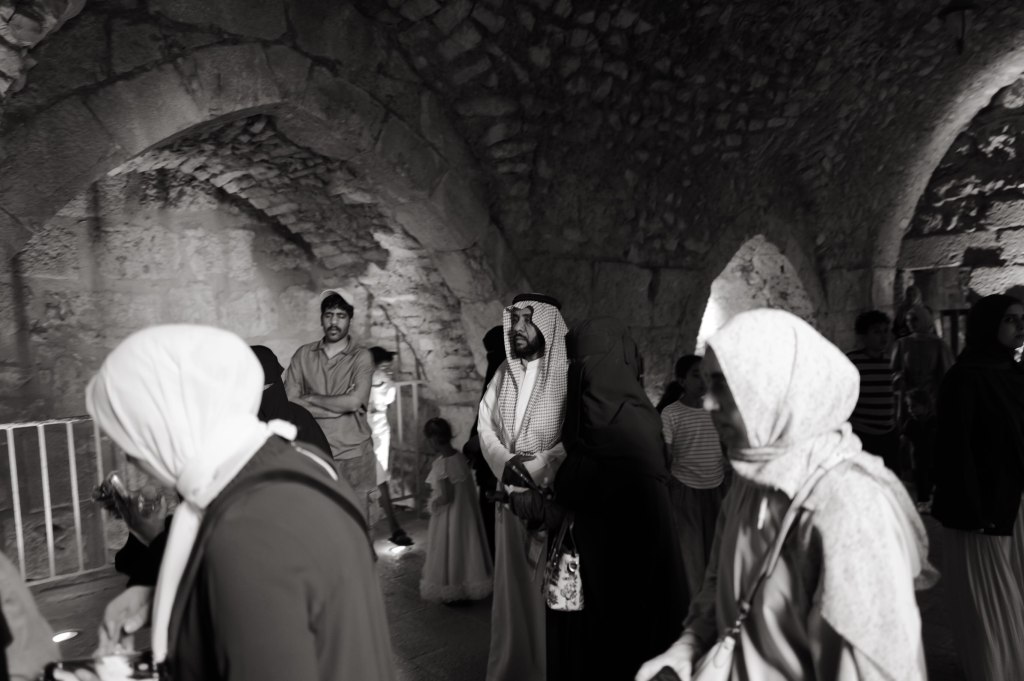
Jordan has no requirement. Many Muslim women wear hijab, plenty don’t, and west Amman is visibly mixed. Saudi dropped the abaya requirement around 2019 and it was never enforced on foreign women. The UAE never had one, and Emiratis are only about a tenth of the population there anyway. People dress as they would in Paris or New York.
A covered woman might be devout, or following her mother, or making a political point, or just having a bad hair day. Same as anywhere.
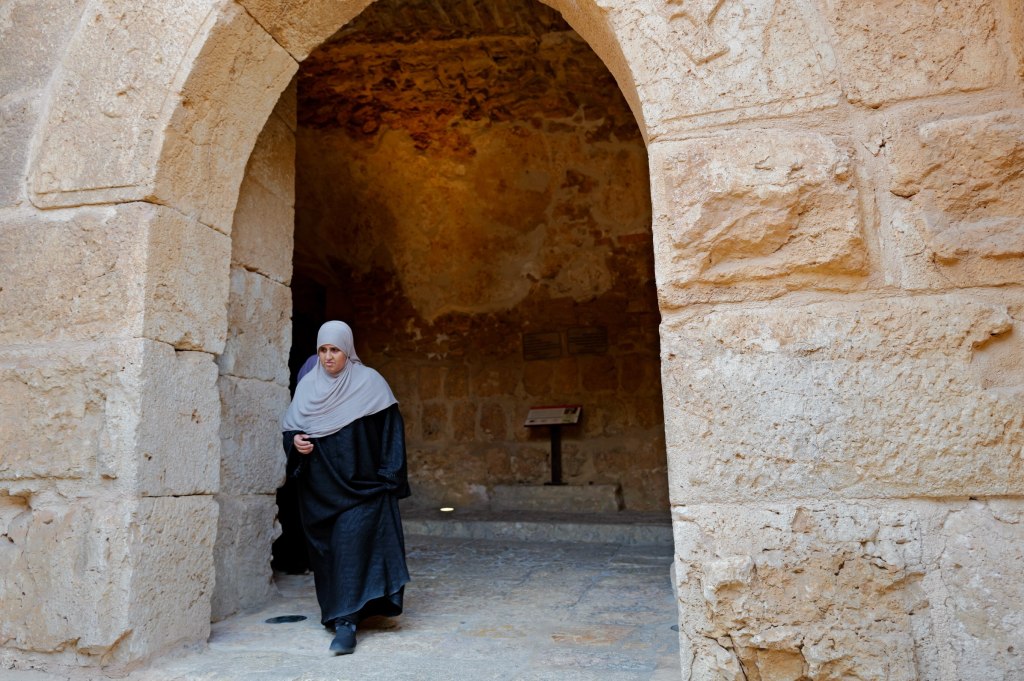
Now the feet.
Feet are the lowest and dirtiest part of the body here. Showing someone your sole says they’re beneath you. That’s why throwing a shoe is the regional gesture of contempt.
The practical version: stop crossing your legs ankle-on-knee. That figure-four position aims your sole straight at whoever’s across from you, and it’s how most American men sit by default. Cross ankle over ankle instead.
In a mosque, shoes off, and don’t stretch your legs toward the qibla or another person. In a church here, same idea. Don’t point your feet at the altar. Eastern Christian practice runs on the same regional norms.
In front of a royal or a minister, don’t cross your legs at all. Both feet flat. Stand when they enter, sit after they sit, right hand for everything, don’t leave first.
A thirty-year-old in Amman won’t care. Older people, rural settings, religious spaces, and government rooms will. Costs you nothing to get it right.
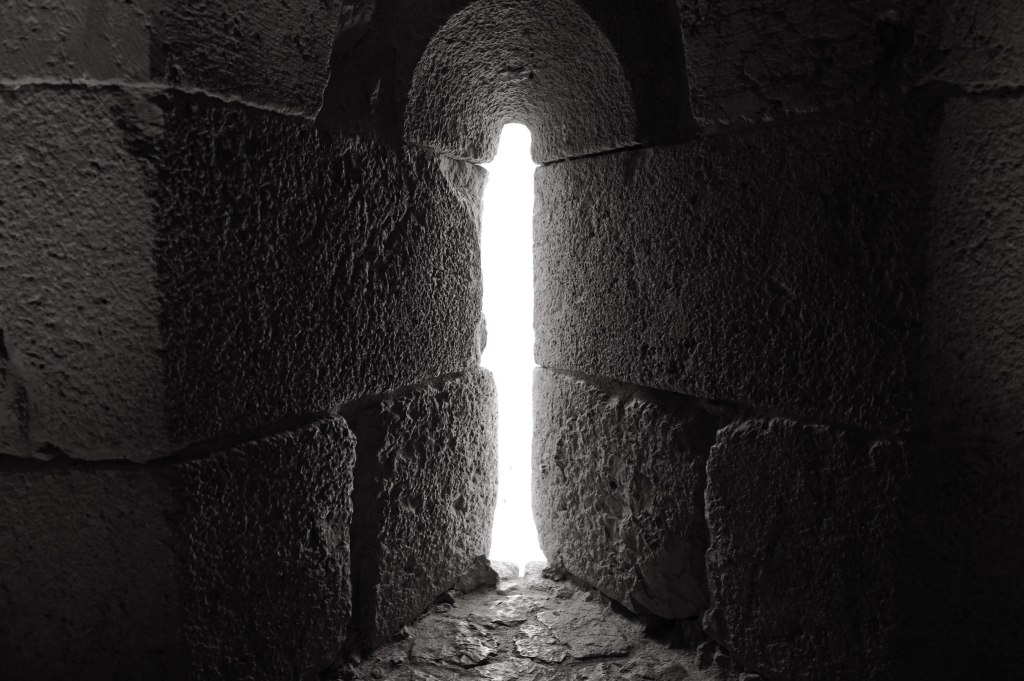
GPS doesn’t work well here
Amman · 27 July
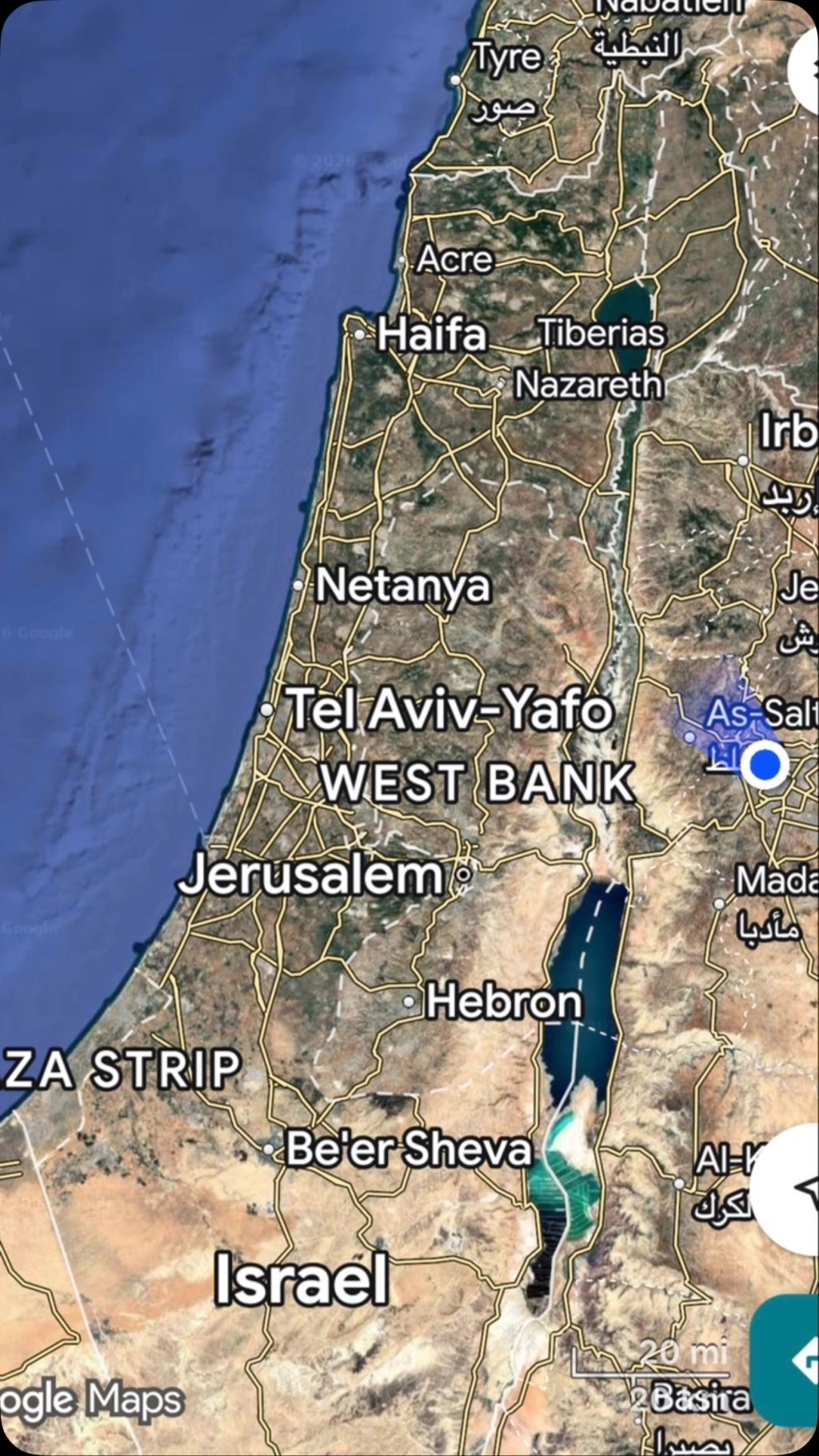
Your phone thinks you’re in Cairo. Or Beirut. Or three streets over from where you’re standing.
Since the war started, GPS jamming and spoofing across this region has become routine. Jamming drowns out the satellite signal so you get nothing. Spoofing is worse — it feeds your phone a false position and the map looks confident while it lies to you. People in Amman have had Google Maps relocate them to Lebanon. People in Beirut have had their phones put them in Jordan.
That last one isn’t random. Nobody wants their munitions landing in Jordan, so spoofing GPS-guided weapons into thinking they’re near Amman degrades them. Amman is being used as a decoy coordinate. Your phone gets caught in the same field.
It’s not one country doing it. Israel has been running interference since 2023. Iran has done it on its own borders for years. Gulf states run their own counter-drone systems. All of it leaks. Jamming can’t be contained inside a border and doesn’t distinguish between a drone and a guy trying to find a restaurant.
The scale is real. Lloyd’s List logged 1,735 GNSS interference events affecting 655 vessels in the region between the start of the war and early March, with roughly 600 of those off UAE ports. Ships have been shown sitting at airports, at a nuclear plant, and on dry land. Pilots have reported complete GPS loss on approach.
If you’re coming, download offline maps before you land. Ask people for directions. It’s more fun and adventurous anyway.
What I read
Amman · 27 July
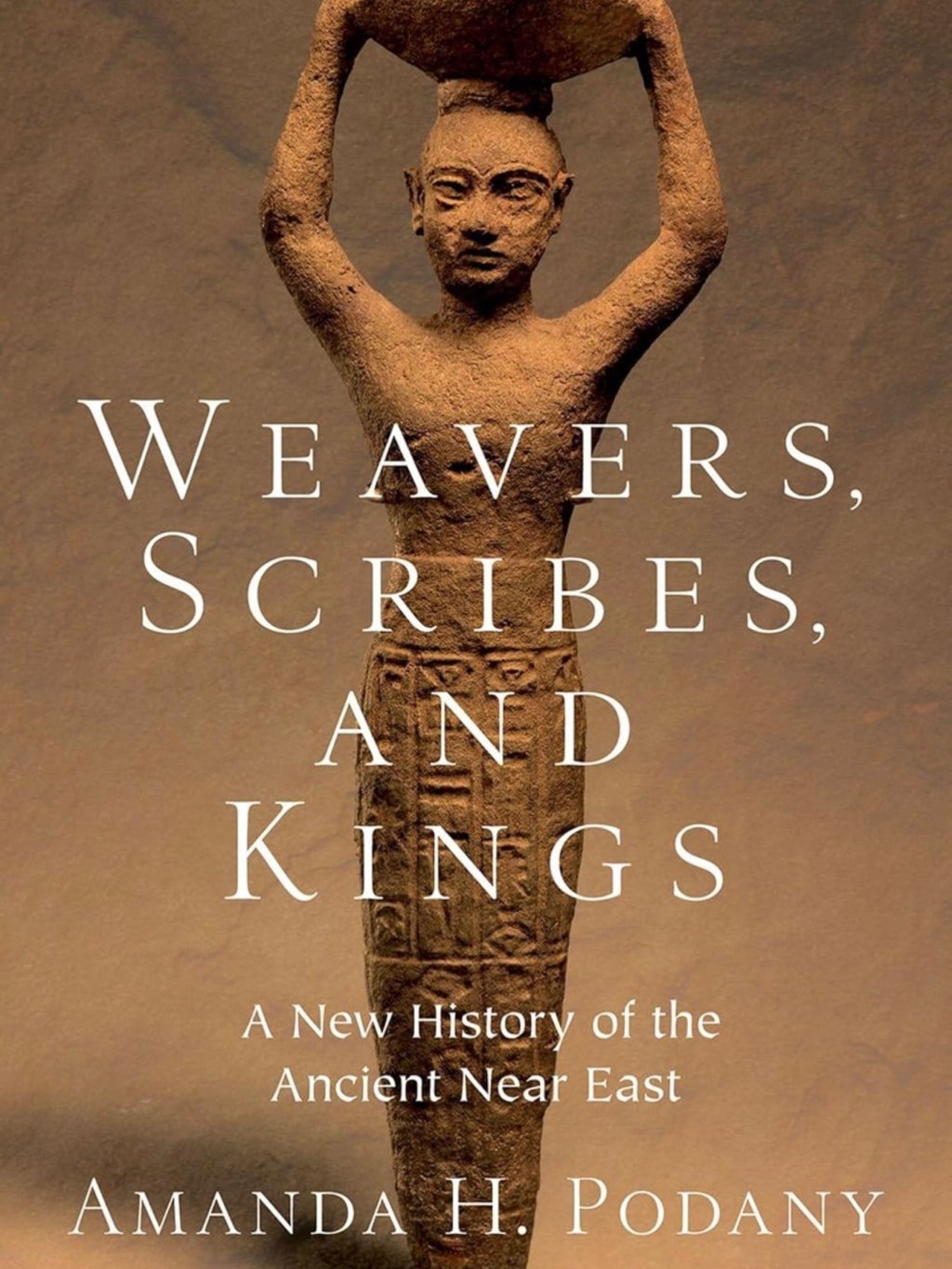
Weavers, Scribes, and Kings, Amanda Podany. I wanted a book on the history of where I was. This was the closest I could find at short notice. It’s very good.
Podany’s argument is that the ancient Near East has been written as a list of kings and empires when the evidence doesn’t require that. Mesopotamia produced hundreds of thousands of clay tablets, and most of them aren’t royal propaganda. They’re receipts, contracts, lawsuits, school exercises, letters between brothers about money. So she writes three thousand years of history through the people in those documents.
You get a woman running a long-distance textile business in the 19th century BCE, writing to her son in Anatolia about shipments and complaining he doesn’t send enough back. A weaver whose rations are recorded. A barber. A snake charmer. A man suing over a field. The rulers are still there, but they share the page with the people who paid for them.
The other thing that lands is how connected it all was, and how early. Diplomatic letters moving between Egypt, Babylon, and the Hittites. Standardized weights so merchants in different kingdoms could trade. Treaties, extradition clauses, royal marriages negotiated over years. This was an international system fifteen hundred years before Rome.
It’s dense but not academic. She quotes the documents directly and lets people speak.
Book recommendations welcome. Especially on Jordan, the Nabataeans, or the region.
The people, and the food
Jordan
This is the part I most want to pass on.
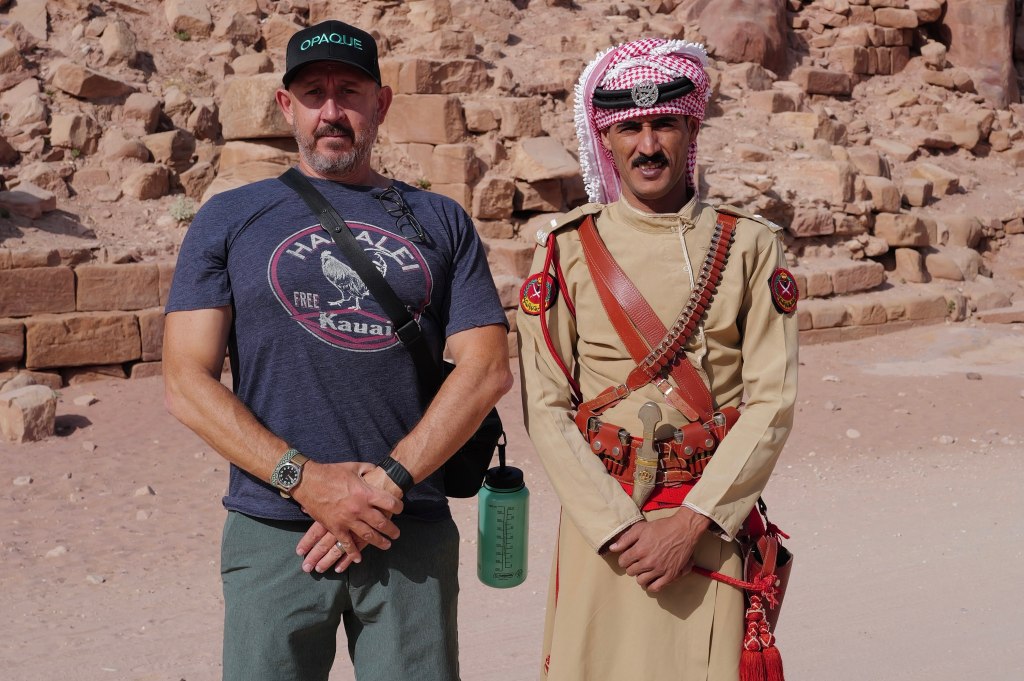
Jordanians are kind. Friendly, warm, and generous well past the point of obligation. Osama. The guards at Petra who stopped what they were doing to talk. The Bdoul men up in the rocks who let me sit with them and make their portraits. A teenager downtown named Sanad who walked straight up and asked me to shoot photos for his Instagram, which I did, and which was the best twenty minutes of my first evening in the country.
I was a stranger with a camera and no ability to speak Arabic. Nobody made me feel like one.
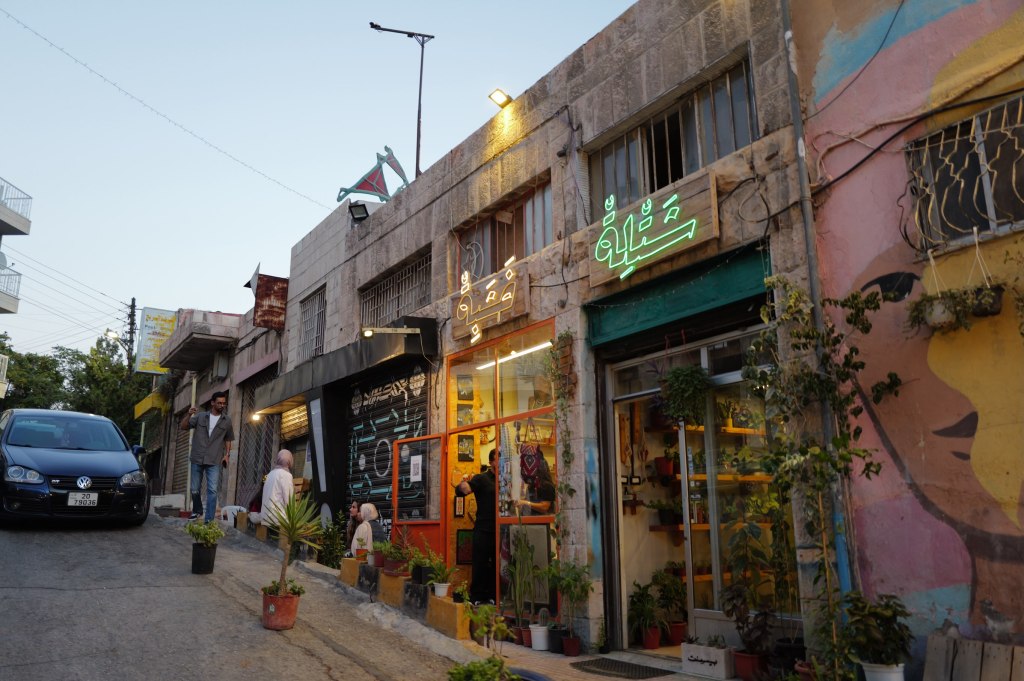
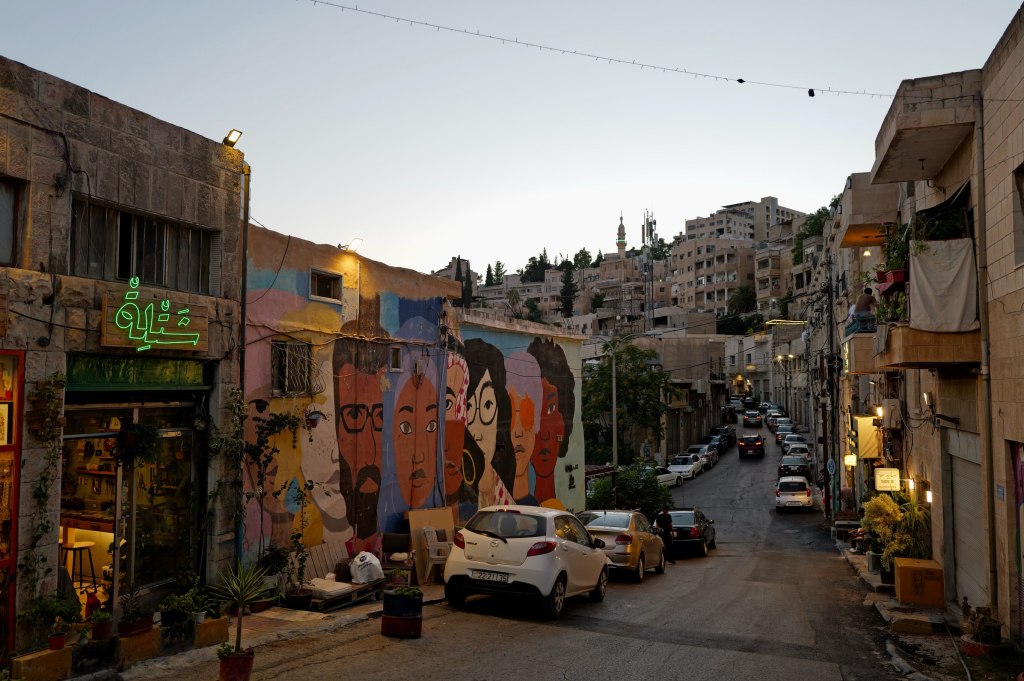
And the food is outstanding.
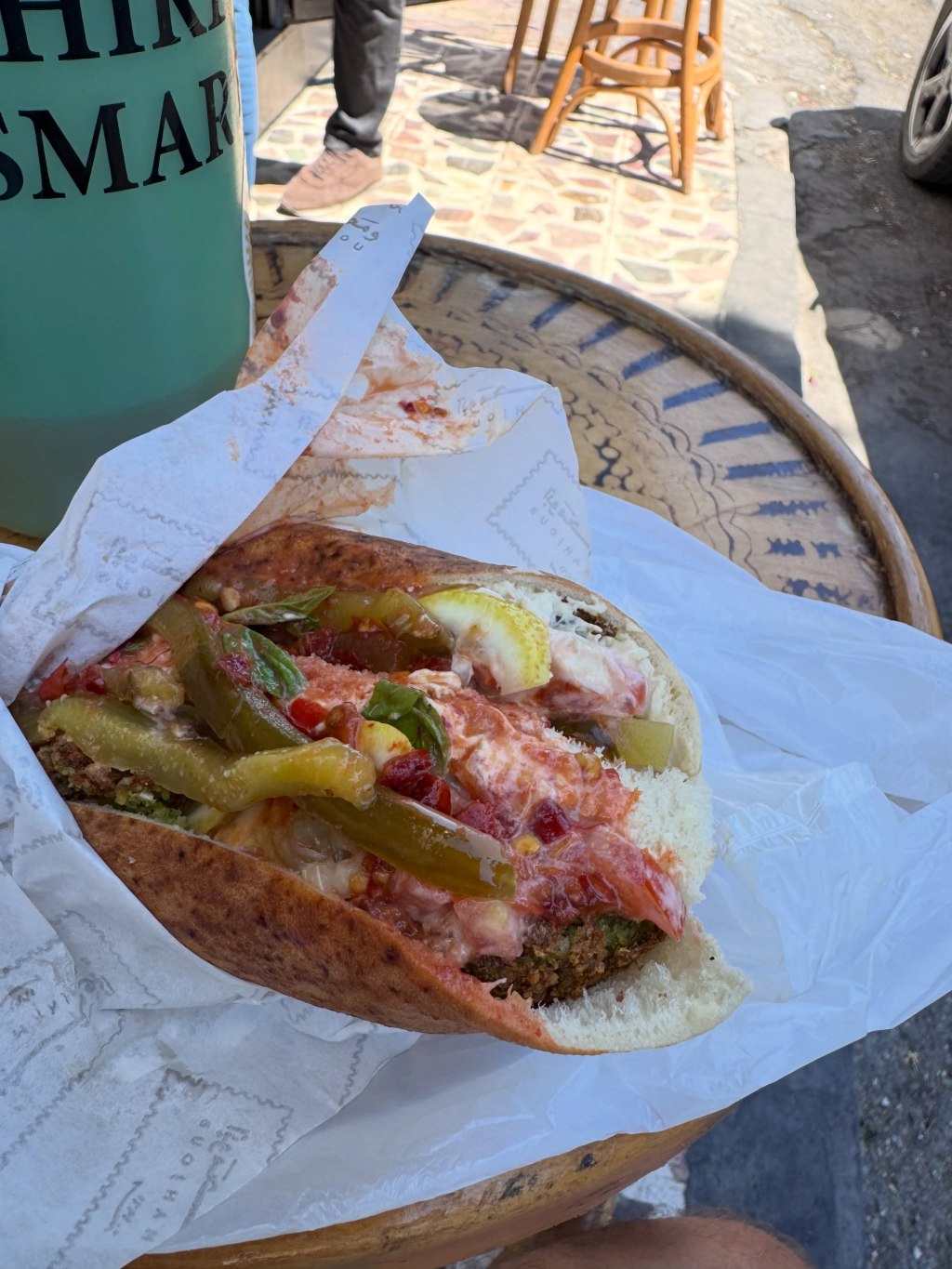
The best thing I ate in Jordan came wrapped in paper from a hole in the wall. Abu Mahjoub, in Amman. Wooden stools out on the pavement, falafel and tomato and pickles in fresh bread, eaten standing up in the street.
I will chase that high for the rest of my life. Eleven out of five.
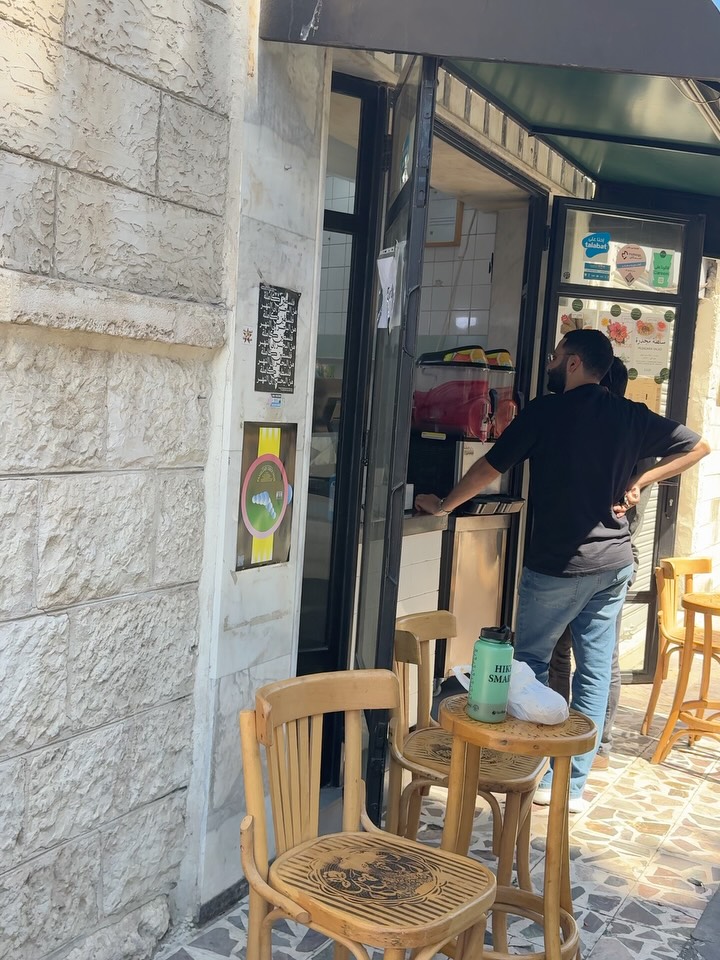
Eat where the stools are on the sidewalk. Skip the hotel restaurant — that was the first thing Osama cut from the itinerary, and I never once regretted it.
The country
Jordan
One thing worth saying plainly, because the headlines won’t.
Jordan has almost no oil, and it’s one of the most water-scarce countries on earth. It borders Syria, Iraq, Saudi Arabia, Israel, and the West Bank. It has stayed stable through fifty years of the region coming apart.
And it takes people in. Jordan hosts one of the highest shares of refugees per capita of any country in the world. UNRWA has 2.4 million registered Palestine refugees here, about forty percent of every Palestine refugee on its books anywhere. More than half a million registered Syrians on top of that, plus Iraqis and others. The country’s total population is around 11.5 million.
That isn’t a statistic. It’s schools, clinics, water, and jobs, absorbed by a country that didn’t have them to spare.
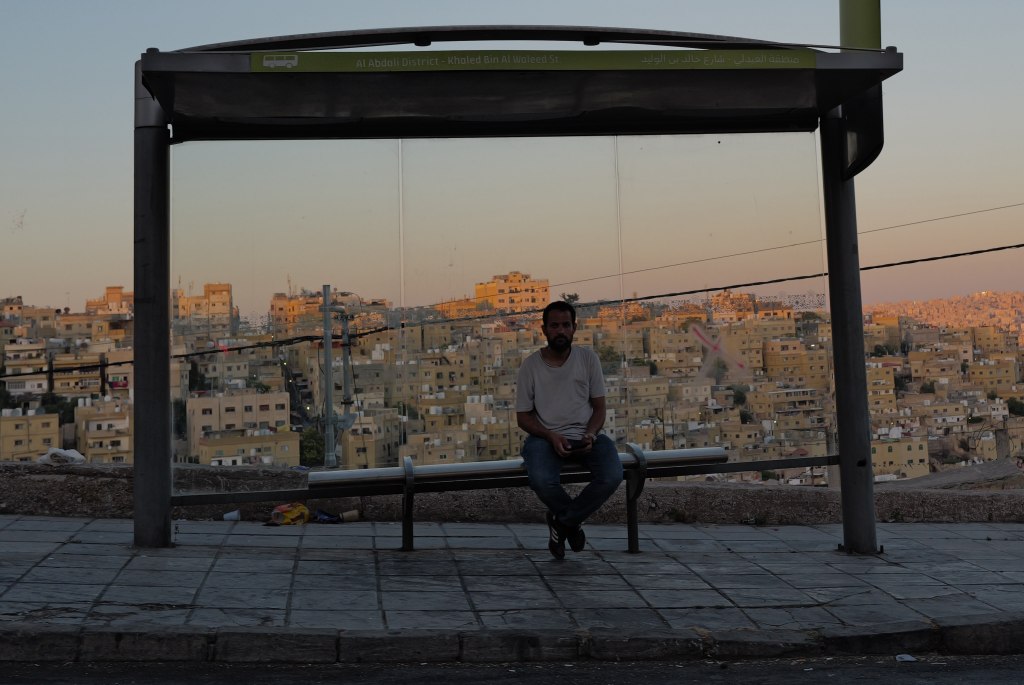
The archaeology gets the same seriousness. Petra, Jerash, Mount Nebo, Madaba, Lot’s Cave — protected, excavated, staffed, and open, in a region where comparable sites have been shelled, looted, and bulldozed. Jordan decided to be the country that keeps them. Then it let me walk through them with a camera and nobody hurried me.
Tourism is close to a fifth of GDP once you count indirect effects, and roughly 60,000 people work in it directly. When visitors stop coming, that doesn’t land on a ministry. It lands on guides, drivers, cooks, and the families at Umm Sayhoun who come down the hill every morning.
Jordan has every excuse to be a harder place than it is.
It isn’t.
Going home
Amman · 28 July
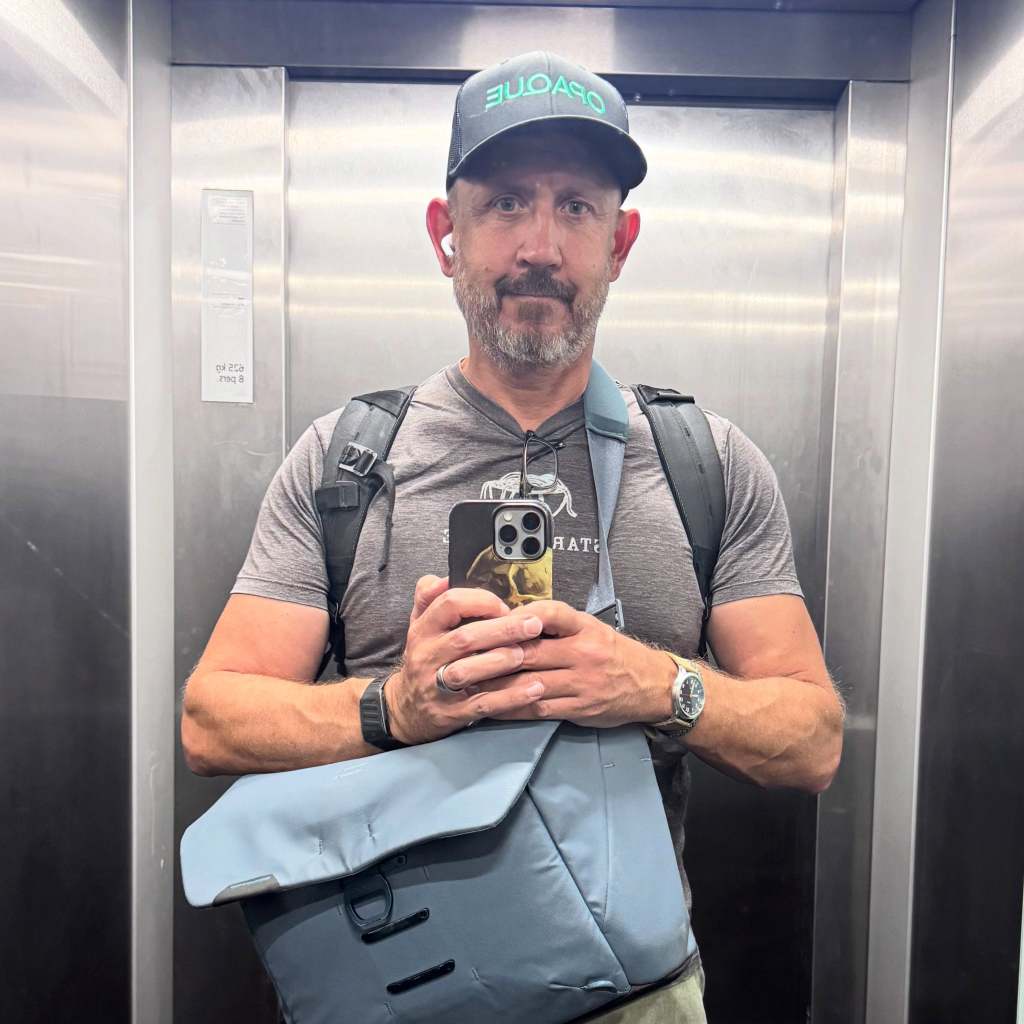
It was a terrific trip. A productive work week in the UAE, and then four days filled with adventure and new friends in Jordan. I learned a lot about the history and culture of this country, mostly thanks to Osama. He has a degree in archaeology, a fun and engaging personality, and a great attitude. Several people asked me for his contact information — he’s @osszyoud on Instagram, and I’m happy to pass along his WhatsApp.
Go now. You’ll have it to yourself, and the country could use the visit.
Plan the trip
Practical
Here’s the route, if you want to copy it. Four days on the ground, Amman as the base, one long push south.
Before you fly
Buy the Jordan Pass online before you land. It waives the tourist visa fee as long as you stay three nights or more, and it covers entry to Petra, Jerash, the Amman Citadel, and about forty other sites. Three tiers, priced by how many consecutive days you want inside Petra: 70 JOD for one day, 75 for two, 80 for three. It does not cover Petra by Night — that’s a separate ticket.
Download offline maps before you land. Read the GPS section above. Your phone will lie to you about where you are, confidently.
I went in late July and it was brutal. Go in spring or autumn if you have the choice.
The route
Day 1 — Amman. Land, get downtown, walk. Don’t schedule anything. The city is worth an evening of just looking at it.
Day 2 — Amman, then south. King Abdullah I Mosque in the morning. Then the Citadel, which gives you six thousand years in about an hour and orients everything else you’re going to see. West to Mount Nebo, then Madaba for the map at St. George. Drive south to Wadi Musa in the evening and sleep there, so you’re at the Petra gate early.
Day 3 — Petra. Be at the gate when it opens. Walk the Bab al-Siq slowly — the djinn blocks, the Obelisk Tomb, and the first betyls are all before the Siq, and almost everyone walks straight past them. Then the Siq, the Treasury, and the 800 steps up to the Monastery before the heat lands. Afternoon: Little Petra, which is free and empty. If you still have legs, drop to the Dead Sea and Lot’s Cave near Safi on the way back north.
That day is a lot. It’s doable and I’d do it again, but I won’t pretend it’s relaxed. If you have a fifth day, split it in two.
Day 4 — North. Jerash in the morning, Ajloun Castle in the afternoon. Both are within ninety minutes of Amman, and neither is crowded.
Day 5 — Amman. Falafel at Abu Mahjoub. Fly home.
What I’d add with more time
Wadi Rum. Aqaba and the Red Sea. Umm Qais. The desert castles east of Amman. Dana. I got to none of them, which is a good reason to go back.
Hire a guide
Do this. It’s the highest-leverage decision of the whole trip.
Osama has a degree in archaeology. On day one he took my itinerary apart and rebuilt it — out with the luxury hotels, in with the sites and the locally owned places. Nearly everything worth reading above came from walking around with him and asking questions.
He’s @osszyoud on Instagram. Message him directly, and tell him I sent you.
Guides here are sitting idle right now. Hiring one is the most direct way your money reaches a person instead of a chain.
Photographs by Aaron Fulkerson, except where taken by Osama. Written on the road, 24–28 July 2026.