


J’adore Paris
J’adore Paris
I started a photography exercise of photographing a subject thirty-six times with pre-fixed constraints and from different angles, composition, and camera settings. Thirty-six because this is how many shots a roll of film usually had.

It’s an exercise in mindfulness and presence. You might enjoy this too. Here’s the pattern.
36 Frames Challenge
Edit immediately
Settings shorthand (use as a start, then adjust)
Variations for different goals
As much as I love photography, it’s a shame photos are shared on Instagram where one can’t really see and experience them fully.
Enjoy. 🙂
In “The Carrier Bag Theory of Fiction,” Ursula K. Le Guin argues that storytelling (and human culture) shouldn’t be defined by the linear “hero slays monster” narrative (the spear or arrow), but rather by a “carrier bag” model: stories that gather, hold, and weave multiple voices and experiences into a dense and consumable package.
Many scholars believe the carrier bag was the earliest human invention. It makes sense because before a weapon to kill for meat there was the forager and the forager requires a means of carrying and storing surplus.
This concept changes the very nature of story, technology, and business. All of which are commonly communicated as a conflict. The hero slays the monster. The winner vanquished their foes. However, there’s another way to see a story and human endeavors. That of a collection, a process, a gathering and storing of progress.
I see all human endeavors as art. Travel, exercise, business, and technology. Building a company or a new technology doesn’t have to be approached as a conquest. It can be seen as an act of collection for the greater good. We gather ideas, constraints, possibilities, people and carry these forward in a fungible form in an effort to advance and improve the experience for all people. The value isn’t domination it’s the creation of freedom through new possibilities.
Update: my wife told me she now understands why I buy too many bags.

My wife is in a writing workshop. We’re each taking a prompt and writing for 10 minutes and then reading to each other what we wrote. It’s fun and connecting. 🙂 This was our first run on the color of joy and the color of grief. The grief one is too personal to share.
There are these moments in life when you can see past the veil of the world that’s bigger than our reality. The filters are removed and you can glimpse the truth of life. The awesome wonder and magic of it all. The limitless possibilities. The boundless beauty. We’re filled with joy from the wonder of it all. I’ve seen this most often through the eyes of my children when they were young and still close to the divine. Before the world layered its gauzy clothes of trauma and fear over their eyes. I’ve had these moments alone in nature. Seeing the vastness and age of it all in geological, not human time. And I’ve had this experience riding motorcycles on empty roads into the oblivion at the edge of the world, beyond human perception. This bliss, this pure joy in the wonder of it all is the bright yellow of the universe that shines through our souls and connects us with all things alive, dead, and yet to be born.

I have two teenage children. For those of you who also have teenagers you understand how easy it is to lose you ***t with them. And how their developing brains and surging hormones often lead to them losing control of their emotions as well.
I read somewhere emotions are like weather patterns. They affect the environment, but always pass. Recently I’ve learned a lovely and helpful mindfulness framework to help me manage my emotions and maintain agency (so I don’t lose my ***t) when I’m frustrated with my children and I’m also sharing this with my kids. It’s called R.A.I.N., which is a helpful tool for keeping cool.
I’ve been fond of Buddhism since I was a child and was introduced to it by my dear friend Henry Kikunaga (friends to this day 44 years later). And I love Science so I’m going to cover this from both the Buddhist and neuroscience angles. Also, it never ceases to amaze me ancient wisdom had it figured out before modern science.
The ancient Buddhist text Satipaṭṭhāna Sutta instructs practitioners to observe feeling tones (vedanā) as pleasant, unpleasant, or neutral — recognizing them without clinging or aversion. Modern neuroscience confirms this wisdom: emotions themselves aren’t problems. The problem is reactive behavior. Like I said, it’s like weather patterns…they’re not the problem, they just are and it always passes.
Most people either avoid emotions (equating openness with weakness) or get swept away by them (unable to process without destabilization). Both lead to what neuroscience calls “bottom-up” responses from the limbic system: Fight, Flight, Freeze, or Fawn.
Here’s why this framework matters, it helps you shift from:
To a more effective and fulfilling approach:
Pausing creates space for the prefrontal cortex to interpret emotional signals and direct behavior that serves your goals. Research by Lieberman et al. (2007) shows that simply labeling emotions reduces their neural intensity — what they call “affect labeling.”
Now, onto the simple algorithm that helps achieve this.
Buddhist teacher Tara Brach adapted this acronym from traditional mindfulness practice, turning ancient wisdom into a repeatable method for meeting emotions without blind reaction. She also wrote “Radical Acceptance: Embracing Your Life With the Heart of a Buddha,” which is a great book.
Before engaging with emotion, stabilize your nervous system:
This mirrors the Buddhist quality of equanimity (upekkhā) — the stable mind that meets change without being overwhelmed.
Name the emotion without judgment or story:
The Buddha’s instruction in mindfulness practice: observe experiences without making them personal identity. Modern psychology confirms this “decentering” reduces emotional reactivity.
Explore what the emotion is telling you.
This aligns with Buddhist insight practice (vipassanā) — using investigation (dhamma-vicaya) to see clearly rather than react automatically. Treat emotions as intelligence, not identity.
Two components backed by research:
Nourish: Self-compassion activates the parasympathetic nervous system. Kristin Neff’s research shows self-compassionate responses reduce cortisol and increase emotional resilience.
Navigate: Choose action aligned with values rather than emotional impulse. Ask: “What serves my longer-term goals?” Then select one concrete step forward.
Respond with kindness toward yourself, then act in alignment with your values rather than reacting from fear, anger, etc.
I do love math…Traditional reactive patterns operate at millisecond speeds through the amygdala. This 15-second process engages the prefrontal cortex, which processes information 200 milliseconds slower but with vastly superior decision-making capability.
Buddhist psychology and modern neuroscience converge: emotions provide valuable information, but emotional states shouldn’t determine behavior. The R.A.I.N. method creates what researchers call “cognitive reappraisal” — processing emotional information through higher-order thinking rather than automatic reaction.
Boom. I hope you get value from this. 🙂

Microsoft’s AI chief, Mustafa Suleyman, warns that “Seemingly Conscious AI” (SCAI) could arrive within the next 2–3 years without major breakthroughs. We’re already there.
https://mustafa-suleyman.ai/seemingly-conscious-ai-is-coming
There are countless cases of humans engaging AI for romance, therapy, and emotional connection.
Treating AI as if it were conscious—the illusion of empathy, memory, intent—can distort reality. Suleyman calls it “AI psychosis.”
These systems may appear aware, but they’re not and they’re not your friend, lover, or therapist anymore than your car is. Treating your car like a lover or therapist will destabilize you, and as we see this ramp up with AI we will see more tragic stories and social backlash.
I’m convinced this illusion partly explains the rebellion when ChatGPT 5 replaced 4o. The shift wasn’t entirely about performance—it was about personality. Users said it felt like they’d “lost a friend.” That’s exactly the problem: we’re confusing a tool with a companion, and the emotional fallout is real.
AI is not your therapist. Using it to learn CBT, mindfulness, or frameworks for mental and physical health? That’s smart. But looking for comfort in a pseudo-relationship through talk therapy is a farce and many users are doing exactly that. That’s not coping. That’s psychosis.
Obviosuly, I am not a mental health professional. Yes, I’ve seen the data on positive results with anxiety among control groups using AI. I don’t care. No good will come from seeking connection from a hammer.

Mark Hinkle, my AI Confidential co-host, recorded this episode from a van parked on a mountain in Pennsylvania. It reminded me of hitchhiking from the Florida Keys to a remote Pennsylvania cabin when I was 18 years old. It involved a van, a self-proclaimed witch, and a Hell’s Angel. I share this story during the podcast, but this episode isn’t about questionable travel choices. It’s about Marco Palladino, co-founder and CTO of Kong.
Marco’s story is the American (and Silicon Valley founders’) dream. Two Italian immigrants land in San Francisco with nothing. They built an API marketplace (Mashape) and ended up open-sourcing their internal platform. They then grew Kong into the leading independent API management company, now worth billions ($2B). From flooded basement offices to owning the API gateway, service mesh, ingress controller, and now AI gateway markets. It’s a terrific episode.
The headline from our conversation: “Agents are the new API client.”
Marco explains:
We also covered:
If you care about the future of AI infrastructure—or a great founder story—listen to the full episode.
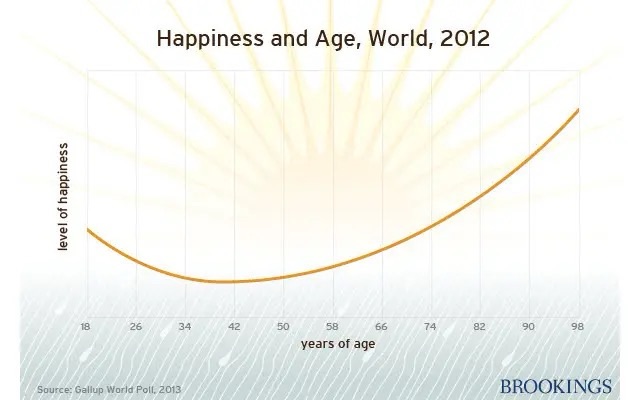
Now that I’m 50, it’s all upside from here! I guess this is evidence of humans moving into the “you can’t scare me” phase of life. I hope this curve is true for me too, but it’s hard to imagine since I thought my 40s decade was the best one yet. #TBOY
I’m not sure if these curves apply to me, as it assumes I had some kind of expectation for my midlife. Having lived in abject poverty, being in the first generation of college grads in my family, living through periods of intentional (and unintentional) homelessness (in my teens and early 20s), and exceeding all my expectations of professional and personal success, it’s hard to imagine my happiness/contentment increasing, but I’m open to it. Peak happiness, here I come. 🙂


I’m going to share something embarrassing because the lesson is worth the cringe.
Several years back, I was leading a business unit that was absolutely crushing it. It was growing sixteen times faster than any previous unit in company history. It improved Net Promoter Score (NPS) and helped other divisions hit their numbers by increasing their Net Retention Rates. The math was irrefutable.
Yet somehow, we became a political piñata. Some executives questioned the data. Peers cherry-picked our results to make them seem less impressive. People who didn’t know my technical background attacked my technical competence. They criticized my vision. At the same time, they tried to absorb parts of our product into their portfolios.
Here’s where it gets ugly: I got swept up in the negativity. Started talking shit in backchannels. Being snarky. Acting like the very people I was frustrated with. Then, through my own stupidity, one of those backchannel conversations went public. The worst part? My snark was aimed at someone who hadn’t even done anything wrong. I was venting sideways.
The hypocrisy hit me like a stink I couldn’t wash off. There I was, compromising my integrity while complaining about others’ lack of integrity.
I wasn’t maintaining my form. I was fracturing under pressure, becoming someone I didn’t recognize. I was already feeling terrible, and then my leader delayed a promotion I’d been promised. But it wasn’t losing the promotion that hurt. To be honest, that actually made me feel a little better since it was establishing a cultural boundary. It was the realization that I’d violated my core values, and my actions hurt others. That pain hit deeper than any career setback. Still does when I think about it.
During this transformation—while rebuilding my integrity—I found this Epictetus quote that became something I would refer to often:
“If you are ever tempted to look for outside approval, realize that you have compromised your integrity. If you need a witness, be your own.”
Most people think integrity means obeying a moral code. But the word comes from the Latin integer—whole, complete, untouched. It’s about maintaining your form under stress, much like we discuss structural integrity in engineering. Yes, it’s also about behaving morally as we know it today. However, there’s this lovely aspect of the word that is about authenticity and honoring your values. Being your whole self. I had allowed the disapproval and behaviors of others to compromise my integrity. To be clear, this is not an excuse for my behavior. That was entirely on me. But it helped me understand the absurdity of my behavior and get to the root cause.
Another helpful phrase came from my leader at that time. He said, “What people say about you behind your back is none of your business.” This guy has an incredible ability to elevate himself above the nonsense. I learned a lot from him.
I started coaching myself and my team on what I called ‘polite, positive, persistent pressure.’ When someone questioned third-party data in a meeting—objective numbers from an independent source—we didn’t get defensive. We’d say ‘Let’s dig into those numbers together.’ When denigration reached our ears: ‘That’s none of my business.’ Present solutions, not problems. Share credit, own failures. Show up prepared, stay relentlessly positive.
Here’s the thing about cynicism—it metastasizes like cancer. It’s toxic and justifies mediocrity and inaction. Sometimes, you’re not in a position to affect change. You must not allow this to drag you into the morass of negativity. And in these situations: Remaining positive in the face of overwhelming negativity isn’t weakness. It’s rebellion.
It’s punk rock in a polo shirt.
Growing up on a farm taught me this: When operating heavy machinery, you have three options. You can run it, you can trust the operator, or you can get the hell out of the way. Standing around complaining achieves nothing useful, but it could well get you maimed.
Business is the same. You can’t control the cynics. You can only model something better. And when that fails? Avoid their machinery. They’ll crash it on their own schedule, and you don’t want to be nearby when they do.
Our unit kept growing. The cynics kept talking. But here’s what I noticed: Positive teams ship. Cynical teams bitch.
I’m not naturally someone who seeks praise—it actually makes me uncomfortable. But I care deeply about the mission. When negativity threatens the mission, that’s when integrity demands we do something different.
And sometimes, the most revolutionary act is simply refusing to join the mob or trying to fight the mob.
Choosing positivity isn’t about being soft. It’s about being effective. It’s about maintaining your structural integrity when others are fracturing. It’s about being your own witness when the gallery is full of critics.
In our current climate—whether in business, politics, or culture—cynicism feels like the smart play. But cynicism is just fear dressed up as intelligence.
The real punk move? Building something extraordinary while others are busy tearing things down.
Be your own witness. Maintain your integrity. And when the negativity comes—because it always does—remember that your polite, positive persistence isn’t just personal development.
It’s revolution.
Insights from Vijoy Pandey, Cisco Outshift, and the Confidential Summit
“A human can’t do much damage in an hour.
An agent acting like a human—at machine speed—can do a lot.”
– Vijoy Pandey, SVP & GM, Cisco
We’re entering the era of agentic AI: networks of autonomous, collaborative agents that behave like humans but act at machine speed and scale. They build, decide, communicate, and self-replicate. But there’s one thing they can’t yet do—earn our trust.
At the Confidential Summit two weeks ago in San Francisco, that challenge took center stage. Executives and builders from NVIDIA, Microsoft Azure, Google Cloud, AWS, Intel, ARM, AMD, ServiceNow, LangChain, Anthropic, DeepMind, and more came together to ask a hard question:
Can we build an Internet of Agents that is open, interoperable—and trusted?
The answer is yes! And many came prepared with reference architectures, including OPAQUE.
In this episode of AI Confidential, we sat down with Vijoy Pandey, who leads Cisco’s internal incubator Outshift and the industry initiative Agency. Along with co-host Mark Hinkle, we explored why this problem can’t be solved with policy patches or paper governance.
Today’s internet runs on deterministic computing—you know what API you’re hitting and what result to expect. Agents break that model.
Agentic systems introduce probabilistic logic, dynamic behavior, and autonomous decision-making. One input can lead to many outcomes. That’s powerful—but also dangerous.
As Vijoy put it: “We’ve built access control lists, compliance programs, and identity providers—for humans. None of those scale to agentic systems.”
Agents can impersonate employees, leak IP, or introduce bias—without ever breaking a rule on paper. That’s why verifiable trust is the new foundation.
At the Confidential Summit, dozens of companies showcased confidential AI stacks that create cryptographic guarantees at runtime—across data, identity, code, and communication.
The future isn’t a single AI. It’s collaborative networks of agents, working across clouds, enterprises, and toolchains. Vijoy’s team at Agency (agency.org) is building the open-source fabric for this new internet: discoverable, composable, verifiable agents that speak a shared language.
OPAQUE has joined this effort to help embed verifiable, hardware-enforced trust into the open stack. And others—from LangChain to Galileo, Cisco to CrewAI—are building multi-agent systems for real enterprise workflows.
This isn’t science fiction. ServiceNow is already using OPAQUE-powered confidential agents to accelerate sales operations. Cisco’s SRE teams have offloaded 30% of their infrastructure workflows to Jarvis, a composite agent framework with 20+ agents and 50+ tools.
These are just the beginning.
The trust layer of the Internet of Agents is being designed right now—at the protocol layer, at the hardware layer, and in the open. It will require open standards, decentralized identity, hardware attestation, and zero-trust workflows by default.
The risks are massive. The opportunity is bigger. But trust can’t be retrofitted. It has to be built in.
Listen to the full convesaration with Vijoy Pandey –> Spotify Apple Podcast YouTube
And you can find all our podcast episodes –> https://podcast.aiconfidential.com and you can subscribe to our newsletter –> https://aiconfidential.com

