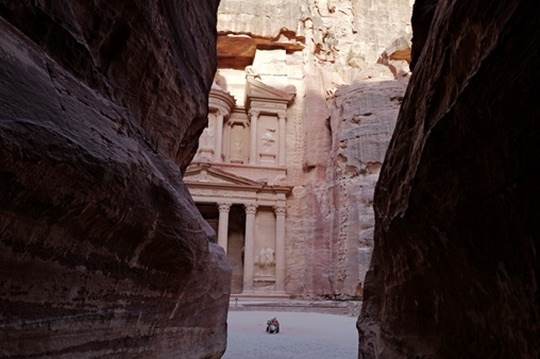
In a previous post, I introduced LANTERN, a framework for processing meta-insights, or truths, and converting them into wisdom. I developed this while attempting to think through the wisdom of Rumi, which I began exploring while reading the book: The Forty Rules of Love, Elif Shafak’s novel about Rumi, the 13th-century Persian poet, and Shams of Tabriz, the wandering teacher who transformed him. A new friend in Jordan, an archaeologist named Osama, recommended this as his favorite book. I loved the book. Then I did what I apparently can’t help doing: I went looking for the sources. I have a compulsion for context, which is literally my number one strength in StrengthsFinder: Context.
Here’s what I found. The forty rules are the novelist’s invention. There is no historical list she drew from. It was her homage to the subjects and the Islamic fondness for the number forty. But the ideas underneath them are real, and they trace to actual texts: Rumi’s Masnavi, the recorded talks of the historical Shams, the Quran, the hadith collections. Exo, my AI agent, and I checked every citation against the primary sources, and where a claim couldn’t be verified, I’ll say so plainly. The forty rules distill to nine ideas. This post is all nine, with enough context to understand each one and a trail of citations if you want to explore this deep and beautiful forest yourself.

A note on the two main sources, so the citations mean something. The Masnavi is Rumi’s six-volume poem of teaching stories, roughly 25,000 verses; the standard English translation is R. A. Nicholson’s, and citations like “Masnavi I:110” mean Book I, verse 110 in his numbering. The Maqalat is different: the historical Shams left no book, but his students recorded his talks, and William Chittick translated the best of them as Me and Rumi: The Autobiography of Shams-i Tabrizi. The novel’s gentle sage is fiction. The Maqalat is the closest thing we have to the wandering Dervish’s actual voice.
1. Love is the instrument of knowing
Not the reward for the journey. The measuring device you take on it. Rumi’s image is exact: “The lover’s ailment is separate from all other ailments: love is the astrolabe of the mysteries of God” (Masnavi I:110). An astrolabe was the era’s precision instrument for reading the heavens. Rumi’s claim is that some truths are only visible through love, the way stars are only readable through the instrument. The surface of it, in plain terms: some understanding is only available from inside commitment. You can’t evaluate your way into knowing a person, a craft, or a faith; the knowing arrives after the love, not before it. Analysis reads the brochure. Love takes the trip. The novel’s framing device, a “religion of love” whose rules can be “attained through love and love only,” is a faithful compression of this single verse. You can’t truly understand unless you’re lovingly curious and open to understanding.
Rumi’s Persian: عشق اصطرلاب اسرار خداست (eshq osturlāb-e asrār-e khodā-st).
Go deeper: Nicholson’s Masnavi, Book I, is free at archive.org.
2. Sell your cleverness and buy bewilderment
The one I already gave the full LANTERN treatment: expertise hardens into a filter until the filter does your seeing for you, and the cure is re-entering not-knowing on purpose (“Sell intelligence and buy bewilderment: intelligence is opinion, while bewilderment is immediate vision,” Masnavi IV:1407). Zen Buddhists arrived at the same summit from another face of the mountain: Shoshin, beginner’s mind.
Rumi’s Persian: زیرکی بفروش و حیرانی بخر (zirakī befrush o ḥayrānī bekhar).
Go deeper: the previous post; parallel verse at Masnavi III:1146.
3. Knowing yourself is knowing God
The novel’s Rule 1 says how we see God is a reflection of how we see ourselves. The idea’s real anchor is older, and the historical Shams handles it with a subtlety the novel doesn’t attempt. Glossing the famous saying “He who knows his soul knows his Lord,” Shams says the Prophet was too modest to say what he actually meant: “He was ashamed to say, He who knows my soul knows my Lord, so he said, He who knows his soul knows his Lord” (Maqalat 2.58–59, Chittick’s translation). Honesty requires a footnote here: that saying, beloved by Sufis for a thousand years, is not in any canonical hadith collection. Muslim scholars who grade these things called it unestablished or outright fabricated as a saying of the Prophet. It survives because it is true in experience, not because its paperwork is in order. I find that fitting for this particular idea.
The Arabic maxim: مَن عَرَفَ نَفْسَهُ فَقَدْ عَرَفَ رَبَّهُ (man ʿarafa nafsahu faqad ʿarafa rabbahu).
Go deeper: Chittick, Me and Rumi (Fons Vitae, 2004), the essential book in this whole list.

4. The only time you can practice is now
Everything you can actually influence sits in the present moment, and every “later” you issue converts action you control into anxiety you don’t. The past is a record you can read but not edit; the future is a forecast you can only influence from here. The Sufis had a title for the discipline: ibn al-waqt, son of the present moment. “The Sufi is the son of the (present) time… it is not the rule of the Way to say To-morrow” (Masnavi I:133). Before mindfulness was an app category, this was about obedience to the hour: answer what the moment actually asks, and saying “tomorrow” to it is a spiritual failure, not a scheduling choice. Rumi has a deeper cut two books later: beyond the son of the moment is the purified one who is “unconcerned with time and state” altogether (III:1426). First you stop living in tomorrow. Then you stop keeping score by the clock at all.
Rumi’s Persian: صوفی ابن الوقت باشد ای رفیق (sufi ebn al-vaqt bāshad, ey rafiq — Nicholson’s “O comrade” is the ey rafiq).
Go deeper: Nicholson, Book I and Book III.
5. Die before you die
The most famous phrase in Sufism, and here’s the surprise: it isn’t a verified saying of the Prophet. The hadith scholars who audited it ruled it unproven as prophetic speech; it’s a Sufi maxim. The idea’s verified anchor is better anyway. In the Masnavi, Rumi walks the whole ladder of existence as a series of deaths: “I died to the inorganic state and became endowed with growth… I died from animality and became Adam (man): why, then, should I fear? When have I become less by dying?” (Masnavi III:3901–3906). Every transformation you’ve ever survived required the death of who you were before it. The passage ends by quoting the Quran: “Verily, unto Him shall we return” (2:156). This is not reincarnation; it’s the observation that becoming has always cost you a self, and it has never once been a loss.
The Arabic maxim: مُوتُوا قَبْلَ أَنْ تَمُوتُوا (mutu qabla an tamutu). Rumi’s Persian, first rung of the ladder: از جمادی مردم و نامی شدم (az jamādi mordam o nāmi shodam).
Go deeper: Ibrahim Gamard’s verse-by-verse commentary at dar-al-masnavi.org.
6. The prayer is graded on the ache, not the grammar
Rumi’s most subversive story. A shepherd prays in crude endearments: he offers to comb God’s hair, wash His clothes, bring Him milk. Moses, the prophet and trained theologian, overhears and scolds the blasphemy. Then God scolds Moses: “Thou hast parted My servant from Me… I look not at the tongue and the speech; I look at the inward (spirit) and the state (of feeling)” (Masnavi II:1720–1796; the crux at II:1759). Read that again: the expert failed the exam he was administering. Every institution that grades on polish, every leader who corrects sincerity for its formatting, is Moses in this story. And there’s a second blade in it: judgment. Moses isn’t corrected for bad theology; his theology was fine. He’s corrected for appointing himself the grader of another man’s devotion. The story convicts the judge, not the worshipper, which makes it a twin of idea eight below: the moment you’re scoring someone else’s sincerity, you’re the one failing the exam. Form is teachable. Contempt is the blasphemy.
Rumi’s Persian: ما زبان را ننگریم و قال را / ما روان را بنگریم و حال را (mā zabān rā nangarim o qāl rā / mā ravān rā bengarim o ḥāl rā).
Go deeper: Gamard’s translation of the full story at dar-al-masnavi.org.
7. Suffering is ripening
A chickpea in a boiling pot keeps leaping to the rim, crying: why are you doing this to me? You bought me, why are you burning me? The cook knocks it back down and explains: this is not cruelty, this is cooking. You are becoming fit for the feast (Masnavi III:4159 and following). It’s the era’s version of an idea every tradition converges on: unearned comfort matures nothing. Rumi makes the vegetable argue, which is exactly what we do in the pot. The surface claim, so it isn’t mistaken for a greeting card: not that suffering is good, but that transformation has a temperature, and comfort never reaches it. The cook is transforming the chickpea, not punishing it. The difference between a trial and a tragedy is whether anything is being cooked.
Rumi’s Persian: هر زمان نخود بر آید وقت جوش / بر سر دیگ و برآرد صد خروش (har zamān nokhod bar āyad vaqt-e jush / bar sar-e dig o bar ārad sad khorush).
Go deeper: Nicholson, Book III; Gamard hosts the story here.

8. Do not judge the sinner
The novel’s Shams keeps company with drunks and prostitutes, and readers assume this is Sufi rebellion against orthodoxy. Here’s what the research actually turned up: the idea’s strongest anchor is the most orthodox text in Islam. Sahih al-Bukhari, the canonical hadith collection, records a man nicknamed Himar who was repeatedly flogged for drinking. When someone cursed him, the Prophet said: “Do not curse him, for by Allah, I know he loves Allah and His Apostle” (Bukhari 6780). And the chapter heading, written by Bukhari himself, states the doctrine: cursing the drunkard is disliked, and he is not outside the faith. Now the surface of it, plainly. The tradition separates the sin from the sinner. The act had consequences; the man was punished, repeatedly. And still no one was permitted to curse him or write him out of the community, because his love of God was judged real despite his relapses. Belonging survives failure. That is the doctrine, stated in the strictest book Islam has. The harshness we associate with religion toward sinners is largely a human addition, layered on later. Which is what makes this idea sting: if the most rigorous source in the tradition protects a relapsing drunk from contempt, my contempt has no scripture to hide behind. Neither does yours.
The Prophet’s Arabic: لَا تَلْعَنُوهُ، فَوَاللَّهِ، مَا عَلِمْتُ إِنَّهُ يُحِبُّ اللَّهَ وَرَسُولَهُ (lā talʿanuhu, fa-wallāhi, mā ʿalimtu innahu yuḥibbu Allāha wa rasulahu).
Go deeper: sunnah.com/bukhari:6780, text and chapter heading.

9. Sobriety above ecstasy
The idea that will most surprise anyone who knows Rumi only from greeting cards. The historical Shams, the supposed patron saint of ecstatic mysticism, ranked plain obedience above spiritual fireworks. Of Bayazid, a famous mystic who cried “Glory be to me!” in rapture, Shams said: “Since he was drunk, he said, Glory be to me! If someone is drunk, he cannot follow Muhammad… One cannot follow the sober in drunkenness” (Maqalat, section 85; the same ranking in sections 80 and 82). This is reportedly the question Shams used to ambush Rumi at their first meeting in Konya, the scene the novel dramatizes. Here’s the teaching in plain terms. Ecstasy is a state: it visits, it leaves, and you can’t build on it. Discipline is a practice: it compounds. Bayazid’s rapture was real, but a drunk man can’t follow anyone anywhere, and a path only counts if it can be walked. In Shams’s ranking, Muhammad’s way is higher precisely because it’s sober: repeatable, teachable, walkable on an ordinary Tuesday. You already know the modern version. The retreat high that evaporates by Thursday. The conference buzz that never becomes a shipped product. Peaks inspire. Practices transform. The masters treated the fireworks as scenery, not the road.
Bayazid’s Arabic cry: سُبْحَانِي مَا أَعْظَمَ شَأْنِي (subḥāni mā aʿẓama shaʾni, “Glory be to me, how great is my majesty”). Shams’s own talks are Persian.
Go deeper: Chittick, Me and Rumi, sections 80–85.
LANTERN: “Die before you die”
As mentioned, I introduced LANTERN as a framework for processing difficult truths and converting them into wisdom, and ran it on idea two. Here it is again, on idea five. Die before you die is about reinvention. There are many personal stories I can filter this through, but I’ll keep it to the professional.
Line. Die before you die. Four words of old Sufi instruction, and as noted above, a maxim rather than a verified saying of the Prophet, which doesn’t dull it a bit. Rumi’s coin from the ascent passage turns the maxim into an audit: “When have I become less by dying?” (Masnavi III:3901–3906). Name one death of a former self that actually diminished you. You can’t. Every one of them built you.
There’s a modern echo of this maxim that I’ve loved since my twenties: find what you love and let it kill you. For years I believed it was Charles Bukowski, the hard-living American poet, and for years I credited him. Fact-checking this post, I learned it isn’t his. Quote hunters traced it to Kinky Friedman, the Texas singer and humorist, in a 1986 newspaper profile. Nonetheless: wrong poet, right instruction. What you love should cost you your current self. Rumi just adds the part Friedman leaves out: the resurrection.
Anchor. A badge on a lanyard. For years I was a startup CEO. My name was effectively on the door, my calls got returned, my title did half my talking. Then I went to a publicly traded company, and on day one they handed me what everyone gets: a badge on a lanyard. I went from well known to invisible overnight. And here’s the part I didn’t expect: I loved it. Nobody defers to a lanyard, so every idea had to win on its own merits. Stripped of the old self’s applause, I learned faster in those years than in the decade my title did the talking. I had died on purpose, and I came back better.
Narrative. Before Shams of Tabriz arrived, Rumi was the credential. He held his father’s chair in Konya, taught religious law, drew crowds, was addressed by honorifics. Then the wandering teacher asked his question, and the professor came apart. He abandoned his lectures. He scandalized his students. Respectable Konya watched its most credentialed scholar fall under the spell of an unwashed stranger and called it ruin. It was ruin. It was also the only reason anyone reading this knows his name. The professor had to die for the poet to be born. The world lost a lecturer it would have forgotten in a generation and got the Masnavi. The reversal: what looked like a brilliant man’s destruction was the beginning of everything history kept.
I’ve watched the corporate version of this refusal for decades. The brilliant engineer gets promoted to manager and keeps writing code, reviewing every pull request, unable to let the engineer die, and so fails at both jobs. The founder who was the product refuses to stop being the product, and the company stays exactly the size of one person’s calendar. Every promotion is a funeral, and almost nobody holds the service. The people who stall aren’t the ones who lack ability for the next self. They’re the ones still performing the last one, because it applauded.
Turn. What are you still the best in the room at that is no longer your job? That’s the corpse you’re carrying. When did you last let a version of yourself die on schedule, instead of waiting for the market, the org chart, or your body to schedule it for you?
Enact. Open your calendar. Find one recurring task that belongs to the person you were two roles ago. Hand it off this week, or kill it outright. Then watch two things: who grows into the space, and how loud the flinch is in you when you let go. The flinch is the measurement. It’s the grip strength of the self that’s overdue for a funeral.
Ripples. Second order, in weeks: your calendar starts matching your actual job. The person who inherited the task grows faster than you expected, and problems get solved without touching you, which stings once and then liberates. Third order, in years: a career becomes a sequence of clean deaths instead of one long decay of a first success. Organizations run the same physics. Kodak’s own engineer invented the digital camera in 1975, and the company couldn’t let the film self die; the market held the funeral instead, without the courtesy. The companies that die are usually killed by the self they refused to bury.
Nemesis. Two counterfeits, and both dodge the actual price of transformation.
Reinvention theater: the rebrand without the burial. The scene: the pivot announcement, the new title, the refreshed website, and underneath it the same calendar, the same decisions, the same hands doing the same tasks. The tell: nothing stopped. The test: name what you actually quit doing, with a date. A death with no corpse is a costume change.
Serial self-abandonment: quitting dressed as transformation. The scene: the job, the project, the city torched every eighteen months, right when it gets hard, and the arson filed under growth. The tell: the deaths always come before mastery, never after it. Rumi’s ladder only climbs through paid-for deaths; the mineral had to fully be mineral before it could afford to become the plant. And the positive sign, so you know the real thing: genuine dying-before-dying grieves. You loved the self you’re burying, you can name what it taught you, and you carry that forward. The counterfeit feels nothing but relief, and learns nothing but escape. The deeper tell: the counterfeit only ever runs away from something. The real thing runs toward something. It isn’t enough to know what you don’t like; escape has no destination, and nothing gets born there. You have to know what you love enough to be remade by it, which brings Friedman’s line back around, properly understood: find what you love and let it kill you. Both kinds of death cost a self. Only one pays for a new one.
The two counterfeits share one root: both refuse to pay. The theater won’t pay in status. The abandonment won’t pay in mastery. The real thing pays both, and that’s how you know it’s real. When have you become less by dying? Never. But only if you actually die, and only if you were fully alive as the thing you’re leaving.
A warning about fake Rumi
I realize I’m fact-checking mystics. Context, remember. I literally can’t help it. So, in that spirit: if this post sends you searching, you’ll meet quotes the research killed. Three famous ones are not Rumi at all. “Not Christian or Jew or Muslim…” is absent from the earliest manuscripts and from the critical edition of Rumi’s collected poems. “I go into the mosque, the synagogue, the church, and I see one altar” was composed in German in 1819 by Friedrich Rückert, who wrote Rumi-style poems with no Persian originals; it entered English in 1903 and got attributed to Rumi somewhere along the way. And “Come, come, whoever you are, even if you have broken your vow a thousand times,” inscribed at Rumi’s own shrine, is attributed by scholars to an earlier Persian mystic, Abu Sa’id. The scholar Ibrahim Gamard documents all three in “Three Fake Rumi Verses”. The popular English Rumi, mostly Coleman Barks’s renderings, are rewritings of older translations by a poet who reads no Persian, with the Islam systematically sanded off. Franklin Lewis, Rumi’s most rigorous biographer, put it plainly: it will not do to extract quotations out of context and present Rumi as a prophet of unchurched spirituality. His universalism came through his tradition, not around it.

If you want the deep forest
Four trails, in order of commitment. Nicholson’s complete Masnavi, free, the primary source behind most of this post. Chittick’s Me and Rumi, the historical Shams in his own recorded voice, stranger and better than fiction. Franklin Lewis’s Rumi: Past and Present, East and West, the definitive biography and the antidote to the greeting cards. And dar-al-masnavi.org, Gamard’s site, the best free scholarly companion on the internet.
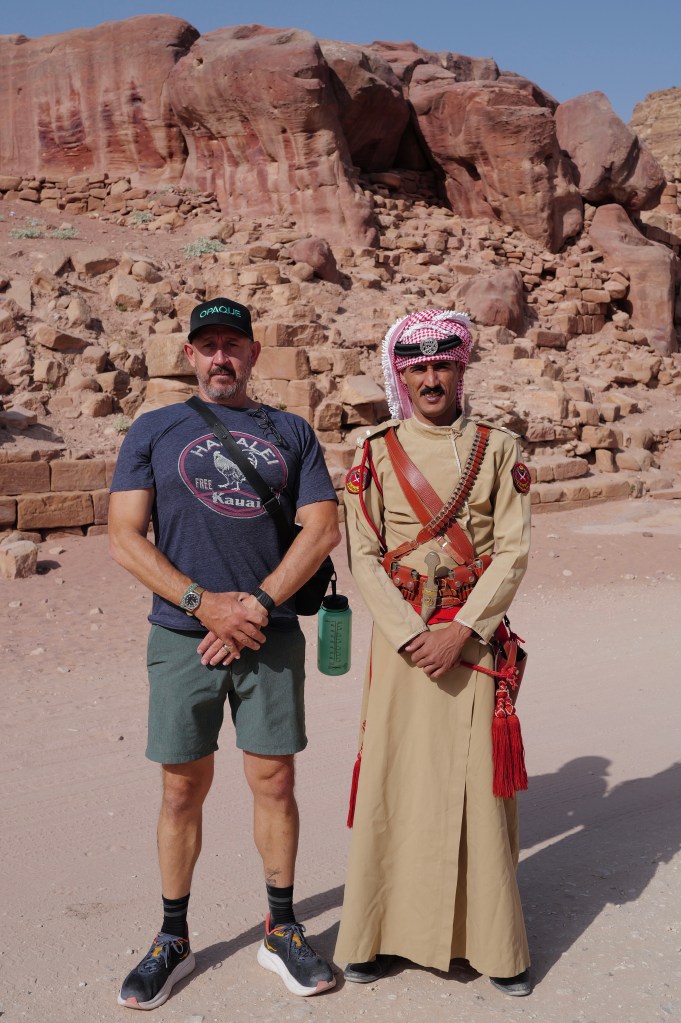
Osama and I met as strangers: a tech executive from California and an archaeologist who reads dead empires for a living, walking through ruins in his part of the world, trading questions for days. Nobody judged anybody. He offered a stranger the book he loved most; I received the recommendation with love and explored its depths, and far beyond its pages. Most of the nine ideas above are hiding somewhere in that exchange. The novel was the door. The forest is real. Go get lost in it.
Thanks, Osama.